Why freshness matters becomes clear if you’ve ever bought good coffee beans and still felt disappointed by the taste.
Freshness affects aroma, flavour, and balance more than most beginners realise. Even high-quality beans can taste flat or dull if they’re too old — no matter how carefully you brew them.
This guide explains what “fresh coffee” really means, how to understand roast dates, and how fresh your beans actually need to be.
What “Fresh” Coffee Really Means (Why Freshness Matters)
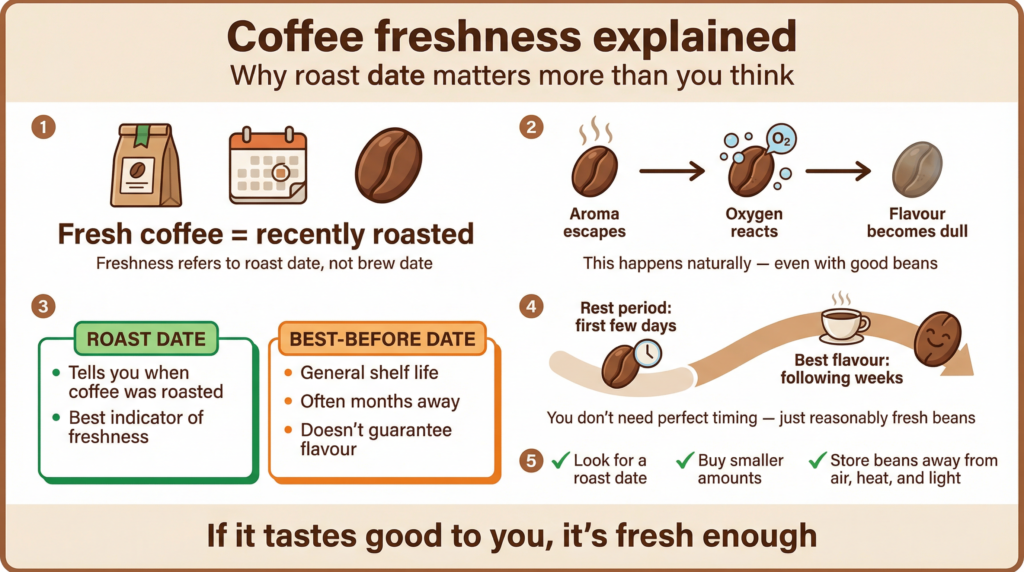
In coffee, freshness refers to how recently the beans were roasted, not when they were brewed or when you bought them from a shop.
This often surprises beginners, because coffee can look fine and smell “okay” even when much of the flavour has already faded.
After roasting, coffee beans slowly release carbon dioxide and aromatic compounds. This process is natural and unavoidable — but it also means flavour and aroma gradually disappear over time.
That’s why coffee changes as it ages, even if it’s stored well.
Fresh coffee doesn’t mean “roasted yesterday.”
Very fresh coffee can actually taste sharp or unsettled at first.
Instead, fresh coffee means roasted recently enough that the beans still taste lively, balanced, and aromatic when brewed.
For beginners, you don’t need perfect timing — just beans that are fresh enough to still have flavour.
Why coffee loses flavour over time
Once coffee is roasted, a few natural changes begin to happen — even if the beans are stored well.
Over time:
- Aromatic compounds slowly escape into the air, , which affects the flavour notes you taste.
These are the smells and flavours that make coffee enjoyable. As they disappear, coffee smells less vibrant. - Oxygen reacts with the beans
Exposure to air causes oxidation, which dulls flavour in the same way it affects other foods over time. - Flavours gradually become flatter and less lively
Sweetness fades first, followed by complexity and balance.
Because of this, older coffee often tastes:
- muted or dull
- papery or stale
- bitter without much sweetness
Even if the beans still look fine and brew normally, much of the flavour that was present when they were freshly roasted may already be gone.
Roast Date vs Best-Before Date
This is where many beginners get confused — and it’s completely understandable.
On a coffee bag, you’ll usually see either a roast date or a best-before date, and they don’t mean the same thing.
- Roast date = the day the coffee was roasted
This tells you how old the coffee actually is and gives you the best clue about flavour. - Best-before date = a general shelf-life estimate
This is often set months in advance and is more about food safety than taste.
A best-before date doesn’t tell you whether the coffee will taste good — it only tells you that it’s still considered safe to drink.
If a coffee bag only shows a best-before date and no roast date, it’s often a sign the coffee isn’t very fresh or wasn’t intended to be used soon after roasting.
For learning and better flavour at home, roast date matters far more than best-before date.
How fresh is “fresh enough” for beginners?
You don’t need to chase perfect timing.
As a simple guideline:
- Coffee is usually best starting about 7 days after roasting
- It remains enjoyable for several weeks after that
For beginners, the goal is straightforward:
Buy coffee that was roasted recently enough to still taste lively.
You don’t need to track exact dates — just avoid coffee that’s clearly old.
What beginners should actually do
You don’t need special equipment or complicated routines.
A few simple habits make the biggest difference:
- Look for a roast date, not just a best-before date
- Buy smaller amounts more often
- Store beans away from light, heat, and air
If your coffee suddenly tastes flat, freshness is one of the first things to check.
Key takeaway
Freshness has a bigger impact on flavour than most beginners expect.
You don’t need perfect timing — just reasonably fresh beans.
If the coffee tastes good to you, it’s fresh enough.
Beginner FAQ
Is very fresh coffee bad?
Coffee benefits from a short rest after roasting. Extremely fresh coffee can taste sharp or gassy, but this usually settles after a few days.
Can I freeze coffee beans?
Freezing can help preserve freshness if done properly, but it isn’t necessary for beginners.
Does grinding coffee make it go stale faster?
Yes. Ground coffee loses flavour much faster than whole beans.