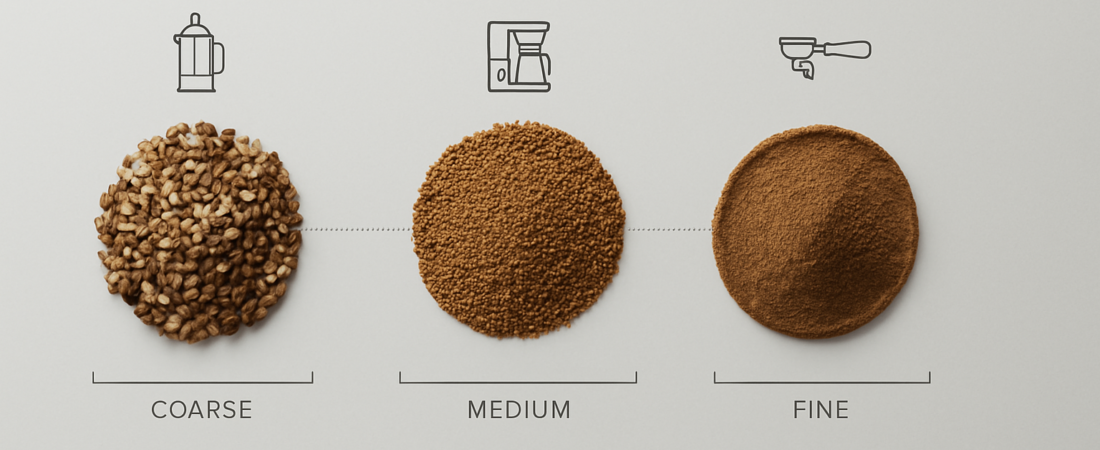
If you’re new to making coffee at home, using a grind size chart for beginners can feel confusing very quickly.
Fine, medium, coarse — and suddenly everyone seems to have a different opinion.
The good news is that you don’t need to overthink it.
This simple guide will help you understand which grind size to use, what it looks like, and why it matters — without getting technical.
Why Grind Size Matters
Grind size controls how fast water flows through coffee and how much flavour is extracted — which is explained more fully in our why grind size matters guide.
- Too fine → water flows slowly → coffee can taste bitter
- Too coarse → water flows too fast → coffee can taste weak or sour
Different brewing methods use different contact times with water, which is why they need different grind sizes.
Simple Grind Size Chart for Beginners
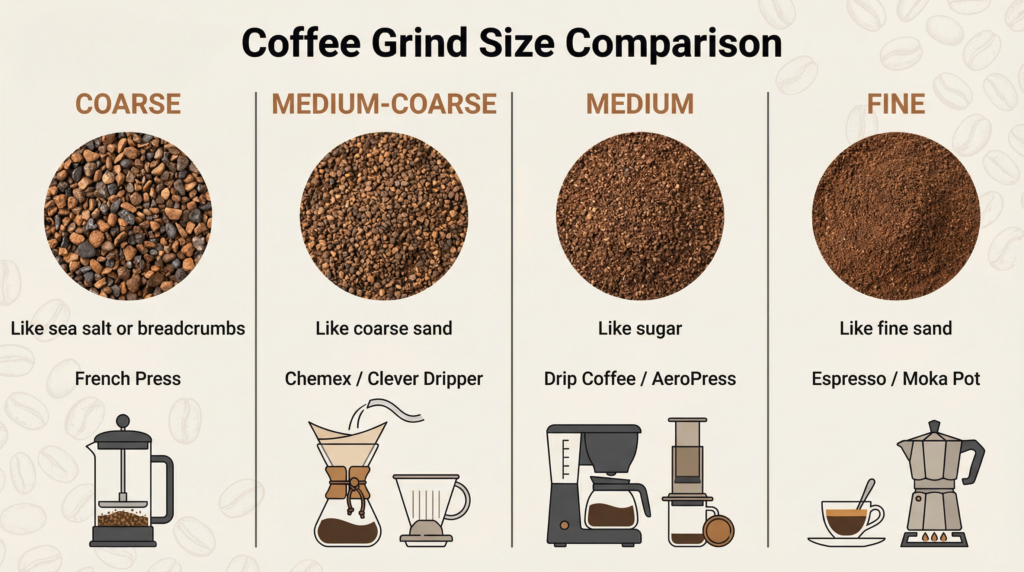
Extra Fine
- Looks like: Powder, similar to flour
- Used for: Turkish coffee
- Beginner note: Very unforgiving — not recommended for beginners
Fine
- Looks like: Table salt or fine sand
- Used for: Espresso, moka pot
- Beginner note: Only use if you have an espresso machine or moka pot
Medium-Fine
- Looks like: Slightly finer than sugar
- Used for: Pour-over (V60), AeroPress (short brew)
- Beginner note: A good starting point for pour-over
Medium
- Looks like: Regular sugar
- Used for: Drip coffee machines, AeroPress
- Beginner note: One of the most forgiving grind sizes
Medium-Coarse
- Looks like: Rough sugar crystals
- Used for: Chemex, Clever Dripper
- Beginner note: Works well for slower pour-over methods
Coarse
- Looks like: Sea salt or breadcrumbs
- Used for: French press, cold brew
- Beginner note: Essential for French press to avoid muddy coffee
If You’re Unsure, Start Here
If you’re just starting out:
- Pour-over → Medium-fine
- AeroPress → Medium
- French press → Coarse
From there, adjust slightly based on taste rather than rules.
What This Tastes Like When It’s Right
When the grind size is right, coffee tastes balanced and clear.
It won’t feel sharp, bitter, or muddy — just smooth and easy to drink.
A Common Beginner Scenario
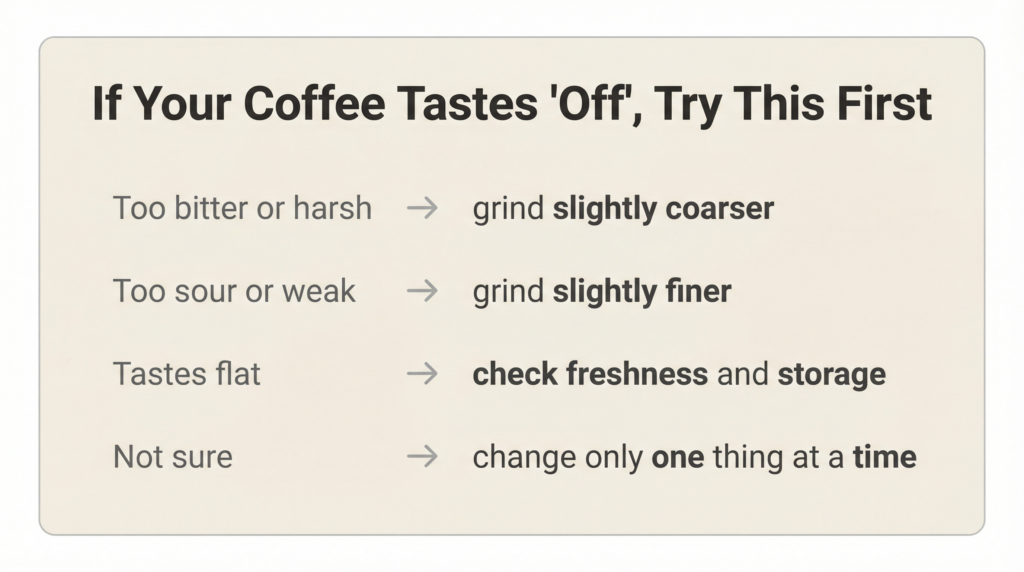
You brew a cup of coffee and it tastes weak, sharp, or unsatisfying — even though you followed the steps.
For a single brew, this is often caused by grind size.
If you’re seeing the same taste problems repeatedly, this grind size troubleshooting guide helps you fix them step by step.
If the grind is too coarse, water runs through too quickly and the coffee tastes thin or sour.
Try grinding slightly finer for your next cup.
A small adjustment is usually enough to make the coffee taste more balanced.
If the coffee tastes harsh or bitter instead, the grind is likely too fine.
In that case, try going slightly coarser next time.
Common Beginner Mistakes (And How to Avoid Them)
Once you understand how grind size affects the taste of a single cup, the next step is avoiding the common habits that cause inconsistent results over time.
Using the same grind size for every method
Different brew methods need different grind sizes to extract properly.
Example: If you use a fine espresso grind in a French press, the coffee often tastes muddy and bitter.
What to do instead: Start with the recommended grind for your brew method, then adjust slightly if needed.
Changing beans and grind size at the same time
When you change too many things at once, it’s impossible to know what actually made the coffee better or worse.
Example: Switching to new beans and changing your grind can leave you unsure which change affected the taste.
What to do instead: Change one thing at a time so the result is clear.
Chasing the “perfect” grind size
There isn’t a single “correct” grind setting — even the same beans can behave differently.
Example: A grind that tasted great yesterday might taste slightly different today, even on the same grinder.
What to do instead: Trust your taste more than exact settings or numbers.
Use this guide if your coffee tastes off before changing anything else:
Did You Know?
Coffee can taste completely different using the same beans but a different grind size.
A small adjustment — finer or coarser — can change bitterness, sweetness, and clarity without buying new equipment.
Beginner FAQ
Do I need a grinder to get the right grind size?
A grinder helps, but it’s not required at first. If buying pre-ground coffee, try to match it to your brewing method (for example, “French press grind”).
Can I use one grind size for everything?
You can, but results will vary. Medium grind is the most forgiving single option.
Why does my coffee sometimes taste bitter?
It’s often too fine for your brew method, which leads to over-extraction.
What’s Next?
Now that you understand grind size, the next step is keeping coffee fresh.
Read next: How to Store Coffee Beans Properly