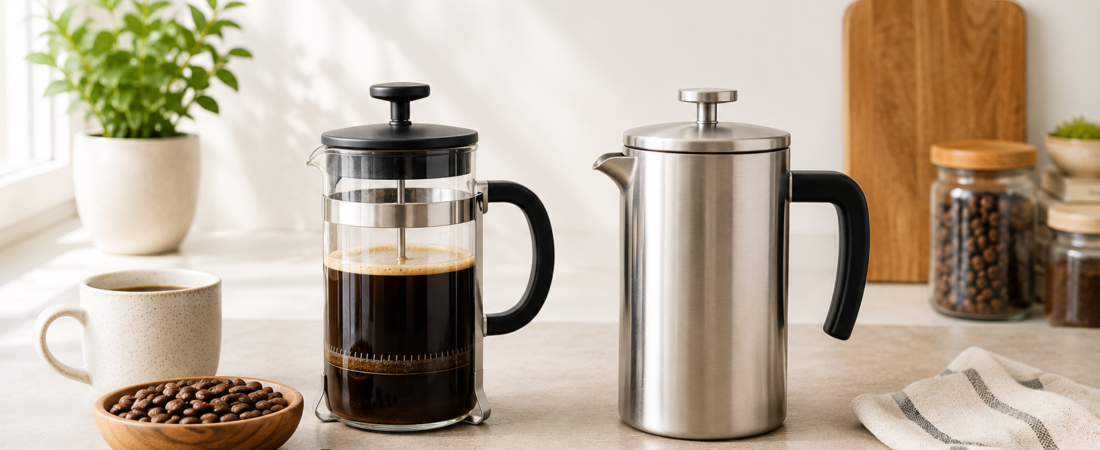
One of the first decisions when buying a French press is choosing between a glass vs stainless steel French press — and neither is objectively better. Both make excellent coffee. It depends entirely on how you brew and what matters most to you.
This guide breaks down the differences clearly so you can make the right choice for your situation without overthinking it.
This article contains affiliate links. If you buy through them, I may earn a small commission at no extra cost to you.
Quick Picks
⭐Best glass French press: Bodum Chambord (~$40) 👉 Check price & availability
⭐Best stainless steel: Secura Stainless Steel (~$28) 👉 Check price & availability
The Short Answer
Choose glass if you brew carefully at home, care about aesthetics, and don’t mind being a little gentle with your equipment.
Choose stainless steel if you want something more durable, prefer coffee that stays hot longer, or tend to be rough on kitchen gear.
If you’re still unsure after reading that, keep going — the details below will make the decision obvious.
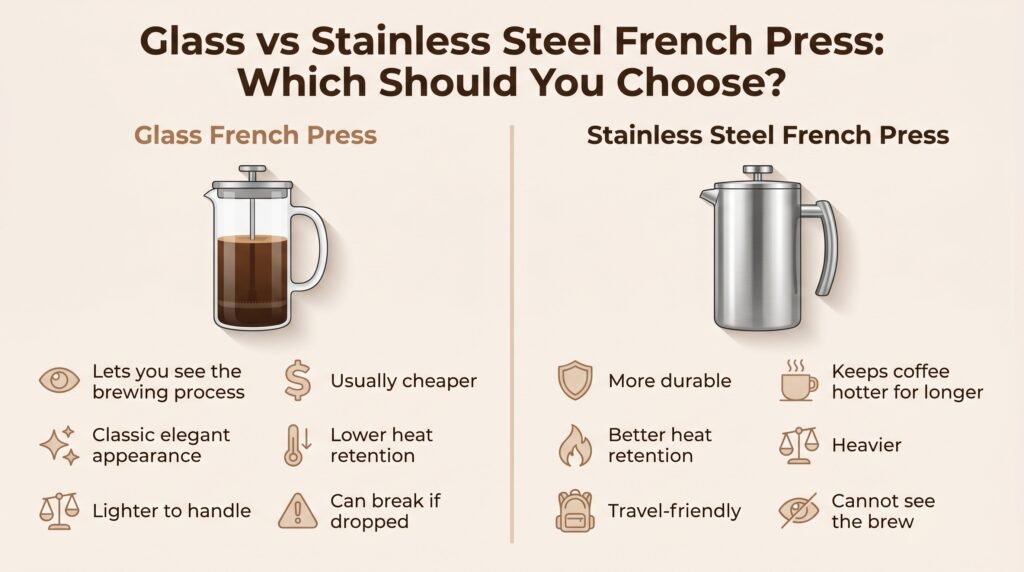
Side-by-Side Comparison – Glass vs Stainless Steel French Press
| Glass French Press | Stainless Steel French Press | |
|---|---|---|
| Durability | Can break if dropped | Very durable, handles knocks well |
| Heat retention | Average — loses heat faster | Better — keeps coffee hotter longer |
| Weight | Lighter | Heavier |
| Aesthetics | Classic, elegant look | Modern, functional look |
| See the brew | Yes | No |
| Price | Often cheaper | Slightly more expensive |
| Cleaning | Easy, but handle carefully | Easy, often dishwasher safe |
| Best for | Home brewing, aesthetics | Durability, travel, heat retention |
Glass French Press: What You Need to Know
Glass French presses are the classic choice — and for good reason. There’s something genuinely satisfying about watching coffee bloom and steep through clear glass. It looks elegant on a kitchen counter, and for most beginners brewing carefully at home, it’s perfectly reliable.
The advantages of glass
You can see the brew. This sounds minor but it’s actually useful, especially when you’re learning. You can watch the coffee steep, see when it looks ready, and spot if something looks off. Many beginners find this helpful when dialling in their technique.
If you’re completely new to French press brewing, our step-by-step guide on How to Use a French Press walks through the full process from start to finish.
It looks better. Glass French presses — particularly classics like the Bodum Chambord (~$40) — have a timeless aesthetic that stainless steel can’t quite match. 👉 Check price & availability. If your kitchen gear matters to you visually, glass wins.
It’s lighter. Glass presses are noticeably lighter than stainless steel models, which makes them easier to handle and pour from, especially larger 34oz or 51oz sizes.
It’s often cheaper. At the budget end of the market, glass French presses tend to cost less than equivalent stainless steel models. The Bodum Brazil, for example, comes in around $20. 👉 Check price & availability
The disadvantages of glass
It can break. This is the main one. Drop a glass French press on a hard floor and it’s likely gone. Some glass models are more resistant than others — borosilicate glass handles heat and minor knocks better than standard glass — but glass is still glass. If you’re clumsy in the kitchen or have young children around, this is worth thinking about.
Heat retention is average. Glass loses heat to the surrounding air faster than stainless steel. If your kitchen is cold, or if you like to take your time with a cup, your coffee will cool down noticeably during a brew. This isn’t a dealbreaker for most people, but it’s worth knowing.
Temperature shock can crack it. Pouring boiling water into a cold glass French press can crack it. Always warm the glass first by rinsing with hot water before brewing.
Stainless Steel French Press: What You Need to Know
Stainless steel French presses have become increasingly popular — and for beginners who want something more worry-free, they’re often the better long-term choice.
The advantages of stainless steel
It’s much more durable. Drop a stainless steel French press and it’s far less likely to suffer damage. There’s no glass to crack, no beaker to replace, and no anxiety about handling it too roughly. For beginners who aren’t yet used to handling glass coffee gear, this is a genuine advantage.
Better heat retention. Stainless steel conducts and holds heat better than glass, meaning your coffee stays warmer for longer during and after brewing. Double-wall insulated models — like the Secura (~$28) — are particularly good at this, keeping coffee hot for an hour or more. 👉 Check price & availability
More practical for travel. If you want to take your French press to the office, on camping trips, or anywhere outside the home, stainless steel is the obvious choice. Glass is too fragile for a bag.
Dishwasher safe. Most stainless steel French presses are fully dishwasher safe, which makes cleaning even easier than glass models that need to be handled carefully.
The disadvantages of stainless steel
You can’t see the brew. This is the main trade-off. With stainless steel you’re brewing blind — you have to rely on a timer rather than visual cues. This isn’t a problem once you’ve established a routine, but beginners sometimes miss the visibility that glass provides.
It’s heavier. Stainless steel presses, especially double-wall insulated models, are noticeably heavier than glass. For a 34oz press this is manageable, but it’s worth considering if you plan to brew and pour frequently.
It looks more utilitarian. Stainless steel French presses are functional and modern-looking, but they lack the classic elegance of a glass press. If aesthetics matter to you, glass is more appealing.
Does the Material Affect Coffee Flavour?
This is a common question and the honest answer is: not meaningfully, no.
The material of the French press body doesn’t come into contact with your coffee in a way that affects flavour. What affects flavour is the filter quality, your grind size, your brew time, and your water temperature — not whether the outer body is glass or steel.
The brewer itself matters less than things like grind size, brew time, and bean choice. If you’re unsure where to start, our Best Coffee Beans for French Press guide keeps things simple for beginners.
The one minor caveat is heat retention. If your coffee cools down significantly during a long brew, it can affect extraction slightly. But for a standard 4-minute brew, this difference is negligible for most people.
What About Glass French Presses with Stainless Steel Frames?
Most glass French presses — including the Bodum Chambord and Bodum Brazil — actually have a stainless steel or plastic frame around the glass beaker. The frame provides some protection and structural support, but it doesn’t change the fundamental trade-offs: the glass beaker itself can still crack or break, and heat retention is still average.
Some presses, like the Veken French Press, use a stainless steel outer frame with a glass inner carafe — giving you the visual appeal of glass with slightly more protection. These are a reasonable middle ground.
Which Is Better for a Beginner?
There’s no universal answer, but here’s a practical framework:
Go with glass if:
- You brew carefully at home on a stable surface
- You care about how your equipment looks
- You want to watch the brew process while you’re learning
- You’re on a tight budget and want the cheapest reliable option
- You like the classic French press aesthetic
Go with stainless steel if:
- You want something durable and worry-free
- You often forget about your coffee and want it to stay hot
- You travel with your press or use it outside the home
- You have kids or pets and kitchen accidents happen
- You want something that will last several years without babying
For most absolute beginners, glass is fine — the Bodum Chambord in particular is one of the most beginner-friendly presses available and has been reliable for years. 👉 Check price & availability
But if you have any doubts about durability, stainless steel is the safer long-term investment. If you’d like to compare more beginner-friendly options beyond just material differences, our Best French Press Under $50 for Beginners guide covers five picks based on budget, durability, and brewing style.
Recommended Picks for Each Type
⭐ Best glass French press for beginners
Bodum Chambord (~$40) — The classic choice. Borosilicate glass, stainless steel frame, reliable filter, easy to clean, and replacement parts are easy to find. The safest all-round recommendation for most beginners. 👉Check price & availability
Bodum Brazil (~$20) — The most affordable entry point. Same reliable Bodum filter system in a slightly less premium plastic-framed body. Good for beginners who want to try French press without spending much. 👉Check price & availability
⭐ Best stainless steel French press for beginners
Secura Stainless Steel (~$28) — Fully stainless steel body, excellent heat retention, extra filters included. The best value stainless steel option for beginners who prioritise durability. 👉Check price & availability
Veken French Press (~$27) — Glass carafe inside a stainless steel frame, 4-level filtration, no plastic touching the coffee. A strong middle-ground option at a very accessible price. 👉 Check price & availability
Frequently Asked Questions
Does glass or stainless steel make better coffee? Neither — the material doesn’t meaningfully affect coffee flavour. What matters is grind size, brew time, water temperature, and filter quality, all of which are the same regardless of material.
Do glass French presses break easily? They can, especially if dropped on a hard floor. Borosilicate glass is more heat-resistant and durable than standard glass, but it’s still breakable. Handle with care and always warm the glass before adding hot water.
Is stainless steel French press safe? Yes. Food-grade stainless steel (304 grade) is completely safe for brewing coffee and doesn’t leach any chemicals or affect flavour. It’s one of the safest materials for coffee gear.
Can I put a glass French press in the dishwasher? Most borosilicate glass French press beakers are dishwasher safe, but check the manufacturer’s instructions first. The metal frame and filter are usually fine in the dishwasher too.
Which lasts longer, glass or stainless steel? Stainless steel will typically outlast glass simply because it’s not at risk of breaking. A well-maintained stainless steel French press can last a decade or more. Glass presses last just as long if handled carefully, but one bad drop ends them.
Is a double-wall stainless steel French press worth it? Yes, if heat retention matters to you. Double-wall insulation keeps coffee noticeably hotter for longer compared to single-wall steel or glass. Worth the slight extra cost if you like to sip slowly.
Final Thoughts
Glass and stainless steel French presses both make excellent coffee. The right choice comes down to your lifestyle, not the material.
If you want the classic experience — watching the brew, a clean aesthetic, lighter weight — go with glass. The Bodum Chambord is the easiest recommendation.
If you want something you don’t have to think about — durable, stays hot longer, handles daily use without worry — go with stainless steel. The Secura is the best value option at this price point.
Either way, you’re one good French press away from better coffee at home.
Once you’ve chosen your French press, avoiding a few common beginner mistakes makes a surprisingly big difference. Our 7 French Press Mistakes That Ruin Your Coffee guide explains what to watch for.
Continue Learning
- Best French Press Under $50 for Beginners → affordable beginner-friendly picks that balance price, durability, and ease of use
- Best French Press for Beginners → broader guide covering all budgets and brewing styles
- How to Use a French Press → step-by-step guide for your first brew
- Best Coffee Beans for French Press → find beans that suit richer, full-bodied brewing
- 7 French Press Mistakes That Ruin Your Coffee → avoid the most common beginner errors