If you’re new to making coffee at home, it’s easy to feel like you’re missing something.
You might see long gear lists, expensive setups, or advice that makes it sound like good coffee requires a lot of equipment. In reality, most beginners don’t need more gear — they need a clear, simple setup that supports the basics. For smaller homes or shared spaces, gear size, noise, and storage matter even more — this guide to Best Coffee Gear for Small Apartments focuses on setups that work in real-life living situations.
This beginner coffee setup checklist shows what you actually need to get started, what’s optional, and what can safely wait — so you can focus on learning instead of buying.
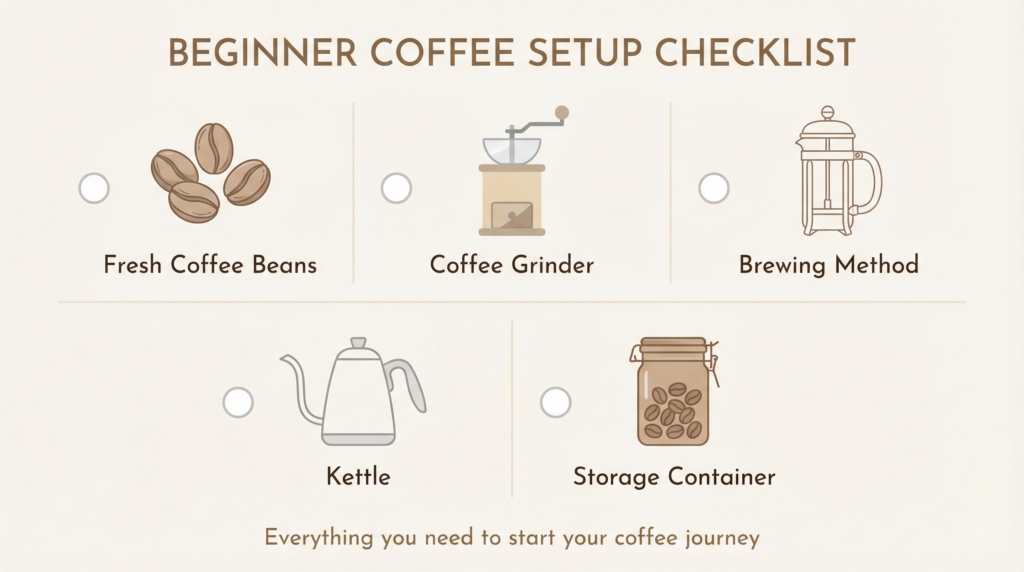
If you prefer a quick visual reference, this checklist shows everything you need to get started — and nothing you don’t.
The Beginner Coffee Setup (At a Glance)
A beginner coffee setup only needs five things:
- Fresh coffee beans
- A way to grind coffee
- One brewing method
- A way to boil water
- A place to store coffee properly
That’s it.
If you have these covered, you already have everything required to make good coffee at home.
Beginner Coffee Setup Checklist (Simple & Practical)
✅ 1. Fresh Coffee Beans
Freshness matters more than most beginners realise.
Checklist:
- Beans have a visible roast date (not just a “best before” date)
- Used within a few weeks of roasting
- Bought in small amounts rather than bulk
Fresh beans make more difference to flavour than upgrading equipment.
✅ 2. A Grinder (Doesn’t Need to Be Fancy)
Grinding coffee yourself helps control flavour — especially when it comes to grind size — and keeps coffee fresher.
Checklist:
- Grinder produces reasonably consistent grounds
- Grind size can be adjusted
- Matches your brewing method (coarse for French press, finer for pour-over).
If you’re unsure what those grind sizes actually look like, this simple grind size chart helps.
If your grind looks mostly even and not a mix of powder and large chunks, your grinder is doing its job.
You don’t need a high-end grinder to start — just one that works reliably. If you want a simple overview of beginner-friendly options that balance price and consistency, here’s a guide to coffee grinders under $150.
If you’re still deciding what type of grinder fits your routine, this manual vs electric coffee grinders for beginners guide explains the difference in simple terms.
If you use an AeroPress, this beginner guide to AeroPress coffee grinders explains which grinder features matter most for that brewing method.
✅ 3. One Brewing Method (Stick With It)
Beginners learn faster by choosing one brewing method and using it consistently.
Checklist:
- Choose one brewing method: pour-over, French press, AeroPress, or drip machine
- Use the same method regularly
- Avoid switching methods too early
Confidence comes from repetition, not variety.
Using the same method helps you recognise what good coffee tastes like — and what’s off — much faster.
✅ 4. A Kettle (Simple Is Fine)
You don’t need specialised kettles or temperature controls to begin.
Checklist:
- Any basic kettle works
- Water can reach a full boil
- Easy to pour safely
Precision tools can help later, but they’re not required at the start.
✅ 5. Coffee Storage
How you store coffee affects flavour day to day.
Checklist:
- Coffee stored in an airtight container
- Kept away from light, heat, and moisture
- Not stored in the fridge
Good storage protects flavour more than many accessories ever will.
Optional (Nice to Have, Not Required Yet)
These tools can improve consistency later, but they won’t fix issues caused by stale coffee or incorrect grind size.
- Digital scales: A coffee scale can help with consistency once you’ve settled into a routine — but it’s not required to make good coffee at home. This guide explains whether you actually need a coffee scale as a beginner, and when it makes sense to add one.
- Gooseneck kettle
- Thermometer
- Extra brewing devices
These make sense once you understand what you enjoy and why.
A Simple Beginner Checkpoint
Before buying anything new, ask yourself:
- Is my coffee reasonably fresh?
- Does my grind size suit my brewing method?
- Am I using the same method consistently?
- Am I changing one thing at a time when the coffee tastes off?
If most answers are “yes,” your setup is already doing its job.
If your coffee regularly tastes harsh or overpowering rather than balanced, this guide on why coffee tastes too strong explains the most common causes and simple fixes.
If not, improving one of these areas will usually help more than buying new gear.
A Common Beginner Scenario
Many beginners assume disappointing coffee means they need better equipment.
In reality, it’s often something simpler:
- coffee isn’t fresh
- grind size doesn’t match the brew method
- too many variables changed at once
A clear, simple setup helps you diagnose problems calmly — without unnecessary upgrades.
Did You Know?
Many cafés rely on consistency and fundamentals more than complex equipment. Good coffee comes from understanding basics, not owning the most gear. Consistency and fundamentals are also emphasised by the Specialty Coffee Association (SCA).
Beginner FAQ
Do I need to buy everything at once?
No. Start with what you have and add slowly as you learn.
Should I upgrade gear early?
It’s usually better to learn first. Upgrades make more sense once you know what affects flavour for you.
Can simple setups really make good coffee?
Yes. Many people are surprised how good coffee can taste with very basic equipment.
What’s Next?
Once your setup is in place, the next step is understanding specific pieces of gear more clearly — starting with the most important one.
Read next: Do You Need a Grinder? (Beginner Truth)