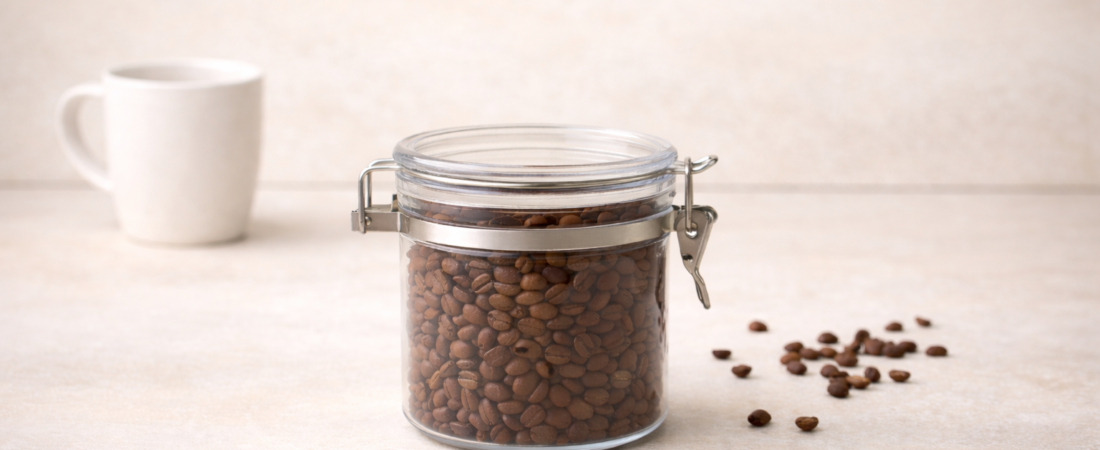
Once you start paying attention to coffee flavour — especially freshness — one question usually comes next: how should you store coffee at home using airtight coffee containers?
There are jars, tins, vacuum containers, bags with valves, and plenty of products claiming to keep coffee “fresh for months.” It can quickly feel confusing — especially if you’re trying not to overbuy gear.
Here’s the reassuring truth:
You don’t need anything complicated to store coffee well.
But using an airtight container does make a real difference, especially once you’re buying fresher beans.
This beginner guide explains how airtight coffee containers help protect flavour at home, what to look for, and what you can safely ignore.
Why coffee storage matters more than beginners expect
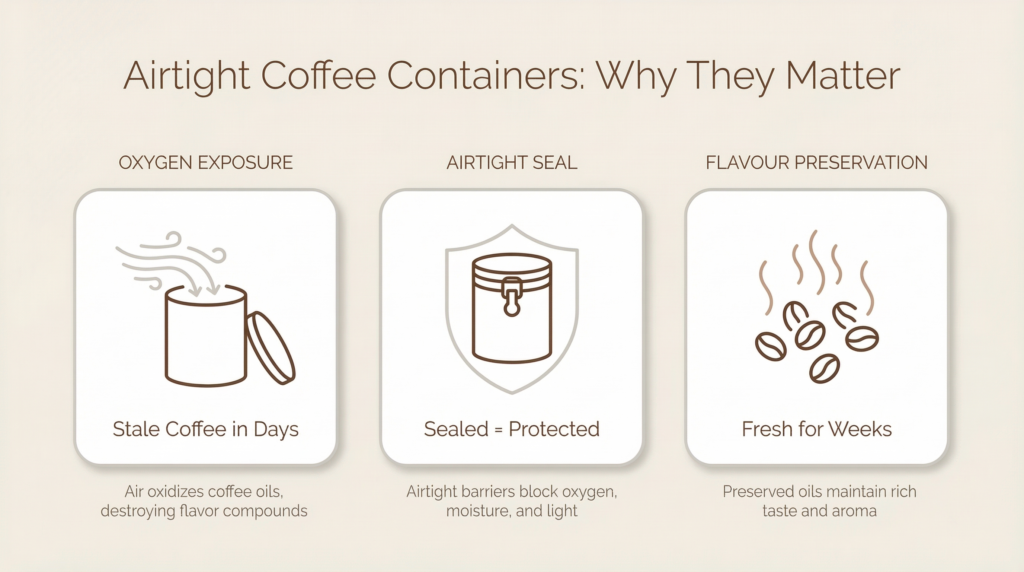
Coffee flavour comes from aromatic compounds created during roasting — and once those compounds are lost, they can’t be recovered.
Those compounds:
- Slowly escape over time
- Degrade when exposed to air
- Break down faster with light, heat, and moisture
Once coffee goes stale, no grinder or brew method can fix it.
Good storage doesn’t make coffee better — it simply helps slow down flavour loss, so the coffee you already bought tastes as good as it can for longer as explained in How to Store Coffee Beans Properly.
What makes airtight coffee containers effective?
An airtight coffee container does one main job:
It limits exposure to oxygen.
Good airtight containers usually have:
- A tight-sealing lid (often with a gasket)
- Minimal air exchange once closed
- Solid construction that doesn’t warp over time
Some containers add extra features, but airtightness is the foundation.
Without that, the rest doesn’t matter much.
Types of coffee containers (and what beginners should know)
1. Basic airtight canisters (best starting point)
These are simple containers with a tight-fitting lid and seal.
Why they work well for beginners:
- Easy to use
- Affordable
- No learning curve
- Reliable for everyday storage
They won’t remove air already inside, but they prevent constant air exposure, which is what matters most at home.
For most beginners, this is all you need.
2. Vacuum-style coffee containers
These containers remove excess air after closing, either manually or automatically.
They can help:
- Reduce oxygen exposure further
- Slow flavour loss slightly more
However:
- They cost more
- They require extra steps
- The improvement is modest for everyday home use
They’re nice to have later, but not essential when you’re starting out.
3. Original coffee bags (sometimes fine)
Many coffee bags come with:
- One-way valves
- Resealable closures
If the bag:
- Is well-made
- Reseals properly
- Is stored away from light and heat
…it can be good enough for short-term use.
That said, bags are easier to open frequently and often let in more air over time than a solid container.
Materials: what works best?
Opaque containers (preferred)
- Protect beans from light
- More forgiving for kitchen storage
- Better long-term option
Glass containers
- Easy to clean
- Let you see bean levels
- Should be kept away from direct light
Stainless steel containers
- Durable
- Light-blocking
- Often very airtight
Material matters less than the seal, but avoiding constant light exposure helps.
What beginners don’t need (yet)
Many people overbuy here.
You don’t need:
- Multiple containers for one bag of beans
- Temperature-controlled storage
- Large bulk storage systems
- Fridge or freezer storage for daily use
Those approaches are situational and often introduce more problems than they solve when you’re just brewing at home.
A simple storage setup that works
For most beginners, this setup is more than enough:
- Buy coffee in small amounts
- Store beans in one airtight container
- Keep it:
- Away from sunlight
- Away from heat
- In a dry place
That’s it.
If your coffee tastes fresher for longer, the setup is working.
How long does coffee stay fresh in an airtight container?
This depends on:
- Roast level
- Bean quality
- How often the container is opened
As a general guide:
- Coffee tastes best within a few weeks of opening
- Airtight storage helps maintain flavour during that window
- No container can keep coffee “fresh forever”
Good storage is about preserving quality, not stopping time.
Beginner buying mindset (important)
It’s easy to turn storage into another optimisation rabbit hole.
Remember:
- Fresh beans matter more than fancy containers
- Airtight matters more than features
- Simplicity beats precision early on
If your container keeps air out and fits your routine, it’s doing its job.
What’s next?
Once you’re storing coffee properly, the next improvements usually come from:
- Grinding fresh (see do you need a coffee grinder?)
- Using a repeatable brew method
- Adjusting ratios gradually
Storage supports flavour — it doesn’t replace the basics of using the right brew method.