Best beginner coffee beans for pour over don’t need to be rare or expensive to taste good — especially when brewing at home.
Choosing coffee beans for pour over can feel overwhelming when you’re just starting out. There are countless origins, roast levels, tasting notes, and brand names — and it’s not always clear what actually matters for making a good cup at home.
Many beginners get better results by choosing simple, forgiving coffees that brew consistently and taste balanced.
This guide explains what makes coffee beans beginner-friendly for pour over, what to look for on the label, and how to choose beans that are easy to work with — even if you’re still learning grind size, pouring, and ratios.
What Makes the Best Beginner Coffee Beans for Pour Over?
When you’re new to pour over, the goal isn’t complexity. It’s clarity, balance, and consistency.
Beginner-friendly pour over beans usually share these traits:
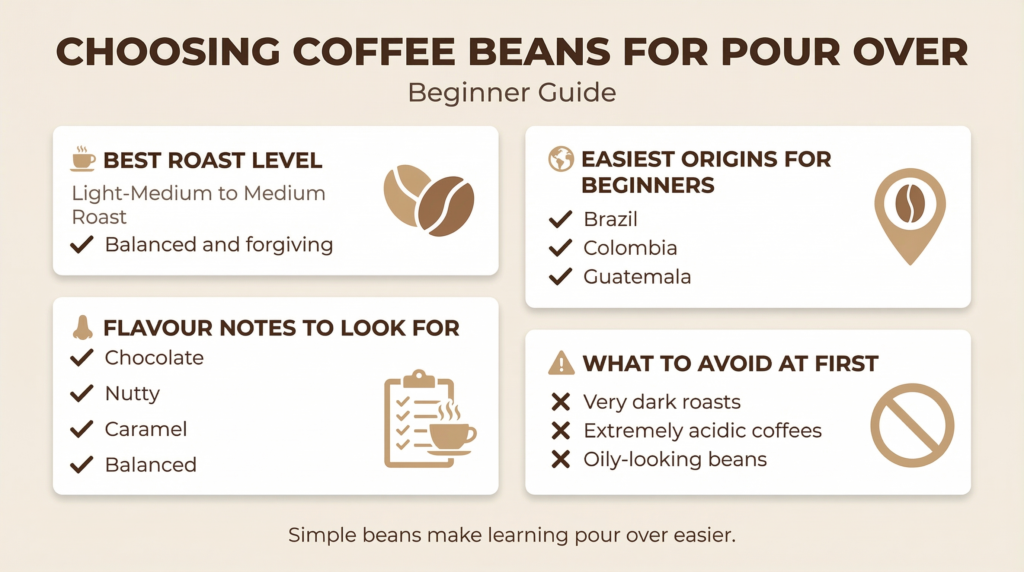
- Medium or light-medium roast
- Clean, balanced flavour
- Low bitterness and low harsh acidity
- Easy extraction with standard pour over methods
Beans that are too dark, too oily, or extremely acidic can be harder to brew well and may highlight small mistakes.
Best Roast Level for Beginner Pour Over Coffee
Light-Medium to Medium Roast (Best Starting Point)
For beginners, light-medium or medium roasts are usually the safest choice.
They tend to:
- Extract more evenly
- Taste balanced rather than sharp or bitter
- Be more forgiving of grind and pouring mistakes
Very light roasts can taste sour if under-extracted, while dark roasts can quickly become bitter in pour over.
If you’re unsure, choose medium roast — it’s the most beginner-friendly option.
Very light roasts can taste sharp or sour if they’re under-extracted, which is a common issue when learning pour over — Why Does My Coffee Taste Sour?
Best Coffee Origins for Beginner Pour Over
You don’t need to memorise regions, but some origins are easier for beginners than others.
More Forgiving Origins
These often taste smooth, balanced, and approachable:
- Brazil
- Colombia
- Guatemala
They usually produce:
- Chocolatey or nutty flavours
- Gentle acidity
- Consistent results across brews
Origins That Can Be Trickier for Beginners
These aren’t bad — just less forgiving:
- Ethiopia
- Kenya
They often taste brighter or fruitier and can turn sour if under-extracted.
If you’re new, start with Central or South American coffees.
Should Beginners Buy Single-Origin or Blends?
Both can work, but one is usually easier.
Blends (Often Easier)
Beginner-friendly blends are designed to:
- Taste balanced
- Brew consistently
- Hide small brewing mistakes
They’re a great starting point if you want reliable results.
Single-Origin (Once You’re More Comfortable)
Single-origin coffees can be excellent, but they:
- Highlight brewing technique more
- Can taste sour or flat if not brewed correctly
If choosing single-origin, stick to medium roast Colombian or Brazilian beans to start.
What to Look for on the Coffee Bag (Beginner Checklist)
When shopping for pour over beans, look for:
- Roast level: Medium or light-medium
- Flavour notes: Chocolate, nutty, caramel, balanced
- Freshness: Roasted within the last 2–4 weeks
- Whole beans: Grind just before brewing if possible
Avoid bags that:
- Don’t list a roast date
- Look very oily (usually dark roast)
- Emphasise extreme flavours if you’re just starting
Beans that are very dark or oily can quickly become harsh in pour over brewing — especially for beginners — Why Does My Coffee Taste Bitter?
How Fresh Do Coffee Beans Need to Be for Pour Over?
Freshness matters — but it doesn’t need to be stressful.
For beginners:
- Beans roasted 1–4 weeks ago are ideal
- Avoid beans older than 2–3 months
- Don’t use beans within the first few days after roasting (they may taste gassy)
Store beans in an airtight container, away from heat and light.
How Many Beans Should Beginners Buy?
Start small.
Buying smaller bags:
- Keeps beans fresher
- Lets you experiment without pressure
- Reduces waste if you don’t love the flavour
As you gain confidence, you can explore different origins and roast styles more comfortably. Using a consistent coffee-to-water ratio also helps keep results predictable when trying new beans.
Simple Beginner Pour Over Tip (That Helps Any Bean)
f your pour over tastes sour or weak, grinding slightly finer often helps.
If it tastes bitter or harsh, grinding slightly coarser usually improves balance.
Small grind size changes often matter more than changing beans — especially for beginners. If you’re unsure how grind size affects flavour, this grind size troubleshooting guide explains exactly what to adjust.
Final Thoughts: Start Simple, Then Explore
The best beginner coffee beans for pour over are:
- Medium or light-medium roast
- Balanced, not extreme
- Easy to extract and forgiving
You don’t need expensive beans or complicated flavour profiles to make good pour over coffee. Start with simple, reliable options, build confidence, and explore more adventurous coffees later.
Good pour over isn’t about chasing perfection — it’s about learning what works for you, one cup at a time.