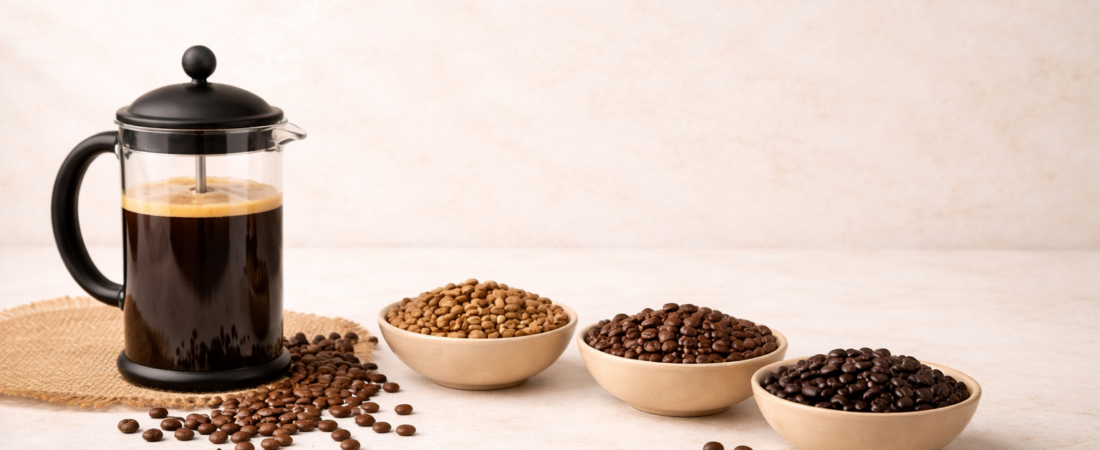
Choosing the best coffee beans for French press makes more difference than most beginners expect. The wrong beans can make your coffee taste bitter or muddy even when your method is correct — but the right ones make French press very forgiving. This guide keeps things simple: what to look for, what to avoid, and a few reliable options to start with.
This article contains affiliate links. If you buy through them, I may earn a small commission at no extra cost to you.
⭐ Best Pick for Most Beginners
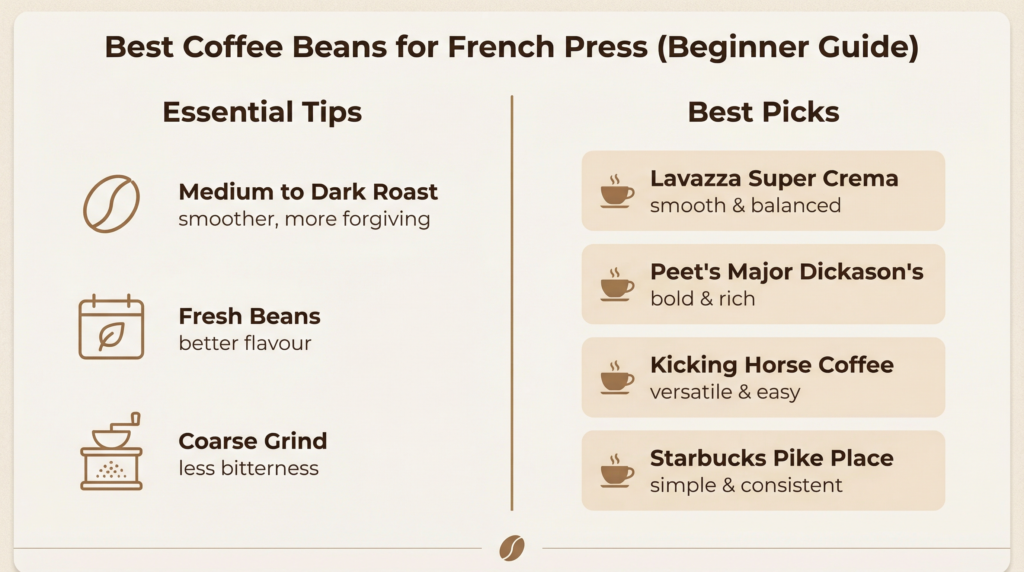
If you don’t want to overthink it, Lavazza Super Crema is the easiest place to start. It’s smooth, balanced, and very forgiving — which makes it ideal for French press, especially when you’re still figuring things out. It doesn’t turn overly bitter or harsh easily, even with small mistakes in technique.
Popular choice for beginners due to its smooth, consistent flavour.
Quick Comparison (Beginner-Friendly)
| Coffee | Roast Level | Taste Profile | Best For |
|---|---|---|---|
| Lavazza Super Crema | Medium | Smooth, balanced | Easy everyday coffee |
| Peet’s Major Dickason’s | Dark | Rich, bold | Stronger flavour |
| Kicking Horse Three Sisters | Medium | Balanced, slightly complex | Exploring flavours |
| Starbucks Pike Place | Medium | Clean, consistent | Familiar taste |
Why Coffee Beans Matter More in French Press
French press brewing works differently from methods like pour-over or drip.
Instead of filtering quickly, coffee grounds sit in water for several minutes. This extracts:
- more oils
- more body
- deeper flavours
That’s why the beans you choose have a noticeable impact on taste.
If your coffee ever tastes heavy, bitter, or muddy, it’s often not just technique — it’s how the beans interact with grind size and brew time.
If you’re curious how French press compares to other methods, this beginner guide explains the differences in a simple way: Beginner Coffee Brewing Methods Compared.
What Makes Coffee Beans “Good” for French Press?
At this stage, it helps to keep things simple. Most beginners only need to get a few things roughly right.
1. Medium to Dark Roasts Work Best
French press naturally produces a fuller-bodied cup.
Medium and dark roasts:
- complement the heavier texture
- taste smoother and rounder
- are easier to get right
Light roasts can work — but they’re less forgiving and can taste sour if not dialled in properly.
2. Freshness Matters More Than Brand
Even the “best” beans will taste flat if they’re stale.
Look for:
- a visible roast date
- beans used within a few weeks
- smaller, fresher purchases
If you’re not sure how to store beans properly, this beginner guide on how to store coffee beans explains it simply.
3. Grind Size Still Matters (A Lot)
Even great beans won’t taste right if your grind size is off — it’s just as important as the beans themselves.
For French press, you’re aiming for a coarse, even grind. This helps prevent over-extraction and keeps the flavour balanced. If your coffee tastes off, grind size is often the reason: bitter means the grind may be too fine, while weak coffee usually means the grind is too coarse.
If you’re not quite sure what a proper grind looks like, this beginner guide on coffee grind size shows you exactly what to aim for.
Best Coffee Beans for French Press (Beginner Picks)
Once you have the basics right, choosing the right beans becomes much easier.
You don’t need to test dozens of options — a few reliable choices will already give you a much better result. Of course, good beans are only part of the picture. If you’re still choosing your brewing setup, our Best French Press Under $50 for Beginners guide compares beginner-friendly options that balance price, durability, and ease of use.
Here are some beginner-friendly options, depending on the type of coffee you prefer:
🟤 1. Lavazza Super Crema (Balanced & Smooth)
A simple, reliable starting point when you want something that works without much adjustment.
It’s smooth, slightly sweet, and well-balanced, which makes it especially forgiving in a French press. This is a safe choice for beginners and anyone who prefers an easy, consistent cup.
🟤 2. Peet’s Coffee – Major Dickason’s Blend (Rich & Full-Bodied)
A solid option for a deeper, more traditional coffee profile.
It’s a darker roast with bold, full-bodied flavours. French press brings out its richness, giving you a heavier, more satisfying cup compared to lighter roasts.
👉 Check price on Amazon
👉Shop directly at Peet’s Coffee — free shipping on orders $49+
🟤 3. Kicking Horse Coffee – Three Sisters (Versatile & Beginner-Friendly)
A flexible choice that works well across different taste preferences.
It offers a balanced profile with enough depth to feel rich, while still being approachable for beginners. This makes it a good option when you want something versatile without overcomplicating things.
🟤 4. Starbucks Pike Place (Simple & Consistent)
A familiar, easy-drinking option that delivers consistent results.
It’s a medium roast with a smooth, balanced flavour that works well in a French press. This is a dependable choice when you want something straightforward without too much variation.
How to Choose Between These Beans
If you’re deciding between these options, here’s a simple way to narrow it down:
- Want something smooth and easy → Lavazza Super Crema
- Prefer stronger, bolder flavour → Peet’s Major Dickason’s on Amazon or direct at Peet’s
- Want to explore different styles → Kicking Horse
- Want something familiar and consistent → Starbucks Pike Place
If you’re just starting out, it’s better to choose something reliable and easy to brew — you can always experiment later once your technique feels consistent.
Whole Beans vs Pre-Ground (What Should You Choose?)
If possible, go for:
Whole beans are usually the better choice. Grinding at home keeps the flavour fresher and gives you much better control over grind size, which matters a lot for French press.
Pre-ground coffee can still work when convenience matters. In that case, choose a coarse grind if available and avoid espresso grind, which is typically too fine and can make your coffee taste bitter or muddy.
Pairing the right beans with the right brewer also makes a difference — this beginner guide on choosing a French press walks through what to look for.
Grinding at home also gives you more control, especially for French press. For a clearer idea of whether it’s worth it, this beginner guide on whether you need a coffee grinder explains the trade-offs.
Common Mistakes Beginners Make
Most problems beginners run into aren’t caused by the beans alone — it’s how everything interacts.
Common issues include using stale beans (which can make coffee taste flat or dull), grinding too fine (leading to bitterness or muddiness), using too much coffee (resulting in a heavy, overpowering taste), and changing multiple variables at once, which makes problems harder to diagnose.
When something tastes off, adjusting one variable at a time makes it much easier to understand what’s actually causing the issue. For example, a strong or overpowering cup often comes down to small adjustments in ratio or grind — this beginner guide on why coffee tastes too strong walks through simple fixes.
A Simple Way to Choose (Without Overthinking)
A simple starting point is a medium roast with fresh beans, while keeping everything else consistent. This alone solves most beginner problems and gives you a reliable baseline to work from.
There’s no need to find the “perfect” beans straight away. Starting with something simple and dependable makes it much easier to understand what you actually like — and you can always explore more options once your coffee already tastes good.
What’s Next?
Once you’ve chosen your beans, the next step is making sure everything else supports your brew. Grind size, timing, and technique all come together here — and small adjustments can make a bigger difference than most people expect.
To see how it all fits together in practice, this step-by-step guide on how to use a French press walks you through the full process from start to finish.