If you’re just getting into making coffee at home, a French press is one of the easiest places to start. It’s simple, affordable, and doesn’t require complicated equipment. But while the process looks straightforward, small details can make a noticeable difference. If your coffee has ever tasted too bitter, too weak, or just slightly off, it usually comes down to a few simple adjustments.
In this guide, you’ll learn how to use a French press step by step — and how to get consistently good results without overthinking it.
The short answer: To learn how to use a French press, you need coarse ground coffee, hot water, and 4 minutes. Add coffee, bloom for 30 seconds, add water, brew for 4 minutes, press slowly, and pour immediately.
☕ French Press Quick Steps (Beginner Overview)
If you’re new to French press, this visual gives you a quick overview of the full process:
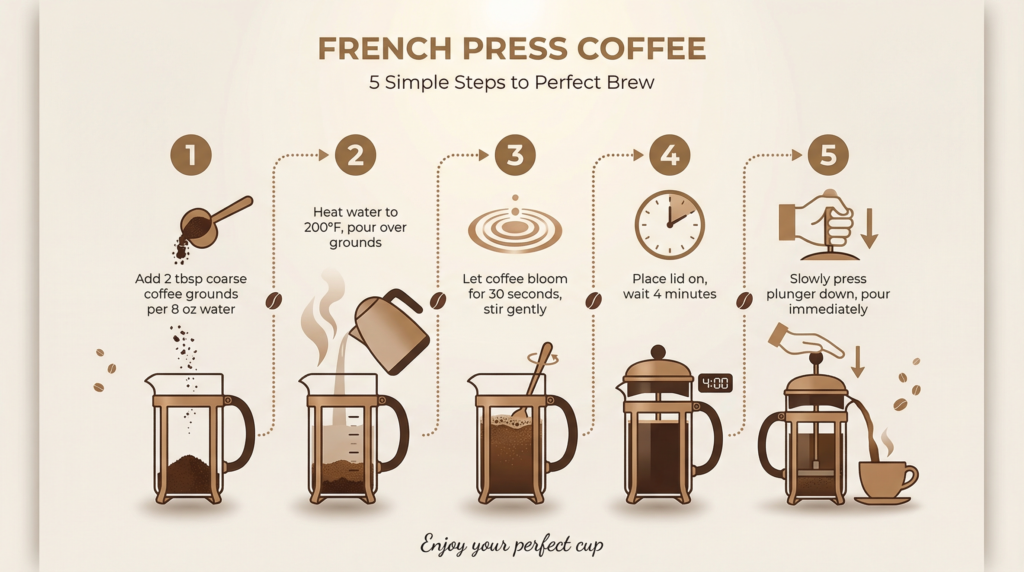
If you want something quick and easy to follow, here’s the method in a simple checklist:
- Add coarse ground coffee to the French press
- Pour a small amount of hot water and wait 30 seconds (bloom)
- Add the remaining water and stir gently
- Let it brew for 4 minutes
- Press slowly and pour immediately
That’s the simple version — below, we’ll walk through each step in more detail so you can get the best results every time.
Once you understand the basic method, having the right tools makes everything easier and more consistent.
- A beginner-friendly French press
- A burr grinder for consistent coarse grounds
- A simple coffee scale for accuracy
This article contains affiliate links. If you buy through them, I may earn a small commission at no extra cost to you.
🛠 Recommended Beginner Setup
If you’re just getting started, a few simple tools can make French press coffee much easier and more consistent:
☕ French Press (Start Here)
A reliable, beginner-friendly option:
✔ Easy to use
✔ Consistent results
✔ Great for beginners
👉 Check current price and availability
⚙️ Coffee Grinder (Big Upgrade)
If you’re using pre-ground coffee, this is one of the easiest upgrades that noticeably improves your results.
⭐ Timemore Chestnut C2 Manual Grinder
✔ Consistent coarse grind
✔ Quiet and portable
✔ Great value for beginners
👉 Check current price and availability
⚖️ Coffee Scale (Optional but Helpful)
For more consistent results over time:
✔ Improves consistency
✔ Easy to use
✔ Trusted coffee brand
👉 Check current price and availability
📏 Simple French Press Ratio (Easy Starting Point)
A good starting point for beginners:
- Coffee: 1 part
- Water: 15 parts
Example:
- 20g coffee → 300ml water
If you don’t have a scale:
- ~2 tablespoons of coffee per cup works well
Once you’re comfortable, you can adjust this slightly stronger or weaker to suit your taste. If you want to understand how ratios affect flavour, this beginner water ratio guide breaks it down clearly.
What You Need (And What Actually Matters)
You don’t need much to get started with how to use a French press, which is part of the appeal.
At a minimum, you’ll need a French press, coffee, and hot water. That alone is enough to make a decent cup. But if you want to improve your results, a grinder and a simple scale can make things much more consistent. The type of coffee you use also matters — if you’re unsure what to choose, this beginner guide to the best coffee beans for French press explains it simply.
Do You Need Expensive Equipment?
One of the most common questions beginners have is whether they need to invest in expensive coffee gear right away.
The short answer is no — knowing how to use a French press well is more important than expensive gear.
A French press is already one of the most affordable brewing methods, and you can make very good coffee with just the basics. What matters more is using the right grind size, a reasonable ratio, and fresh coffee.
That said, a couple of small upgrades can make things easier and more consistent. A simple burr grinder, for example, gives you much better control over grind size compared to pre-ground coffee. Likewise, a basic scale helps you repeat the same ratio each time, which removes a lot of guesswork.
If you’re just starting out, focus on getting the process right first. You can always upgrade later once you know what actually makes a difference.
How to Use a French Press (Step-by-Step Explained)
Start by adding your ground coffee to the French press.
Use a coarse grind (like sea salt). This helps prevent over-extraction and reduces bitterness.
Next, pour a small amount of hot water — just enough to wet all the grounds.
Let it bloom for about 30 seconds. This releases trapped gases and improves flavour.
After that, pour in the rest of the water slowly and evenly.
Give it a gentle stir to make sure everything is fully saturated.
Now comes the easiest part: waiting.
Let the coffee brew for about 4 minutes.
Once the time is up, press the plunger down slowly and steadily.
Don’t force it — if it feels too hard, your grind is likely too fine.
Finally, pour your coffee immediately.
Avoid letting it sit in the press, as it will continue extracting and can turn bitter.
How to Adjust the Taste to Your Preference
Once you’ve got the basic method down, the next step is learning how to tweak it to suit your taste. If your coffee tastes too strong, try using slightly less coffee or adding a bit more water. If it tastes too weak, increase the amount of coffee instead. Small changes like this are usually all you need to dial things in.
Grind size also makes a noticeable difference. A slightly finer grind will extract more and create a stronger, fuller cup, while a coarser grind will give you a lighter, smoother result. The key is to adjust one thing at a time. This makes it easier to understand what’s actually improving (or worsening) the flavour. You don’t need to make big changes. In most cases, small tweaks are enough — and with a bit of practice, you’ll quickly get a feel for what works best for you.
How Long Should You Leave Coffee in a French Press?
A common mistake beginners make is leaving coffee sitting in the French press after brewing. Even after you press the plunger down, the coffee continues to extract if it stays in contact with the grounds. This often leads to a bitter or over-extracted taste, especially if left for too long.
If you’re making more than one cup, it’s a good idea to pour the coffee into another container once it’s ready. This helps preserve the flavour and keeps your coffee tasting balanced.
French Press Troubleshooting (Common Problems and Fixes)
Even when you know how to use a French press correctly, small details can affect the taste. If something feels “off,” it usually comes down to one of these common issues:
Coffee tastes too bitter
This is usually caused by over-extraction. Try using a coarser grind or reducing your brew time slightly. Pressing too slowly or leaving coffee sitting in the press can also make it taste harsher.
Coffee tastes too weak or watery
This often means under-extraction. Try adding a bit more coffee or using a slightly finer grind. Make sure all the grounds are fully saturated during brewing.
Coffee tastes gritty or muddy
This usually happens when the grind is too fine. A coarse grind (similar to sea salt) helps reduce sediment and gives a cleaner cup.
Coffee tastes flat or dull
This is often due to stale coffee beans. Fresher beans can make a noticeable difference, even with the same brewing method.
Most of the time, you only need to adjust one variable at a time — grind size, coffee amount, or brew time. Small changes are usually enough to improve your results.
Is a French Press Worth It for Beginners?
For many people, learning how to use a French press is one of the best ways to start making coffee at home.
It’s simple, doesn’t require electricity, and gives you full control over how your coffee tastes. Compared to more technical brewing methods, it’s much more forgiving — which makes it ideal if you’re still learning. Once you know how to use a French press well, it becomes one of the most reliable methods in your coffee routine.
The main trade-off is that French press coffee tends to have more body and a slightly heavier texture compared to filtered methods like pour over. Some people enjoy this richness, while others prefer a cleaner cup.
If you’re unsure, starting with a French press is a low-risk way to learn the basics without investing heavily in equipment.
Choosing a French Press (Beginner-Friendly Picks)
If you’re still choosing a French press, it’s worth picking one that’s easy to use and durable — especially if you’re just starting out. A good French press doesn’t need to be expensive, but build quality and filtration can make a difference in daily use.
A classic option like the Bodum Chambord is widely recommended for beginners because it’s simple, reliable, and easy to use. The glass carafe lets you see the brewing process, and it produces a full-bodied cup with minimal effort — making it a great starting point if you’re new to French press coffee.
If you prefer something more durable, a stainless steel option like the Secura French Press is worth considering. It retains heat better (so your coffee stays warmer for longer) and is much less fragile than glass — especially useful if you’re making coffee daily or want something more long-lasting.
And if you’re looking for a cleaner cup with less sediment, the Espro P3 takes things a step further with its double-filter system. It reduces grit in your coffee while still keeping the rich flavour that French press is known for — a nice upgrade if you’re particular about texture.
If you want to compare these options in more detail, you can check out this guide to the best French presses for beginners. If you’re deciding between materials, see our Glass vs Stainless Steel French Press comparison guide.
Final Thoughts
Knowing how to use a French press is one of the simplest skills you can learn for making great coffee at home — which is why so many beginners start here. Once you understand the basics — grind size, ratio, and timing — the process becomes easy to repeat. You don’t need perfect technique, just a simple routine that works for you.
Focus on consistency, make small adjustments, and pay attention to how your coffee tastes. Over time, you’ll naturally find what works best. A simple setup, a few small tweaks, and a bit of practice are more than enough to make consistently good coffee at home.
If you have a question about your French press technique or something doesn’t taste right, leave a comment below — I’m happy to help you work it out.