
Why is my coffee too strong? If your coffee tastes too strong, you haven’t done anything wrong.
Strong coffee is a very common issue for beginners, especially when adjusting recipes, grind size, or brew time. In most cases, coffee tastes too strong not because of bad beans or equipment — but because too much flavour is being extracted during brewing. If you’re unsure how grind size affects strength and bitterness, this grind size troubleshooting guide explains it step by step.
In the United States, this often happens with drip machines and pre-ground coffee, which can extract more aggressively than expected.
The good news is that strong coffee is usually easy to fix with one or two small adjustments. For beginners, “too strong” usually means the coffee feels overpowering rather than enjoyable — not that it’s high quality or well-balanced. The fix is almost never buying new gear. It’s about small brewing adjustments that reduce over-extraction while keeping flavour.
What “Too Strong” Coffee Actually Tastes Like
Coffee that’s too strong is often described as:
- harsh or overpowering
- heavy or intense
- bitter or burnt
- drying on the tongue
- unpleasantly sharp rather than balanced
Strong coffee often leaves a lingering aftertaste that doesn’t fade quickly.
It’s important to note that strong doesn’t always mean bitter, but the two are closely related and often happen together.
In simple terms, coffee that tastes too strong is usually over-extracted or too concentrated.
Why Is My Coffee Too Strong? Common Causes Explained
Most strong coffee problems come down to extraction, concentration, or both.
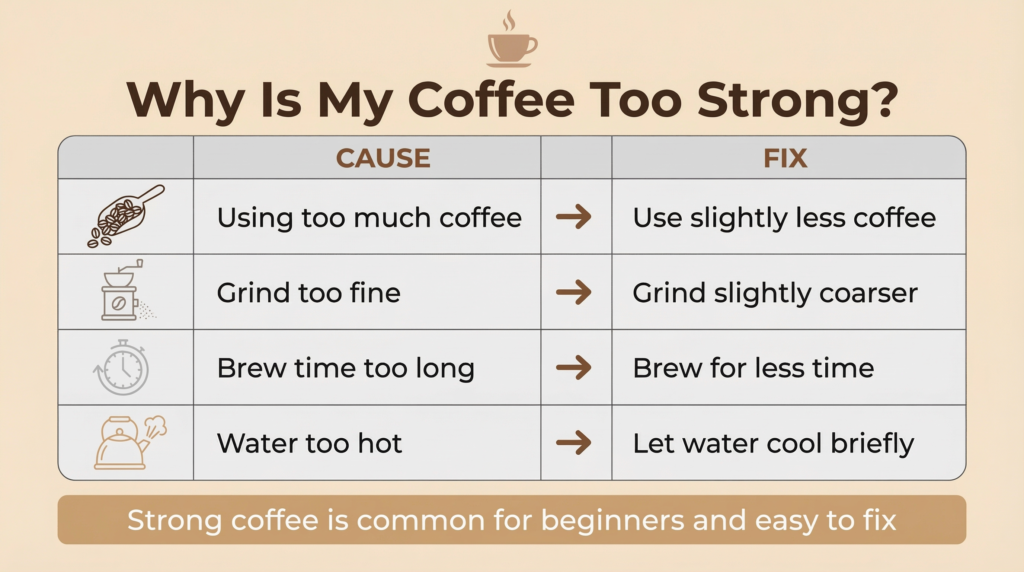
Here’s a breakdown of the most common reasons coffee tastes too strong — and how to fix each one.
1. Using Too Much Coffee (Most Common Cause)
One of the most common reasons coffee tastes too strong is simply using too much coffee for the amount of water. This often happens when measurements are eyeballed instead of using a consistent coffee-to-water ratio. This is often tied to buying and using more coffee than necessary, which is covered in this guide on how much coffee you should buy at a time.
When that ratio is too high, the result is an intense, overpowering cup — even if everything else is done correctly.
This often happens when:
- eyeballing measurements instead of using a ratio
- adding extra coffee to “make it stronger”
- using scoops that are larger than expected
How to fix it:
Try using slightly less coffee, or increase the amount of water. Small adjustments to the ratio can dramatically improve balance.
2. Grind Size Is Too Fine
Grinding coffee too fine slows the flow of water and increases contact time. This pulls out more flavour compounds — including bitter ones.
A grind that’s too fine often leads to coffee that tastes both strong and bitter.
This is especially common with:
- pour-over brewing
- espresso-fine grinds used for filter coffee
- over-correcting after sour or weak coffee
Having a grinder that lets you make small, consistent adjustments makes this much easier to fix. If you want a broader overview of beginner-friendly grinder options for filter coffee, this guide to best coffee grinders for beginners explains what actually matters without overcomplicating things.
If budget is your main concern, you can also see this guide to coffee grinders under $150.
How to fix it:
Try grinding slightly coarser and taste the difference. Make small changes rather than large jumps.
3. Brew Time Is Too Long
If coffee stays in contact with water for too long, extraction continues past the sweet and balanced stage.
This can happen with:
- French press coffee steeped too long
- pour-over brews that drip very slowly
- immersion methods forgotten or left unattended
When extraction goes too far, coffee becomes harsh and overwhelming.
How to fix it:
Reduce brew time slightly, or adjust grind size to control flow rather than changing everything at once.
4. Water Temperature Is Too Hot
Water that’s too hot extracts flavour very aggressively, especially from darker roasts.
This can push a brew from bold into unpleasantly strong.
How to fix it:
Avoid pouring water immediately after a rolling boil, especially for darker roasts. Let the kettle cool briefly before brewing.
A Quick Checklist to Fix Strong Coffee
If your coffee tastes too strong, try this simple checklist:
- Use slightly less coffee
- Grind a little coarser
- Reduce brew time
- Let water cool briefly after boiling
- Change one thing at a time
Small, controlled adjustments make it much easier to find balance.
Strong vs Weak vs Sour: A Quick Clarification
These three flavours are often confused:
- Weak coffee → too diluted or under-extracted
- Sour coffee → under-extracted (sharp, acidic)
- Strong coffee → too concentrated or over-extracted
If your coffee tastes thin or watery rather than intense, you may be dealing with weak coffee instead.
If your coffee tastes sharp or lemony rather than heavy, sour coffee is more likely.
If your coffee tastes harsh, burnt, or drying on the tongue, bitterness is likely the issue.
Understanding these differences makes troubleshooting much easier.
The Reassuring Truth for Beginners
Almost everyone brews coffee that’s too strong at some point — especially when experimenting with ratios or grind size.
Strong coffee isn’t a mistake. It’s feedback.
Once you recognise it, you’ll start making better adjustments quickly, and your coffee will become smoother and more balanced with each brew.
Good coffee doesn’t come from getting everything perfect — it comes from learning how small changes affect flavour.