Why does my coffee taste sour? If your coffee tastes sour, you haven’t done anything wrong.
Sour coffee is a very common issue for beginners, especially when learning new brewing methods or trying lighter-roast beans. In most cases, sourness isn’t caused by bad coffee — it’s caused by a small brewing detail that’s easy to adjust.
If your coffee tastes harsh or burnt rather than sharp, you may be dealing with bitterness — we explain that here → Why Does My Coffee Taste Bitter?
Once you understand what causes sour coffee, it usually only takes one or two simple changes to improve the flavour.
What “Sour” Coffee Actually Tastes Like
Sour coffee is often described as:
- sharp or acidic
- lemony or citrus-like
- thin or hollow
- unpleasantly tart rather than rich
It’s different from bitterness. Sour coffee doesn’t usually linger heavily on the tongue — instead, it feels sharp and underdeveloped.
In simple terms, sour coffee usually means the coffee has been under-extracted. If this is new to you, extraction is simply how much flavour is pulled out during brewing — under-extraction causes sourness, while over-extraction causes bitterness.
Why Does My Coffee Taste Sour? Common Causes Explained
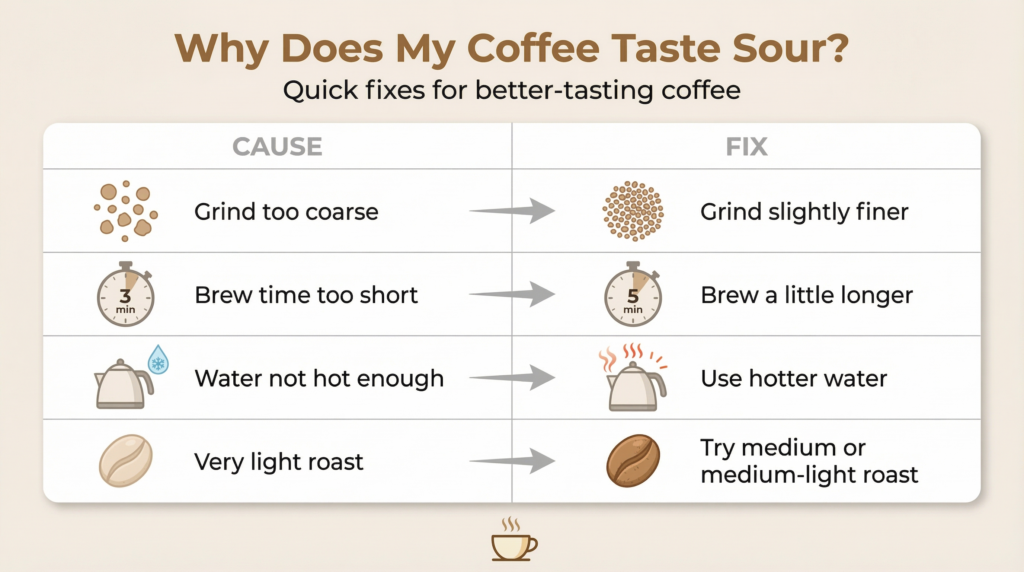
Here’s a quick visual summary of the most common causes of sour coffee and how to fix them.
1. The Grind Size Is Too Coarse (Most Common Cause)
Grinding coffee too coarse is one of the most common reasons beginners end up with sour coffee. If you’re unsure what “too coarse” actually looks like, we break this down visually in our beginner grind size guide.
When coffee grounds are too large, water passes through them too quickly. This prevents enough flavour from being extracted, leaving the coffee tasting sharp and incomplete.
This often happens when:
- grinding very coarsely to avoid bitterness
- using pre-ground coffee that’s too coarse for the brew method
- adjusting grind size too far in one direction
Having a grinder that allows small, repeatable adjustments makes this much easier to fix. If you want a calm overview of beginner-friendly options, here’s a guide to coffee grinders under $150.
How to fix it:
Try grinding slightly finer and see how the flavour changes. Small adjustments often make a big difference.
2. Brew Time Is Too Short
If coffee doesn’t stay in contact with water long enough, it can’t fully extract its flavours.
This can happen with:
- pour-over brews poured too quickly
- French press coffee steeped for too short a time
- fast-flowing drip machines combined with coarse grinds
When extraction stops too early, the coffee tastes sour rather than balanced — often because of an incorrect coffee water ratio.
Different brew methods need different contact times — especially immersion methods like French press.
How to fix it:
Slightly increase brew time, or adjust grind size instead of changing everything at once.
3. Water Temperature Is Too Low
Water that isn’t hot enough struggles to extract flavour properly.
This is especially noticeable with lighter roasts, which require more heat to bring out sweetness and balance. It often happens when water is left to cool too long after boiling.
How to fix it:
Make sure your water is hot enough when brewing. Avoid letting the kettle sit for too long before pouring.
4. The Roast Is Very Light
Light-roast coffees naturally have brighter, more acidic flavours. When under-extracted, that brightness can easily tip into sourness.
Beginners sometimes mistake this for a brewing failure, when it’s actually a combination of roast style and extraction.
How to fix it:
If sourness bothers you, try a medium or medium-light roast while learning. These tend to be more forgiving and easier to balance.
A Quick Checklist to Fix Sour Coffee
If your coffee tastes sour, try this simple checklist:
- Grind slightly finer
- Allow coffee to brew a little longer
- Make sure water is hot enough
- Try a medium or medium-light roast
- Change one thing at a time, not everything at once
Small, controlled changes help you understand what improves the flavour.
Sour vs Bitter: A Quick Clarification
Sour and bitter coffee are opposites:
- Sour coffee → under-extracted
- Bitter coffee → over-extracted
If your coffee tastes harsh, burnt, or heavy rather than sharp or thin, you may be dealing with bitterness instead.
Understanding the difference makes troubleshooting much easier.
The Reassuring Truth for Beginners
Almost everyone brews sour coffee at some point — especially when experimenting with grind size or lighter roasts.
Sourness isn’t a failure. It’s feedback.
Once you recognise it, you’ll start making better adjustments quickly, and your coffee will become more balanced with each brew.
Good coffee doesn’t come from getting everything perfect — it comes from learning how small changes affect flavour.