Single origin vs blend can be confusing if you’re new to specialty coffee and wondering which one you should actually buy.
The good news is that neither is better or worse — they simply serve different purposes.
This beginner-friendly guide explains the difference between single origin coffee and blends in clear, simple terms so you can choose confidently based on how you drink your coffee.
What Does “Single Origin” Mean? (Beginner Explanation)
Single origin coffee comes from one specific place rather than a mix of different coffees.
That place could be:
- one country
- one region
- or even one farm
Because all the beans come from the same origin, the coffee tends to reflect where it was grown — including the climate, soil, and growing conditions.
This is why single origin coffees are often described as more expressive or unique. You’re tasting the character of one place, rather than a blend designed to taste the same every time.
Flavour Profile
Single origin coffees often taste:
- brighter and clearer
- fruity or floral flavours
- more complex or distinctive
The flavours can also change slightly depending on the season or harvest.
That variation is part of what many people enjoy — each bag can feel a little different.
Best For
Single origin coffee is often a good choice if you:
- drink coffee black
- enjoy pour-over or filter brewing
- are curious to explore how coffee can taste different from one origin to another
Beginner Watch-Out
Single origin coffee can sometimes:
- taste sour if under-extracted
- taste noticeably different from bag to bag, especially across different roast levels.
- feel less consistent than blends
This doesn’t mean it’s bad coffee.
It simply means single origin rewards reasonable brewing and small adjustments, rather than aiming for the same flavour every single time.
If you enjoy variety and learning by taste, this can be part of the fun.
What Is a Coffee Blend? (Beginner Explanation)
A coffee blend is made by combining beans from multiple origins into one coffee.
Roasters create blends on purpose — not to hide quality — but to achieve:
- balance
- consistency
- a reliable flavour profile
Because blends are designed to taste similar from bag to bag, they’re very common in cafés, especially for espresso and milk-based drinks.
Flavour Profile
Blends often taste:
- smooth and balanced
- chocolatey or nutty
- familiar and comforting
They’re built to work well across different brew methods, which makes them easy to enjoy without much adjustment.
Best For
Blends are often a good choice if you:
- drink milk coffees (lattes, cappuccinos)
- make espresso or espresso-style drinks
- want easy, everyday coffee that tastes good consistently
Beginner Watch-Out
Blends can sometimes:
- feel less distinctive than single origin coffees
- depend heavily on the roaster’s quality and recipe
This doesn’t make blends inferior.
A well-made blend can be excellent specialty coffee — just designed for comfort, balance, and consistency rather than showcasing one specific origin.
For many beginners, blends are the easiest and most forgiving place to start.
Quick Beginner Shortcut
If you’re unsure which to choose:
- Want consistency every morning? → Blend
- Drink coffee black? → Single origin
- Drink milk coffee? → Blend
- New to specialty coffee? → Start with a blend, then explore single origin
There’s no wrong choice — just what suits you best right now.
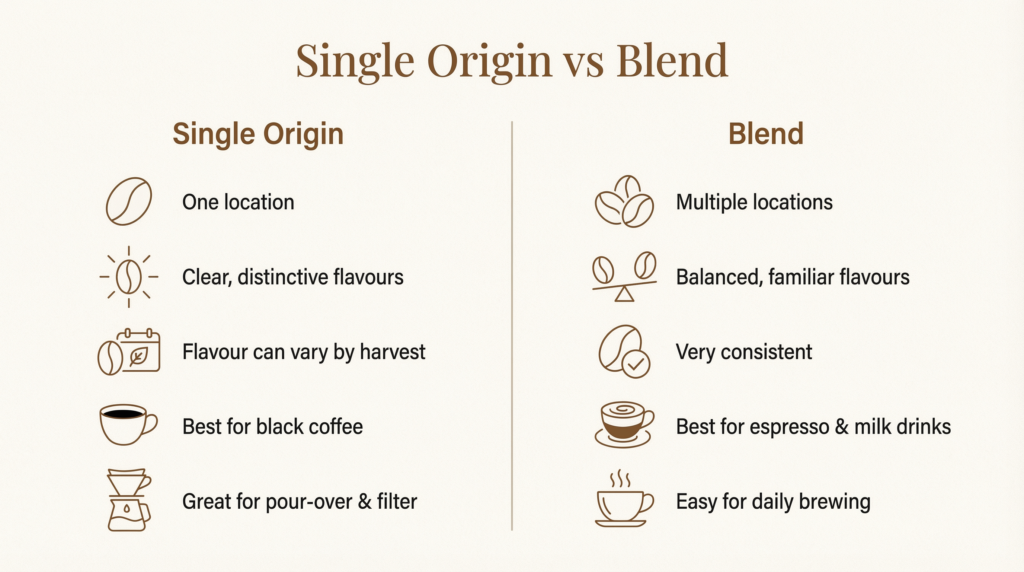
Single Origin vs Blend — At a Glance
This quick comparison shows how single origin and blends differ in flavour, consistency, and best use.
Which Should Beginners Choose?
For most beginners, starting with a blend is the easiest option.
Blends are forgiving, reliable, and work well with different brew methods.
Once you’re comfortable:
- trying a single origin is a great way to explore flavour
- you’ll notice differences more clearly
- brewing becomes more enjoyable
Many people enjoy both — blends for everyday drinking, single origin for slower, more intentional brews.
Did You Know?
Most cafés use blends for espresso because they’re easier to dial in and stay consistent day after day — especially with milk.
That’s not a compromise; it’s a practical choice.
Key Takeaway (Super Simple)
- Single origin = clarity, character, exploration
- Blend = balance, consistency, ease
If you’re just starting out, begin with a blend and explore single origin when you’re ready. Both have a place in making great coffee at home.
Beginner FAQs
Is single origin coffee better quality?
Not necessarily. Both single origin and blends can be high-quality specialty coffee. It depends on sourcing and roasting.
Are blends cheaper than single origin?
Sometimes, but not always. Pricing depends on bean quality and availability.
Can blends still be specialty coffee?
Absolutely. Many specialty roasters are known for their blends.
Why do blends taste more “familiar”?
They’re designed to be balanced and approachable, which many people prefer.
➡️ Next Beginner Guide
Coming next: How to Read a Coffee Bag Label (Beginner Guide)