Why Grinder Noise Matters More Than People Expect
If you live in an apartment, quiet coffee grinders for apartments matter more than most people expect — especially during early mornings.
Many beginners discover this after buying their first grinder: freshly ground coffee tastes better, but the grinder is louder than expected, particularly with shared walls, sleeping partners, or early routines.
Grinder noise is just one part of apartment-friendly coffee gear — this guide to Best Coffee Gear for Small Apartments shows how grinder choice fits alongside compact brewers, quiet kettles, and easy-to-store setups.
The good news is that quiet coffee grinders do exist, and you don’t need to sacrifice quality or spend excessively to find one.
This guide explains:
- Why some grinders are loud
- Which grinder types are naturally quieter
- How to choose a grinder that fits apartment living
What “Quiet” Actually Means for Coffee Grinders
“Quiet” doesn’t mean silent. Even the quietest coffee grinders make some noise.
For apartment living, the goal is reducing sharp, high-pitched sound — not eliminating noise completely. A grinder that produces a softer, lower-frequency sound is far less disruptive than one that screams through thin walls.
A quiet coffee grinder for apartments should feel manageable, not jarring.
Why Coffee Grinders Are Loud
A simple visual breakdown of what affects coffee grinder noise in apartments.
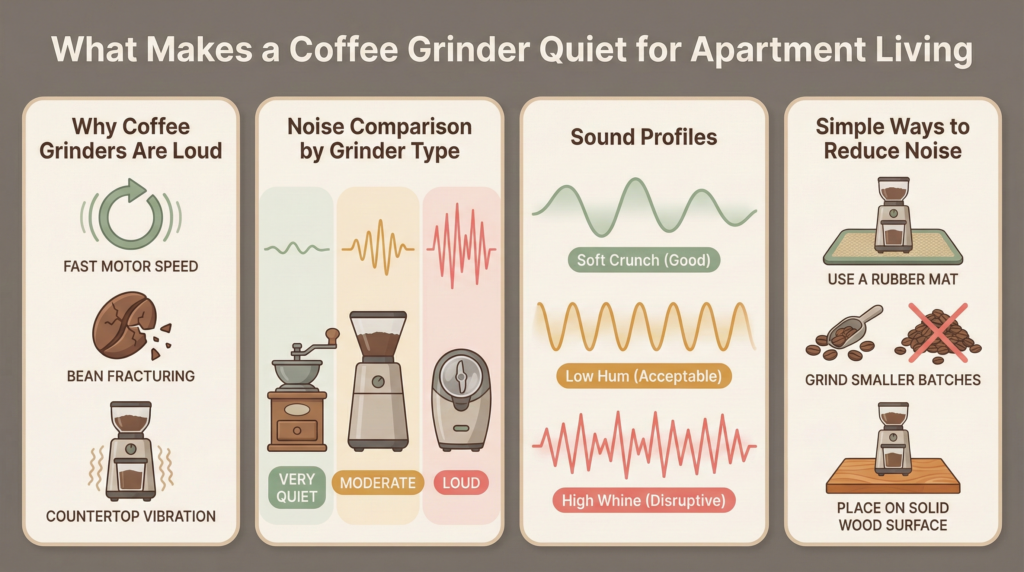
Grinder noise usually comes from three sources:
- Motor speed
- Bean cracking
- Vibration against hard surfaces
At beginner price points, you can’t eliminate noise entirely — but you can reduce it significantly with the right design.
The Quietest Option for Apartments: Manual Burr Grinders
Manual grinders are naturally quiet because:
- There’s no motor
- Beans are crushed gradually
- Vibration is minimal
The sound is closer to a soft crunch than a loud whine.
They’re ideal if you:
- Brew one or two cups at a time
- Grind early or late
- Want control without noise
Example option:
A compact manual burr grinder like the Timemore Chestnut series is commonly used in apartments for its quiet, hand-powered operation. → See details
If you want the quietest possible option, this guide to best manual coffee grinders for beginners explains which models are easiest to use and most suitable for daily apartment brewing.
Are Electric Grinders Ever Apartment-Friendly?
Some electric grinders are noticeably quieter than others — particularly:
- Lower-RPM burr grinders
- Models with enclosed housings
- Grinders designed for home use rather than cafés
They won’t be silent, but they’re far less disruptive than blade grinders.
Example option:
Home-focused electric burr grinders such as the OXO Brew Conical Burr Grinder are often chosen for apartment use due to their enclosed design and lower, steadier noise profile. → View product
If you prefer electric grinding, this guide to best electric coffee grinders for beginners explains which home-use models tend to be quieter and easier to live with.
Burr vs Blade: Noise Comparison
Blade grinders tend to produce:
- High-pitched, sharp noise
- Sudden bursts of sound
Burr grinders tend to produce:
- Lower-frequency sound
- More controlled grinding
- Less startling noise
If you’re still deciding whether the upgrade matters, this burr vs blade coffee grinder comparison explains the differences in sound, consistency, and everyday usability in more detail.
For apartment living, burr grinders are almost always the better choice.
What Actually Makes a Grinder Apartment-Friendly
When choosing a quieter grinder, look for:
- A solid base (less vibration)
- Burr mechanism
- Slower grind speed
- Compact footprint
Avoid grinders marketed as:
- “Ultra-fast”
- “High-power”
- “Commercial-grade”
These are usually louder.
If you’re choosing between hand-powered and electric options, this manual vs electric coffee grinder guide for beginners explains which type tends to work better in apartment settings.
Realistic Noise Expectations
No coffee grinder is completely silent.
A realistic goal is choosing a grinder that:
- Doesn’t wake sleeping partners
- Doesn’t echo through thin walls
- Doesn’t feel disruptive in the morning
Manual grinders usually produce a soft crunch, while quieter electric burr grinders produce a low, steady hum rather than a sharp whine.
Small Changes That Make Any Grinder Quieter
Even with the right grinder, a few small habits can reduce noise further:
- Grind on a rubber mat or folded towel
- Avoid hollow countertops
- Grind smaller batches
- Keep the grinder clean
These changes cost nothing and often make a noticeable difference.
If your coffee still tastes off after reducing noise and vibration, this grind size troubleshooting guide can help identify whether grind size is the real issue.
Is a Quiet Grinder Worth Prioritising?
For apartment living, many beginners say yes — even over speed.
A quieter grinder:
- Makes early routines more enjoyable
- Reduces stress at home
- Encourages grinding fresh more often
That alone can improve your coffee experience more than minor performance gains.
For a simple, low-stress home setup, this beginner coffee setup checklist shows how grinder choice fits into an overall brewing routine.
Who Quiet Grinders Matter Most For
Quiet grinders are especially helpful if you:
- Brew early in the morning
- Share walls or living space
- Have sleeping children or partners
- Work irregular hours
If noise isn’t an issue, convenience may matter more — and that’s fine too.
Budget Considerations
Many apartment-friendly grinders also fall into the budget category — this guide to coffee grinders under $100 focuses on beginner-friendly options that balance lower noise with everyday usability.
Final Takeaway
Apartment-friendly coffee setups aren’t about sacrificing quality.
They’re about choosing:
- Tools that fit your space
- Routines that feel sustainable
- Gear that supports daily life
A quieter grinder often makes better coffee simply by making it easier to brew consistently.