If you’re deciding between pour-over vs French press, the differences are simpler than they first appear.
Pour-over is often described as “clean” and precise.
French press is known for being rich and forgiving.
And suddenly it feels like picking the wrong one could ruin your coffee before you even start.
The truth is much simpler — and far less stressful.
This guide explains the real differences between pour-over and French press, how each one tastes, and which option makes more sense for beginners — without pressure, jargon, or unnecessary gear.
Pour-Over vs French Press – The Key Difference
The biggest difference between pour-over and French press is how the coffee is filtered.
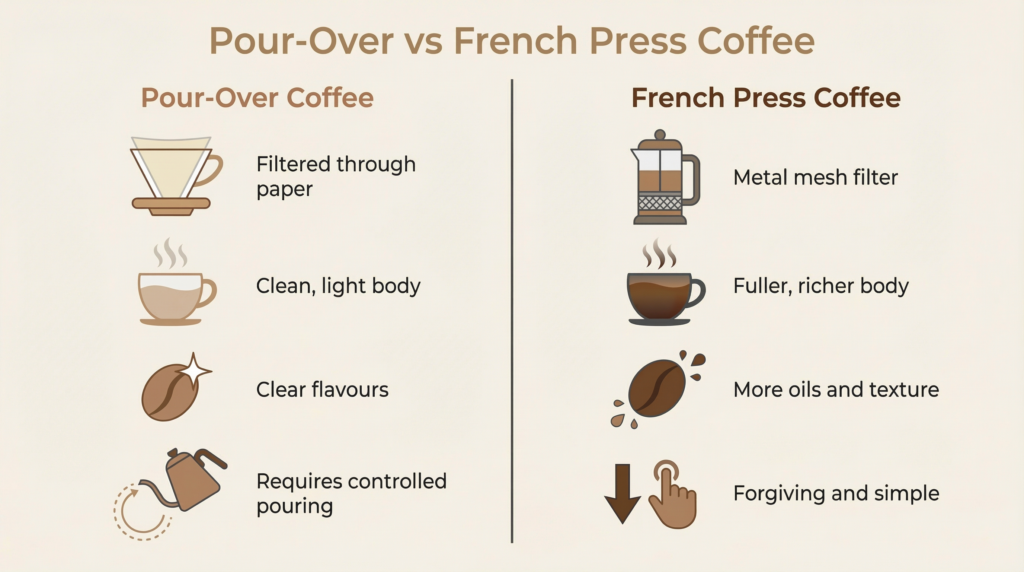
Pour-over uses a paper or metal filter that removes most oils and fine particles.
French press uses a metal mesh filter that allows oils and fine particles to remain in the cup.
In simple terms, filtering affects how much coffee oil and texture end up in your drink.
This is why pour-over tastes cleaner and lighter, while French press tastes heavier and richer.
Neither is “better” — they’re just different experiences.
Pour-Over Coffee (What Beginners Should Know)
Pour-over coffee is brewed by slowly pouring hot water over ground coffee in a filter. The water flows through the coffee and drips into a cup or carafe below.
What pour-over tastes like
Pour-over coffee tends to taste:
- clean and clear
- lighter-bodied
- more detailed in flavour
Many people enjoy pour-over because it highlights subtle flavours in the coffee.
Ease of use for beginners
Pour-over rewards consistency and attention — but it also makes mistakes more noticeable.
Small changes in grind size, pouring speed, or water amount can noticeably change the flavour from cup to cup. This doesn’t mean pour-over is “hard,” but it does require a bit more focus.
Who pour-over is best for
Pour-over is a good choice if you:
- enjoy a lighter, cleaner cup
- like following a simple process
- don’t mind slowing down a little
It’s ideal for people who enjoy the ritual of making coffee.
French Press Coffee (What Beginners Should Know)
French press coffee is brewed by steeping coffee grounds directly in hot water, then pressing a plunger to separate the grounds from the liquid.
What French press tastes like
French press coffee tends to taste:
- fuller and heavier
- richer in texture
- slightly more intense
Because the oils remain in the cup, the coffee often feels more robust.
Ease of use for beginners
French press is more forgiving of small mistakes.
If your timing is slightly off or your pour isn’t perfect, French press usually still tastes good. This makes it especially confidence-building for beginners.
Using a coarse grind is especially important for good French press results, as finer grinds can slip through the filter and make the coffee taste muddy.
If you’re unsure what a coarse grind looks like, this simple grind size chart for beginners makes it easy to compare.
Who French press is best for
French press is a good choice if you:
- want a fuller-bodied coffee
- prefer simplicity
- don’t want to worry about pouring technique
Many beginners start with French press to build confidence, then explore pour-over later.
Ease of Use: A Quick Comparison
Both methods are beginner-friendly — just in different ways.
- Pour-over rewards consistency and practice
- French press prioritises simplicity and forgiveness
Many beginners feel more relaxed starting with French press, then experimenting with pour-over once they’re comfortable.
Gear Requirements (What You Actually Need)
Neither method requires expensive equipment. If you want a clearer picture of what actually improves flavour (and what doesn’t), this coffee gear basics guide for beginners explains it simply.
Pour-over basics:
- pour-over dripper
- paper filters
- kettle
- grinder (helpful but not mandatory at first)
French press basics:
- French press
- kettle
- grinder (helpful but not mandatory at first)
Pre-ground coffee can work temporarily, but freshly ground coffee gives better flavour once you’re ready.
A Common Beginner Scenario
Many beginners buy good coffee and even decent equipment, but still feel disappointed by the result.
In most cases, the issue isn’t the brew method. It’s usually something simpler — grind size, freshness, or changing too many variables at once.
If your coffee tastes bitter, sour, or muddy, Grind Size Troubleshooting is a good place to start.
It’s usually something simpler:
- coffee isn’t fresh
- grind size doesn’t match the method
- too many things were changed at once
This is why choosing one method and learning it calmly works better than switching gear early.
So… Which Should You Choose?
Here’s a simple way to decide:
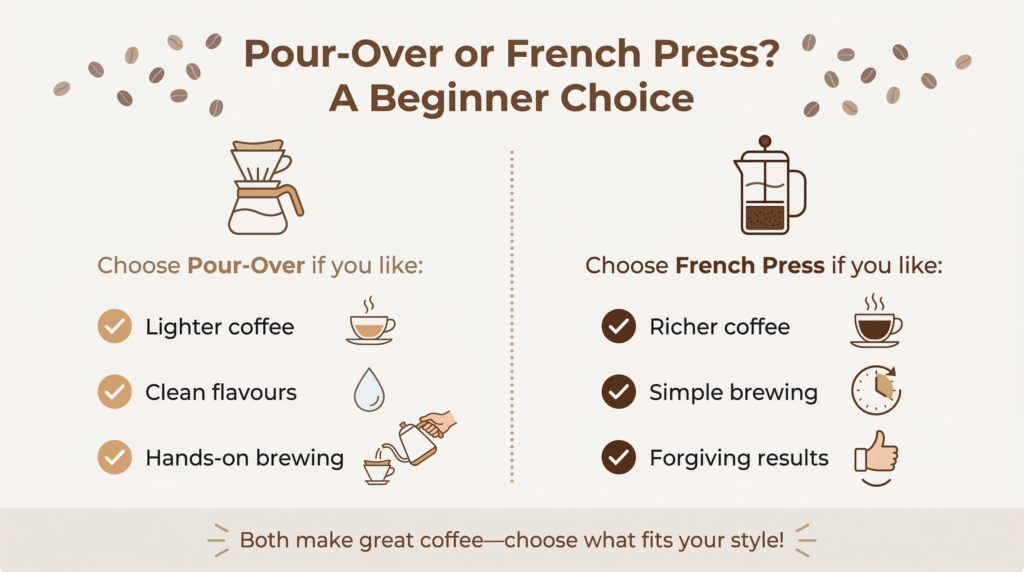
Choose pour-over if:
- you like lighter, cleaner coffee
- you enjoy a hands-on process
- you’re happy to learn a simple routine
Choose French press if:
- you like richer, fuller coffee
- you want something forgiving
- you prefer the simplest possible setup
The best choice is the one that fits your mornings — not the one that looks most impressive online.
No matter which method you choose, using a consistent grind matters. If you’re new to grinders, this guide explains the difference between blade and burr grinders and why grind consistency affects flavour.
Beginner FAQ
Is one method “better” than the other?
No. They’re just different styles of coffee.
Can I try both eventually?
Absolutely. Many people enjoy both for different moods.
Do I need a grinder to start?
Not immediately. But a grinder becomes important once you want more control over flavour.
What’s Next?
Now that you understand the difference between pour-over and French press, the next question most beginners ask is:
Which pieces of coffee gear actually make a noticeable difference to flavour — and which ones don’t?
Read next: What Gear Actually Improves Flavour (Ranked for Beginners)
This guide breaks down which tools genuinely improve taste for beginners, which upgrades can wait, and how to prioritise your spending without overcomplicating your setup.