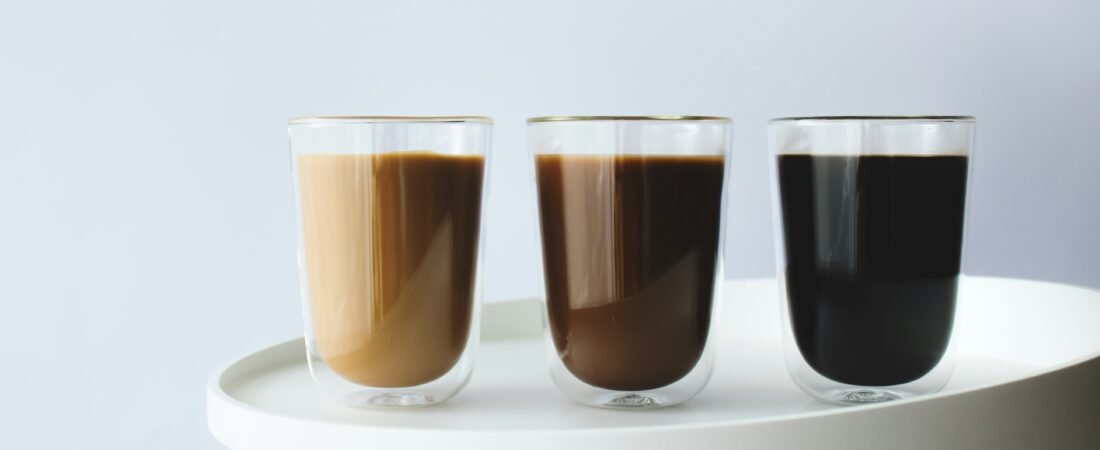
If you’re new to specialty coffee, one of the fastest ways to improve your home brews is understanding roast level. Light vs medium vs dark roasts taste very different and choosing the right one can instantly make your coffee smoother, sweeter, or more enjoyable.
This beginner-friendly guide explains each roast level in simple terms so you can confidently choose the one that matches your taste and brew method.
What “Roast Level” Actually Means (Beginner Explanation)
Coffee beans start out green — soft, grassy, and nothing like the coffee you know.
Roasting transforms the beans by:
- caramelising sugars
- breaking down acids
- developing oils and aroma
- changing flavour from fruity → sweet → bold
The longer coffee is roasted, the darker the roast becomes — and the more the flavour changes.
This is why roast level has such a big impact on how your coffee tastes.
Quick Beginner Shortcut
If you’re unsure which roast to buy:
- Choose medium roast → the safest and most forgiving option
- Choose light roast → if you drink black coffee and enjoy brighter flavours
- Choose dark roast → if you drink milk coffee or prefer bold flavour
If you’re still unsure, medium roast is always a great place to start.
Light Roast (What Beginners Should Know)
Flavour Profile
✔ Bright and lively
✔ Fruity or floral notes
✔ Lighter body (often tea-like)
✔ Higher acidity
Why it tastes like this
Light roasts are roasted for a shorter time, which means:
- more natural bean flavours remain
- acidity stays higher
- sweetness is delicate rather than caramelised
Best For
- Pour-over
- Filter coffee
- Black coffee lovers
- Anyone curious about fruity, modern specialty coffee
Beginner Watch-Out
Light roast may taste sour if:
- your water is too cool
- your grind is too coarse
- the beans are extremely fresh
Extremely fresh beans can behave differently during brewing, especially with lighter roasts. Freshness doesn’t disappear overnight, but it does change how coffee extracts. This guide on how long coffee beans stay fresh explains what actually changes over time — and what doesn’t.
Medium Roast (Best All-Rounder for Beginners)
Flavour Profile
✔ Balanced flavour
✔ Gentle sweetness
✔ Mild acidity
✔ Smooth, round body
Why it tastes like this
Medium roasts have more caramelisation than light roasts, resulting in:
- lower acidity
- more sweetness
- familiar flavours like nuts, chocolate, and gentle fruit
Best For
- Pour-over
- Drip machines
- French press
- Beginner espresso
- Anyone who wants a “safe and balanced” cup
Beginner Tip
If you don’t know what to buy, choose medium roast.
It’s the most forgiving and consistent option for beginners.
Dark Roast (Bold & Strong Flavour)
Flavour Profile
✔ Bold and intense
✔ Smoky, chocolatey, roasty notes
✔ Low acidity
✔ Heavy body
Why it tastes like this
Dark roasts are roasted the longest, which causes:
- oils to rise to the surface (shinier beans)
- original fruit flavours to fade
- stronger, more bitter tones to appear
Best For
- Espresso
- Milk coffees (latte, cappuccino)
- Iced coffee
- Anyone who prefers bold, strong coffee
Beginner Watch-Out
Dark roast may taste bitter if:
- water is too hot
- brew time is too long
- used for pour-over (often over-extracts)
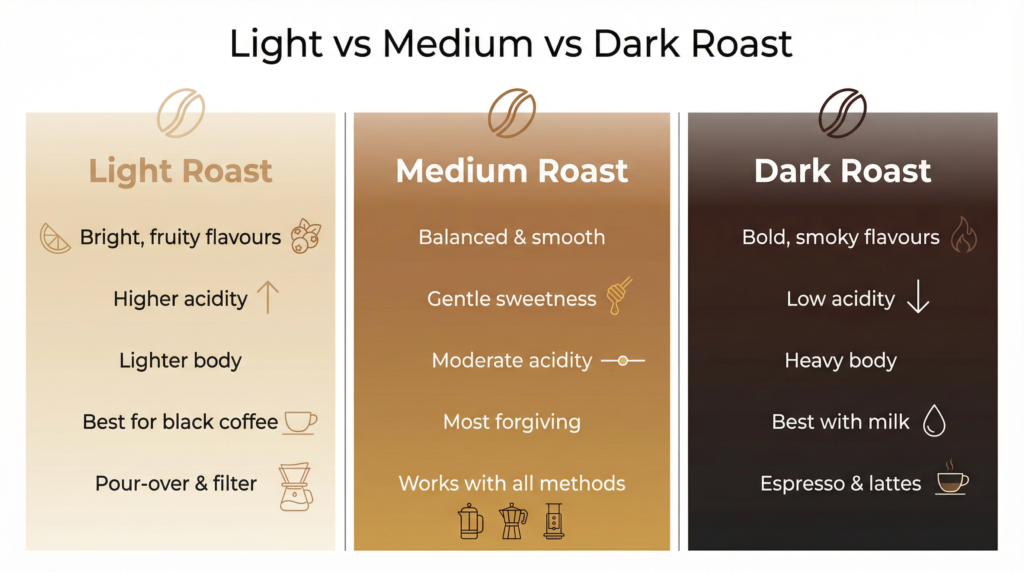
Light vs Medium vs Dark Roast — Beginner Comparison Table
How Roast Level Affects Your Brew Method
Roast level doesn’t just change flavour — it changes how coffee extracts.
Light Roast
- Needs slightly hotter water
- Often benefits from a finer grind
- More sensitive to under-extraction
Medium Roast
- Very forgiving
- Works with most brew settings
- Easiest roast for beginners
Dark Roast
- Extracts quickly
- Works better with cooler water (around 90–92°C)
- Can over-extract if the grind is too fine
Which Roast Should Beginners Choose?
- If you drink black coffee
→ Medium-light or medium roast
(Clear flavour without overwhelming acidity) - If you drink milk coffee
→ Medium-dark or dark roast
(Milk softens flavour; darker roasts shine through) - If you enjoy fruity or floral flavours
→ Light roast - If you prefer chocolatey, classic flavours
→ Medium or medium-dark roast - If you’re completely lost
→ Medium roast
(You can’t go wrong.)
Did You Know?
Many people think dark roast has more caffeine —
but light roast actually contains slightly more, because less caffeine burns off during roasting.
The difference is small, but it often surprises beginners.
Key Takeaway (Super Simple)
- Light roast = bright, fruity, higher acidity
- Medium roast = balanced, smooth, best for beginners
- Dark roast = bold, strong, best with milk
Choosing the right roast level for your taste and brew method is one of the simplest ways to make better coffee at home — without changing your equipment.
Beginner FAQs
Does darker roast mean stronger coffee?
No. Strength comes from brew ratio and extraction, not roast level. Dark roast simply tastes bolder.
Why does my coffee taste sour or bitter?
- Sour = under-extracted (common with light roast)
- Bitter = over-extracted (common with dark roast)
Do lighter roasts need different brewing settings?
Often yes — slightly hotter water and a finer grind help balance flavour.
Which roast is best for espresso beginners?
Medium or medium-dark. They’re much easier to dial in than light roast.
➡️ Next Beginner Guide
Coming next: Single Origin vs Blend: A Beginner’s Guide