Coffee storage seems simple — until your coffee starts tasting flat, dull, or inconsistent.
Most beginners don’t realise they’re making storage mistakes, because nothing feels “wrong” at first. Coffee still brews. It still smells like coffee. It still works.
But small storage habits quietly affect flavour over time, especially once a bag is opened.
The good news is that coffee storage doesn’t need to be complicated. Most mistakes are easy to fix once you know what actually matters.
This guide walks through the most common coffee storage mistakes beginners make — and what to do instead.
Here’s the simple version before we dive into the details:
Quick Answer: Best Way to Store Coffee at Home
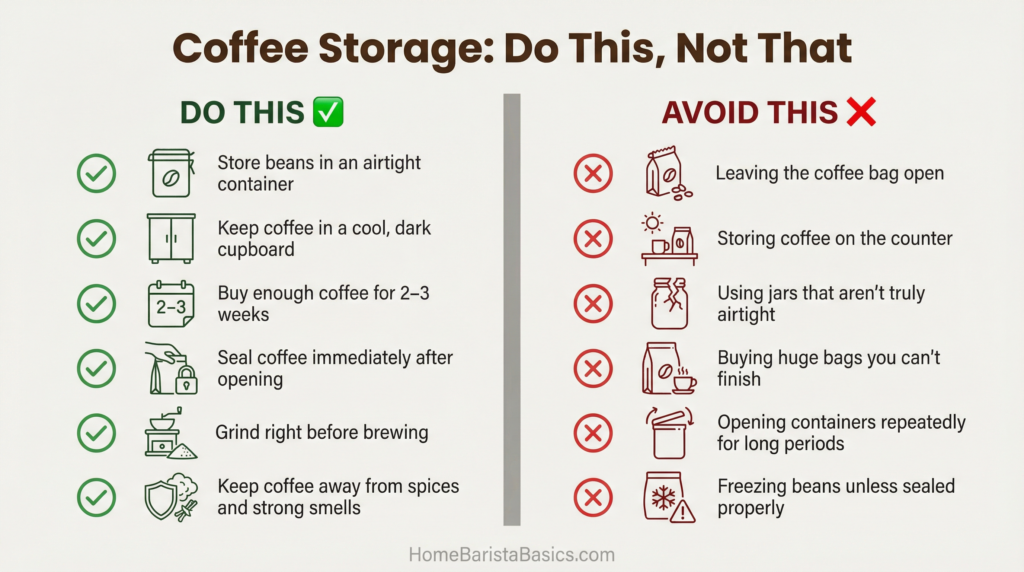
The best way to store coffee is in an airtight container, kept in a cool, dark cupboard away from heat and light. Avoid leaving the bag open, avoid storing coffee on the counter, and only buy enough coffee to use within 2–4 weeks of opening.
Good storage isn’t about perfection — it’s about reducing air, heat, light, and moisture exposure.
Mistake 1: Thinking Coffee Goes Bad Overnight
One of the biggest misconceptions beginners have is that coffee suddenly becomes “bad” after a certain point. In reality, coffee doesn’t spoil quickly — it simply loses freshness gradually.
When storage is poor, flavour fades faster. When storage is reasonable, coffee stays enjoyable longer, even if it isn’t perfectly fresh.
For a clearer breakdown of what “fresh” actually means, see How Long Do Coffee Beans Stay Fresh? Understanding this alone removes a lot of unnecessary stress.
Mistake 2: Leaving the Bag Open Between Brews
An open coffee bag allows air to reach the beans continuously, and air is the main reason coffee loses aroma and flavour over time. Even a small opening can speed this up.
This often happens unintentionally, especially when:
- the bag isn’t resealed properly
- the zip seal wears out
- the bag is folded instead of sealed
Even if the beans still smell “fine,” the most aromatic compounds fade first — which is why coffee often starts tasting dull before it ever tastes “bad.”
When the bag is opened multiple times a day, freshness fades faster than most beginners expect.
Mistake 3: Storing Coffee on the Counter
Kitchen counters feel convenient, but they’re rarely ideal for coffee. Counters are exposed to light, heat, and frequent temperature changes — all of which accelerate flavour loss.
Coffee stays happier in a cool, dark place, such as a cupboard away from the stove or oven. This matters more than buying more expensive beans.
Mistake 4: Using Containers That Aren’t Truly Airtight
Not all containers protect coffee equally. Many jars and canisters look solid, but they don’t always seal properly, and each time they’re opened they allow fresh air in. Over time, that repeated air exposure slowly strips aroma and flavour.
A simple airtight coffee container reduces this exposure significantly — and it doesn’t need to be expensive.
A good coffee container should have:
- a rubber gasket seal
- a locking lid (or screw lid)
- no loose-fitting glass tops
Beginner-friendly airtight containers include the Airscape Coffee Canister (best overall), the OXO POP Container (budget-friendly), and the Oggi Stainless Steel Coffee Canister (good for larger storage).
You don’t need premium gear — just a proper seal.
Mistake 5: Storing Coffee Near Strong Smells
Coffee absorbs odours surprisingly easily, so storing it near strong-smelling items can subtly affect aroma and taste over time. This is especially noticeable once coffee is ground.
Common problem areas include storing coffee near:
- spices
- cleaning products
- scented pantry items
Keeping coffee in a sealed container and storing it in a neutral-smelling cupboard helps prevent this.
Mistake 6: Buying More Coffee Than Your Storage Can Handle
Storage and buying habits are closely linked. Buying large amounts only makes sense when coffee can be stored well, used at a steady pace, and managed properly once opened.
For most beginners, buying too much usually leads to faded flavour, rushed brewing, and unnecessary waste.
A simple beginner rule is this: buy only what will be used in 2–3 weeks. If coffee is consumed slowly, smaller bags purchased more often usually taste better.
A more detailed guide is here: How Much Coffee Should You Buy at a Time?
Mistake 7: Overhandling Coffee Beans
CCoffee is often handled more than necessary through repeated scooping, leaving containers open, or grinding long before brewing. Each interaction exposes coffee to fresh air, which slowly reduces aroma and flavour.
A simple habit helps here: only open coffee when it’s about to be used, then seal it again promptly. Small habits like this add up over time.
Grinding fresh matters too, especially when consistency is an issue. A comparison guide is here: Manual vs Electric Coffee Grinders: Which Is Better for Beginners?
Mistake 8: Assuming Freezing Is Automatically Better
Freezing coffee is often suggested as a storage upgrade, but it’s easy to do incorrectly. Problems usually happen when beans aren’t sealed tightly, moisture gets in, beans are thawed and refrozen, or coffee is repeatedly scooped from the freezer.
In those cases, freezing can actually harm flavour faster than simple room-temperature storage.
Freezing only works well in specific situations, and for most beginners it’s usually unnecessary.
What Actually Matters Most for Coffee Storage
Good coffee storage doesn’t require special techniques or expensive equipment. It comes down to a few simple habits that protect flavour over time:
- limiting air exposure
- avoiding heat and light
- buying reasonable amounts
- keeping habits simple
These basics protect flavour far more effectively than chasing advanced methods.
A Simple Coffee Storage Setup for Beginners
If you want a simple setup that works without overthinking, here’s a beginner-friendly approach:
✅ Keep beans in their original bag inside an airtight container
✅ Store the container in a cupboard (not the counter)
✅ Keep coffee away from spices and strong smells
✅ Only grind right before brewing
✅ Buy smaller bags more often
That’s it.
Most beginners never need anything more.
Storage and Brewing Work Together
Storage supports good brewing, but it doesn’t replace it. If coffee tastes inconsistent, storage may be part of the picture — but grind size, ratios, and brew method matter too. Even great beans can taste disappointing if the brewing basics aren’t consistent.
When inconsistency is a recurring issue, this guide can help: Beginner Water Ratio Guide for Coffee.
Good coffee comes from a chain of small, sensible decisions.
Coffee Storage Mistakes FAQs (Beginner Questions)
Should coffee beans be stored in the fridge?
In most cases, no.
Fridges contain moisture and strong food odours, and every time you open the door the temperature changes. This increases the chance of condensation and can cause coffee to absorb unwanted smells.
A cool, dark cupboard is usually a better option than the fridge.
How long do coffee beans stay fresh after opening?
Most coffee beans stay enjoyable for around 2–4 weeks after opening, depending on how they’re stored.
If the beans are exposed to air frequently (open bag, loose lid, warm counter), freshness fades faster. If they’re stored in an airtight container in a cool cupboard, flavour stays stronger for longer.
Is it okay to store coffee in the original bag?
Yes — as long as the bag is sealed well.
Many specialty coffee bags include a one-way valve and are designed to store beans reasonably well for beginners. The problem is that bags are often left open or poorly resealed.
For best results, keep the original bag inside an airtight container to reduce air exposure.
Do coffee beans go stale faster once ground?
Yes, significantly.
Grinding increases the surface area of the coffee, which causes aroma and flavour compounds to escape much faster.
If possible, grind only what you need right before brewing. Even a small change here can make coffee taste noticeably fresher.
What is the best container for storing coffee?
The best coffee container is one that is truly airtight, has a rubber gasket seal, and is easy to open and reseal quickly. Ideally it should also block light, or be stored in a dark cupboard.
A more detailed guide is here: Best Airtight Coffee Containers for Home Use (Beginner Guide).
You don’t need expensive equipment — just a good seal.
Should beginners freeze coffee beans?
Usually, no.
Freezing only works well if beans are sealed properly and stored in a way that prevents moisture exposure. If you repeatedly open the freezer bag, scoop beans out, or allow condensation to form, freezing can actually harm flavour.
For most beginners, room-temperature airtight storage is simpler and works extremely well.
Final Thoughts
Most coffee storage mistakes don’t ruin coffee — they just quietly reduce how enjoyable it is. The fix isn’t perfection. It’s awareness.
With airtight storage, sensible buying habits, and a few small changes, beginners can keep coffee tasting good without pressure or complication. Once storage feels under control, techniques like freezing make more sense — if they’re ever needed.
February 7, 2026