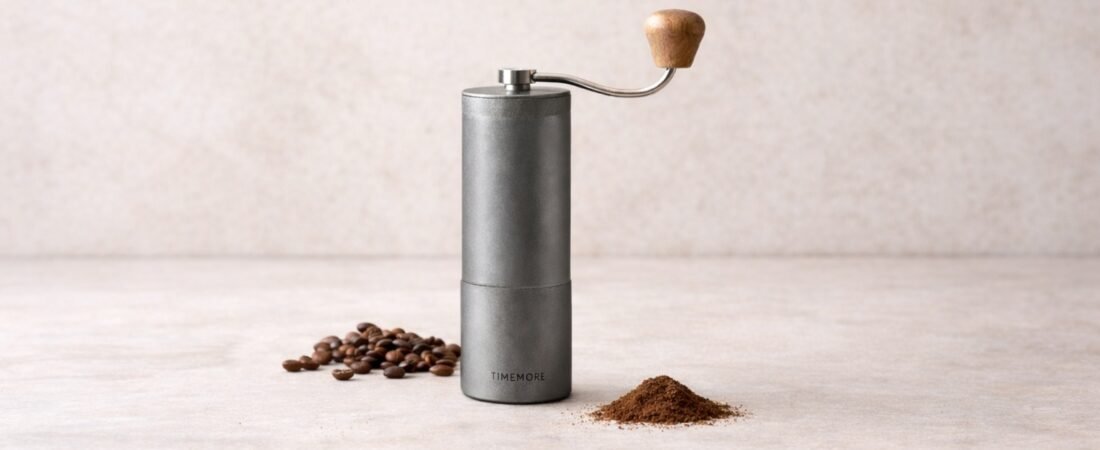
Best manual coffee grinders for beginners are often recommended because they deliver excellent grind consistency without high cost, noise, or complexity.
If you’re new to making coffee at home, manual grinders can feel surprisingly appealing — simple, quiet, and focused on the basics that actually affect flavour.
But beginners often hesitate.
Will hand grinding be too slow? Too much effort? Or feel unnecessary when electric grinders exist?
The truth is reassuring.
A good manual grinder can produce more consistent coffee than many cheap electric models, while staying affordable, compact, and easy to learn. Many beginner-friendly manual grinders also fall well within a lower budget. If you’re trying to stay cost-conscious, this guide to the best coffee grinders under $100 for beginners shows which options make sense at this price point.
This guide explains when a manual grinder makes sense for beginners, what actually matters when choosing one, and a few reliable options that balance simplicity and performance — without overthinking or overspending.
Why Manual Grinders Are Often Recommended for Beginners
Manual grinders aren’t recommended because they’re “old-fashioned” or more serious — they’re recommended because they work. They’re recommended because, at entry-level prices, they usually offer better grind consistency than cheap electric grinders.
For beginners, consistency matters far more than speed.
A good manual grinder:
- produces more even grounds
- makes flavour easier to control
- helps you understand grind size changes
- keeps coffee fresher day to day
That’s why many beginners are surprised by how much their coffee improves with a simple hand grinder.
If you’re still deciding whether you even need a grinder yet, this guide on whether you need a coffee grinder as a beginner explains when a grinder actually starts to matter.
What Actually Matters in a Beginner Manual Grinder
Before looking at specific models, it helps to know what actually affects results.
For beginners, a good manual grinder should:
- use burrs, not blades
- allow clear grind size adjustment
- feel stable and solid while grinding
- work well for filter coffee (not espresso)
- be comfortable to use for 1–2 cups
You don’t need extreme precision, premium materials, or espresso-level fineness.
You need repeatable, forgiving performance.
Manual Grinders Are Best for These Brewing Methods
Manual grinders work especially well for:
- pour-over
- AeroPress
- French press
- drip coffee machines
They are not ideal if you:
- brew large batches daily
- want push-button convenience
- need espresso-level grind precision
If that sounds like you, an entry-level electric grinder may be a better fit. This manual vs electric grinder guide breaks that decision down clearly.
Best Manual Coffee Grinders for Beginners
Below are manual grinders that balance price, consistency, and ease of use — grinders beginners can grow with, not outgrow immediately.
Note: This article contains affiliate links. If you buy through these links, I may earn a commission at no extra cost to you.
Best Overall Beginner Manual Grinder
Why this works so well for beginners:
- Burr grinder with good consistency
- Clear, click-based grind adjustment
- Solid build without feeling heavy
- Comfortable for daily use
Best for:
Pour-over, AeroPress, French press (small batches)
What to expect:
Grinding takes a bit of effort, but the results are noticeably cleaner than with blade grinders or very cheap electric models.
This is often one of the best-value entry-level manual grinders available.
Best Manual Grinder to Grow Into
If you want a hand grinder you won’t feel the need to replace quickly, this is a strong option.
Why beginners like it:
- Very consistent grind distribution
- Smooth adjustment and stable grinding
- Feels durable and well-built
- Handles different brew methods easily
Best for:
Pour-over, AeroPress, French press, daily use
What to expect:
Slightly more expensive than entry-level models, but smoother to use and more forgiving as your taste develops.
This is a good choice if you want to buy once and keep it for years.
Best Compact Manual Grinder (Small Kitchens or Travel)
Hario Mini Mill (or similar compact hand grinder)
This type of grinder is popular for its size and simplicity.
Why it can work for beginners:
- Lightweight and portable
- Easy to store
- Affordable entry point
Best for:
Occasional brewing, travel, small kitchens
Trade-offs:
Grind consistency is acceptable, but not as strong as the options above. Better suited for forgiving methods like French press.
What to Avoid with Manual Grinders
Some manual grinders create more frustration than improvement.
Beginners should usually avoid:
- grinders without burrs
- extremely cheap models with unstable handles
- grinders designed mainly for espresso
- grinders that require frequent disassembly to adjust
If grinding feels inconsistent or exhausting, the issue is usually the grinder — not you.
How to Choose the Right Manual Grinder for You
Here’s a simple decision guide:
- You brew 1–2 cups and want the best value
→ Timemore Chestnut C2 - You want something smoother that lasts longer
→ 1Zpresso JX - You want something small for occasional use
→ Hario Mini Mill (or similar compact hand grinder)
You only need one grinder — not the “perfect” one.
A Calm Buying Reminder for Beginners
You don’t need to master coffee on day one.
A good manual grinder helps you:
- learn grind size adjustments
- notice flavour differences
- build confidence in brewing
You can always upgrade later — once you know why you want to.
Buying calmly now usually leads to better decisions long-term.
What’s Next?
Once you’ve chosen a manual grinder, the next step is understanding how it compares to electric options — and whether convenience matters more for your routine.
👉 Read next: Best Electric Coffee Grinders for Beginners
👉 Or: Best Coffee Grinders for Beginners (No Espresso)