Best light roast coffee for beginners can taste bright, smooth, and enjoyable — without sourness — if you choose the right beans and avoid a few common mistakes.
Many beginners try light roast coffee once, find it sharp or acidic, and assume light roast “isn’t for them.” In reality, sour light roast coffee is usually caused by bean choice or brewing variables, not the roast itself.
Light roast coffee can be rewarding for beginners who enjoy cleaner flavours and a fresher taste — as long as it’s approached the right way.
This guide explains:
- Why light roast coffee often tastes sour for beginners
- What light roast actually tastes like (in simple terms)
- How to choose beginner-friendly light roasts
- Reliable light roast options that are easier to brew
- Common mistakes to avoid
Why Light Roast Coffee Often Tastes Sour for Beginners
Light roast coffee is roasted for less time than medium or dark roasts. That preserves more of the bean’s natural acidity — which can be pleasant or unpleasant depending on how it’s brewed.
For beginners, sourness usually comes from:
- Under-extraction
- Grind size that’s too coarse
- Brew time that’s too short
- Beans that are very lightly roasted or overly complex
- Expectations that don’t match the roast style
If your coffee tastes sharp, thin, or mouth-puckering, it’s usually a brewing issue — not a sign that the coffee is bad.
If sourness keeps showing up, this grind size troubleshooting guide can help diagnose bitterness, sourness, or weak flavour.
What Light Roast Coffee Tastes Like (In Simple Terms)
Light roast does not mean weak or flavourless. It means the coffee’s natural characteristics are more noticeable.
Beginner-friendly light roasts often taste like:
- Mild citrus or apple-like brightness
- Subtle sweetness
- Clean, crisp finish
- Lighter body than medium roast
They are not supposed to taste:
- Vinegary
- Harshly sour
- Thin and hollow
When brewed well, light roast coffee tastes fresh and lively — not sharp or unpleasant.
If flavour descriptions feel confusing, this coffee tasting notes guide for beginners breaks them down in everyday language.
Light Roast vs Medium Roast (Which Is Easier for Beginners?)
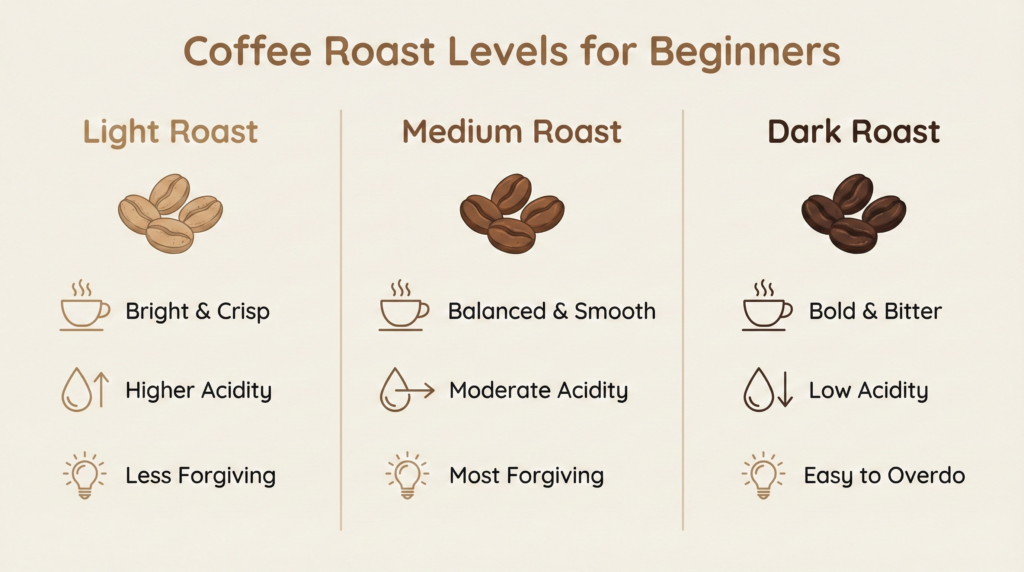
Medium roast is the most forgiving starting point for beginners, while light roast rewards more careful brewing.
Medium roast
- More forgiving
- Smoother and more balanced
- Easiest starting point
Light roast
- Brighter and cleaner
- Shows brewing mistakes more clearly
- More rewarding once basics are understood
Many beginners start with medium roast and explore light roast later. If you want the safest option first, see this guide to the best medium roast coffee for beginners.
Whole Bean or Ground Light Roast — Which Should Beginners Choose?
Light roast coffee benefits more from freshness and grind control than darker roasts.
Whole beans
- Better flavour clarity
- Less sourness when dialled in
- Best if you own a grinder
Ground coffee
- More convenient
- Goes stale faster
- Still workable for beginners
If you already have a grinder, whole beans are strongly recommended.
If not, starting with ground light roast coffee is still completely fine.
If you’re unsure whether you actually need a grinder, this beginner guide explains when a coffee grinder really matters.
Best Light Roast Coffee for Beginners (Reliable Picks)
You don’t need ultra-light or experimental coffees to enjoy light roast as a beginner. The best options are balanced, approachable, and forgiving.
Counter Culture – Hologram (Light–Medium Roast)
Counter Culture Hologram is often recommended for beginners because it sits between light and medium roast.
It offers:
- Gentle brightness without sharp acidity
- Subtle sweetness
- Clean, balanced flavour
This makes it a safe entry point if you’re curious about light roast but want consistency.
View current Counter Culture Hologram light-leaning roast options
Stumptown – Bright & Light Blends
Some Stumptown light roasts are beginner-friendly when brewed carefully.
They typically feature:
- Mild citrus notes
- Clean finish
- More clarity than bitterness
For beginners, blends are usually easier to brew than very light single-origin coffees.
View Stumptown light roast options here
Lavazza Qualità Oro (Light-Medium Leaning)
While not labelled as a light roast, Lavazza Qualità Oro leans lighter than most supermarket options and is very forgiving.
It’s a good choice if you want:
- Smooth flavour
- Mild brightness
- Predictable results
This works well as a transition from medium to light roast.
See current Lavazza Qualità Oro options
Note: These aren’t “expert” coffees. They’re reliable starting points that help beginners enjoy light roast without frustration.
Common Beginner Mistakes With Light Roast Coffee
Many disappointing cups come from expectations, not bad beans.
Common mistakes include:
- Brewing too quickly
- Using grind sizes that are too coarse
- Expecting light roast to taste like dark roast
- Switching beans constantly instead of adjusting one variable
- Choosing very lightly roasted specialty coffees too early
Good coffee comes from small adjustments, not constant switching.
If your coffee tastes sharp or sour, this coffee sourness troubleshooting guide explains what’s happening and how to fix it.
Who Light Roast Coffee Is (and Isn’t) Best For
Light roast is ideal if you:
- Enjoy clean, bright flavours
- Brew pour-over, drip, or AeroPress
- Are comfortable making small adjustments
It may not be ideal if you:
- Want bold, smoky flavours
- Prefer heavy body
- Brew espresso exclusively
- Want zero experimentation
Final Recommendation for Beginners
Light roast coffee isn’t “too advanced” — it just requires a little more attention.
If your coffee tastes sour:
- Adjust grind size
- Extend brew time
- Choose forgiving light-medium roasts
If you want the easiest possible experience, medium roast remains the safest choice. But if you enjoy brightness and clarity, light roast can be very rewarding.
What’s Next?
If you want to go deeper, the next helpful steps are:
- Understanding how roast level affects acidity
- Learning how much coffee to buy at once
- Improving freshness and storage
There’s no rush.
Finding one light roast you enjoy — and brewing it consistently — is already success.
If you want a broader starting point, this best coffee beans for beginners guide walks through flavour, roast, and buying decisions step by step.