Best coffee beans for beginners who don’t like acidic coffee are smooth, balanced, and forgiving — making them ideal if sour or sharp flavours have put you off brewing at home. If that sounds familiar, and you’re new to making coffee and find that most cups taste sharp, sour, or uncomfortable, you’re not alone.
Many beginners assume they don’t like coffee — or that they’re doing something wrong — when the real issue is much simpler: the beans are too acidic for their taste or tolerance.
The good news is this:
You don’t need to give up on coffee, buy expensive gear, or learn complicated techniques.
You just need beans that are naturally lower in perceived acidity and more forgiving while you’re learning.
This guide explains:
- What acidity in coffee actually means (in simple terms)
- Why some beans feel harsh or sour to beginners
- Which types of beans are easier on the palate
- Beginner-friendly coffee options for people who dislike acidity
- How this differs from choosing dark roast coffee
Quick Answer for Beginners
A simple visual guide to choosing smoother, lower-acid coffee beans for beginners.
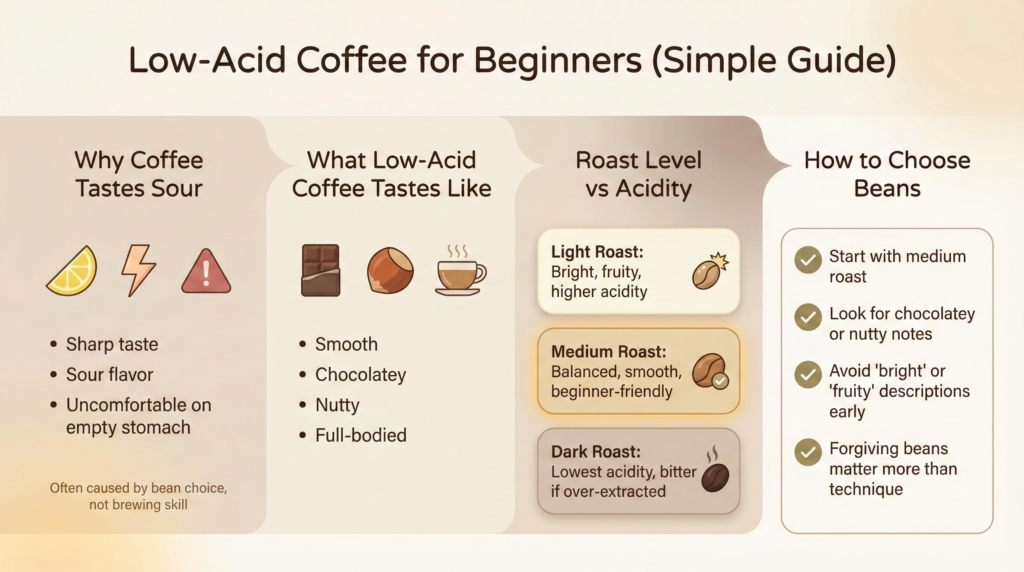
If coffee tastes sour or sharp, start with smooth medium-roast beans that lean chocolatey or nutty.
Avoid very light roasts early on — they’re harder to brew well and often taste acidic to beginners.
You don’t need expensive coffee or perfect technique to enjoy a smoother cup.
What “Acidic Coffee” Means (Without the Coffee Jargon)
In coffee, acidity doesn’t mean the coffee is bad or spoiled.
It refers to bright, sharp flavours — the kind that can taste:
- Sour
- Tart
- Sharp on the tongue
- Uncomfortable on an empty stomach
Some people enjoy this brightness.
Many beginners don’t.
If your coffee tastes unpleasant even when it’s freshly brewed, acidity is often the reason.
This is especially common when beginners drink:
- Very light roast coffee
- Coffee marketed as “bright” or “fruity”
- Specialty beans without adjusting brew variables
If your coffee frequently tastes sour or harsh, this grind size troubleshooting guide for fixing sour or bitter coffee explains how grind size affects extraction and why it often causes acidic flavour.
Why Many Beginners Dislike Acidic Coffee
Most beginner frustration comes from bean selection, not brewing mistakes.
Common causes include:
- Choosing light roasts too early
- Buying beans described as “bright” or “high acidity”
- Brewing acidic beans with fast methods
- Drinking coffee on an empty stomach
- Expecting all coffee to taste smooth and chocolatey
None of this means you “don’t like coffee.”
It simply means you prefer lower-acid flavour profiles.
What Low-Acid Coffee Tastes Like (Beginner-Friendly Description)
Beans that are easier on the palate tend to taste:
- Smooth rather than sharp
- Rounded rather than punchy
- Chocolatey, nutty, or caramel-like
- Fuller-bodied
- Less sour, even when brewed imperfectly
These flavours are more forgiving while you’re still learning grind size, ratios, and brew timing.
If flavour descriptions feel confusing, this coffee tasting notes guide for beginners explains what common terms like “chocolatey,” “nutty,” and “bright” actually mean in plain language.
Roast Level vs Acidity (Important Beginner Insight)
Many people assume dark roast = low acid.
That’s often true — but it’s not the whole picture.
Medium roast
- Balanced acidity
- Smooth flavour
- Most forgiving for beginners
Light roast
- Higher perceived acidity
- Cleaner, brighter flavours
- Easier to taste sour if brewed incorrectly
Dark roast
- Lower perceived acidity
- Stronger, bitter-leaning flavours
- Can feel harsh if over-extracted
This means:
- If you dislike acidic coffee, you don’t have to jump straight to dark roast.
- Many beginners do best with smooth medium roasts first.
Pairing smooth, forgiving beans with a beginner-friendly drip coffee maker makes it much easier to brew a consistent, low-acid cup without extra trial and error.
If you want a safe starting point, this best medium roast coffee for beginners guide explains why medium roasts are usually smoother, less acidic, and easier to brew consistently.
Whole Bean or Ground Coffee for Low-Acid Preferences
Both can work — what matters is consistency, not perfection.
Whole beans
- Fresher flavour
- More control over acidity
- Best if you already own a grinder
Ground coffee
- Convenient
- Still perfectly fine for beginners
- Often easier when starting out
If you’re unsure whether grinding fresh beans will actually improve your coffee, this guide on whether a coffee grinder is worth it for beginners helps you decide without overcomplicating things.
Best Coffee Beans for Beginners Who Don’t Like Acidic Coffee
You don’t need rare or specialty-only beans to enjoy smooth coffee.
The best options for low-acid preferences are reliable, approachable, and forgiving.
Peet’s Coffee – Smooth Medium Roast Blends for Beginners
Peet’s medium roast blends are popular with beginners who want coffee that tastes smooth and familiar, without sharp acidity.
These blends typically offer:
- Low perceived acidity
- Chocolatey, nutty flavours
- A fuller mouthfeel
- Predictable results across brew methods
They work especially well for drip coffee makers, pour-over, and AeroPress.
If you’re looking for a reliable starting point, you can view current Peet’s medium roast options here.
Lavazza Qualità Oro
Lavazza Qualità Oro is often chosen by beginners who want coffee that feels gentle and balanced, rather than bright or sharp.
It’s known for:
- Mild sweetness
- Minimal acidity
- Smooth, approachable flavour
- Easy brewing across methods
This is a good choice if you want coffee that tastes pleasant even when your grind size or brew time isn’t perfect.
If you want a smooth, approachable coffee that’s easy to brew consistently, you can see current Lavazza Qualità Oro options here.
Stumptown Holler Mountain
Holler Mountain offers slightly more flavour clarity than supermarket blends, while remaining beginner-friendly.
It features:
- Caramel-forward sweetness
- Light nutty notes
- A smooth, balanced finish
It’s a good option if you want less acidity without moving fully into dark roast territory.
If you’d like something with a little more flavour clarity while still keeping acidity in check, you can check current Stumptown Holler Mountain availability here.
Note: These coffees aren’t “expert-only” choices.
They’re reliable starting points for beginners who want smoother flavour with less acidity.
Common Beginner Mistakes When Avoiding Acidic Coffee
Many disappointing cups come from expectations, not bad beans.
Common mistakes include:
- Assuming all acidity is bad
- Buying very light roasts too early
- Brewing too quickly
- Switching beans constantly instead of adjusting one variable
- Jumping straight to very dark roasts and encountering bitterness instead
If your coffee still tastes unpleasant, this coffee sourness troubleshooting guide explains the most common causes of sour coffee and how beginners can fix them step by step.
Who This Guide Is For (And Who It Isn’t)
This approach is ideal if you:
- Dislike sour or sharp flavours
- Want smooth, comforting coffee
- Brew drip, pour-over, French press, or AeroPress
- Are still learning the basics
It may not be ideal if you:
- Actively enjoy bright, acidic coffee
- Prefer very light, fruity profiles
- Want espresso-specific recommendations
How This Leads Into Dark Roast (What’s Next)
If you still find medium roasts too bright, the next step is dark roast — but with different trade-offs.
Dark roast coffee reduces acidity further, but introduces stronger bitterness and smokier flavours.
That’s why dark roast deserves its own guide, focused on avoiding harshness rather than acidity.
If medium roasts still feel too bright, this best dark roast coffee for beginners (not bitter) guide explains how to reduce acidity further without ending up with harsh or smoky flavours.
Final Recommendation for Beginners
If you don’t like acidic coffee:
- Start with smooth, balanced beans
- Avoid very light roasts early on
- Choose forgiving, consistent coffees
- Change one variable at a time
You don’t need to force yourself to like bright coffee to enjoy brewing at home.
Finding coffee that feels comfortable and enjoyable is already success.