Choosing the best coffee beans for beginners doesn’t have to be complicated.
If you’re new to making coffee at home, chances are you’ve brewed a cup that tasted too bitter, too sour, or just unpleasantly strong — even when you followed a recipe. That often leads beginners to assume they bought the wrong equipment or did something wrong during brewing.
In reality, the issue is often much simpler: the beans themselves aren’t beginner-friendly.
This guide explains how to choose coffee beans that taste smooth, balanced, and forgiving, without specialty jargon or expensive recommendations. By the end, you’ll know what to look for — and what to avoid — so your coffee tastes good more often.
What “Beginner-Friendly” Coffee Beans Actually Mean
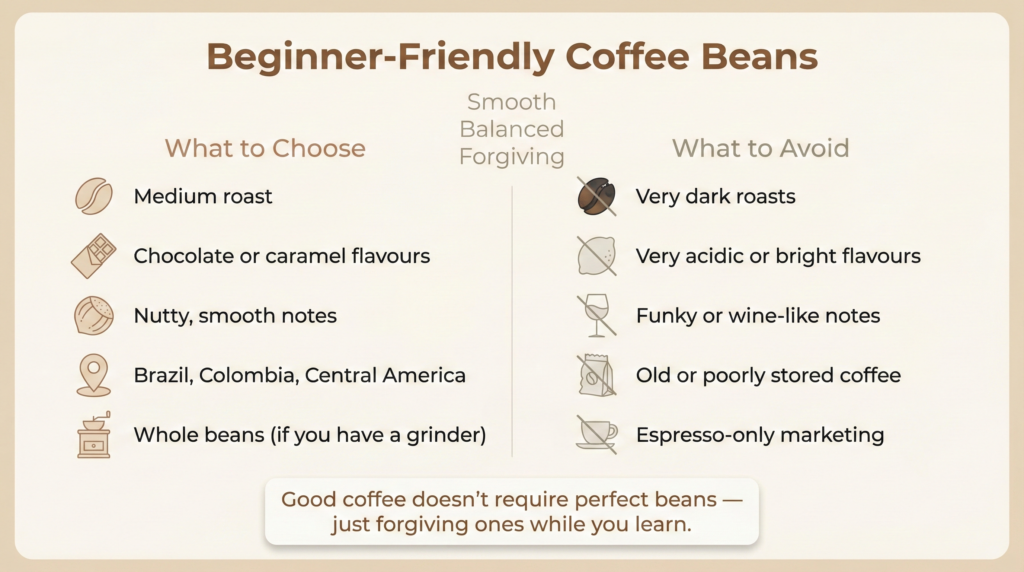
For beginners, the best coffee beans aren’t the most complex or exotic.
They’re beans that:
- Taste smooth rather than harsh
- Have balanced flavour (not extreme bitterness or acidity)
- Are forgiving if grind size or brew time isn’t perfect
Beginner-friendly beans make it easier to learn brewing basics because small mistakes don’t ruin the cup.
Why Many Beginners Dislike Their First Coffee Beans
Most beginner frustration comes from buying beans that are:
- Very dark roasted (harsh and bitter)
- Very light roasted (sour and sharp)
- Old or poorly stored
- Marketed for espresso when you’re brewing filter coffee
These beans aren’t bad — they’re just harder to brew well while you’re learning. That frustration often leads beginners to wonder whether they should be buying “better” beans at all. This guide on whether specialty coffee beans are worth it for beginners explains when upgrading beans actually helps — and when it doesn’t.
If your coffee often tastes harsh or overpowering, this guide explains the most common causes and simple fixes: Why Is My Coffee Too Strong? Simple Beginner Fixes
The Best Roast Level for Beginners (Start Here)
For most beginners, medium-leaning roasts are the easiest place to start.
They tend to:
- Taste more balanced
- Be less bitter than very dark roasts
- Be less sour than very light roasts
- Work well across most home brew methods
Very light and very dark roasts can both taste unpleasant when brewing variables aren’t dialled in yet.
Whole Beans vs Ground Coffee (What Beginners Should Know)
If you’re choosing between whole beans and pre-ground coffee:
- Whole beans stay fresher longer and usually taste better
- Ground coffee is more convenient but goes stale faster
If you already own a grinder, whole beans are worth it.
If you’re unsure whether a grinder is necessary at this stage, this beginner guide explains when a grinder matters and when it doesn’t.
If you decide to start with whole beans, this guide to best coffee grinders for beginners explains which grinder types are easiest to use and most forgiving while learning.
Flavour Profiles Beginners Tend to Enjoy
When reading coffee labels, look for flavour descriptions like:
- Chocolate
- Caramel
- Nutty
- Smooth
- Balanced
Be cautious with beans described as:
- Very bright
- Highly acidic
- Funky
- Wine-like
- Extremely bold
Those flavours can be interesting later, but they’re less forgiving while learning.
If flavour terms feel confusing, this guide explains what they actually mean: Coffee Tasting Notes Explained for Beginners
Best Coffee Bean Origins for Beginners
You don’t need to memorise regions, but these origins are often beginner-friendly:
- Brazil – smooth, nutty, low acidity
- Colombia – balanced and approachable
- Central America – clean and mild
These origins tend to produce coffee that tastes familiar and easy to enjoy.
Freshness Matters More Than Brand
A common beginner mistake is focusing on brand names instead of freshness.
Good beginner beans should:
- Taste clean and balanced
- Be reasonably fresh
- Be stored properly once opened
Fresh coffee makes brewing mistakes easier to correct and flavour easier to understand.
Beginner-Friendly Coffee Bean Picks (Optional, Low-Pressure)
You don’t need rare or expensive beans to get good results as a beginner.
Many beginners do best with widely available, consistent medium-roast coffees that are forgiving if grind size or brew time isn’t perfect.
If you’d like a few safe, beginner-friendly examples, these are commonly chosen for their smooth flavour and reliability:
- Peet’s Coffee Medium Roast Blends — smooth, low-acid flavour that works well across drip coffee, pour-over, and AeroPress.
→ Check current options - Lavazza Qualità Oro — a balanced medium roast with gentle sweetness and minimal bitterness, often enjoyed by beginners.
→ View current options - Stumptown Holler Mountain offers a smooth, caramel-forward flavour with light nutty notes and a mild, balanced finish.
→ See availability
These aren’t “advanced” or specialty-only beans — they’re simply reliable starting points while you’re learning.
Common Beginner Mistakes With Coffee Beans
- Buying very dark roasts to “avoid sourness”
- Choosing very light roasts without adjusting grind size
- Storing coffee in the fridge
- Buying large bags before knowing what you like
- Changing beans constantly while still learning
Good coffee comes from stable variables, not constant changes.
A Reassuring Truth for Beginners
If your coffee tastes bad, it doesn’t mean:
- You chose the wrong beans forever
- You need expensive equipment
- You’re failing at coffee
Coffee improves through small adjustments. Starting with smooth, balanced beans simply makes the learning curve gentler.
Final Recommendation for Beginners
If you want the best chance of enjoying coffee at home:
- Start with smooth, balanced beans
- Avoid extreme light or dark roasts early on
- Buy smaller amounts
- Focus on freshness over brand names
- Change one thing at a time
Once you’re comfortable, exploring different roasts and origins becomes fun — not frustrating.
If you’re building your first home setup, this beginner coffee setup checklist shows how a grinder fits alongside the other essentials.
What’s Next?
As you get more comfortable with beans, the next step is understanding how roast level and storage affect flavour — but there’s no rush.
For now, finding coffee you enjoy and brewing it consistently is more than enough.