Arabica vs Robusta is one of the first choices beginners face when exploring better coffee at home.. But what do those terms actually mean? And more importantly, which one should beginners choose if they’re trying to get café-style coffee at home?
This beginner-friendly guide explains the difference between Arabica and Robusta in plain language so you can make a confident, informed choice next time you’re buying coffee beans.
What Are Arabica and Robusta Coffee Beans?
Arabica and Robusta are the two main coffee species used around the world.
They are not brands and not quality ratings.
They’re simply different types of coffee plants, and each one naturally produces beans with different flavours, caffeine levels, and growing characteristics.
Because they come from different plants, Arabica and Robusta create very different drinking experiences — even before roasting or brewing.
Did you know?
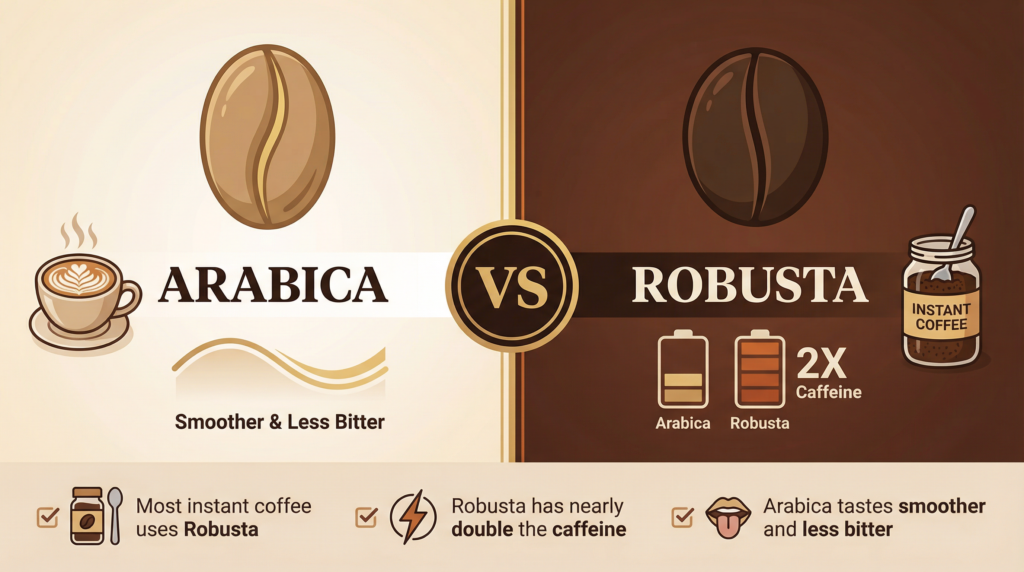
Most supermarket instant coffee is made from Robusta beans.
That’s one reason instant coffee often tastes stronger and more bitter than café-style coffee.
How Does Arabica Coffee Taste?
Most specialty coffee uses Arabica beans because they tend to taste smoother, softer, and more balanced, especially for beginners.
Common flavour notes include:
- chocolate
- caramel
- nuts
- berries
Arabica coffee usually has higher acidity, but this doesn’t mean sour.
For beginners, acidity often shows up as a bright or lively feeling, similar to how fruit tastes fresh rather than sharp.
Because of this balance, Arabica coffee is often:
- less bitter
- easier to enjoy black
- closer to what most cafés serve
This is why many beginners find Arabica more familiar and approachable when making coffee at home.
How does Robusta coffee taste?
Robusta coffee tastes stronger and more intense than Arabica.
Typical flavour notes include:
- dark chocolate
- roasted nuts
- earthier, heavier flavours
Robusta contains much more caffeine, which contributes to its bolder taste and noticeable bitterness.
That bitterness isn’t a flaw — it’s simply part of Robusta’s natural character.
Because of its strength, Robusta is commonly used in:
- instant coffee
- darker roasts
- espresso blends (especially for milk-based drinks)
In milk coffees, Robusta’s bold flavour helps the coffee taste stand out instead of getting lost.
For beginners, Robusta can sometimes feel harsh or overwhelming when brewed black, which is why it’s often blended with Arabica rather than used on its own.
Arabica vs Robusta caffeine difference
One of the biggest differences is caffeine content:
- Arabica = about 1.2%–1.5%
- Robusta = about 2.2%–2.7%
Nearly double.
That higher caffeine is why Robusta tastes more bitter—caffeine itself is naturally bitter.
Arabica vs Robusta price
Arabica is more expensive because the plants are harder to grow and need specific conditions. Robusta grows easily in hotter climates and produces more beans, so it’s cheaper.
In simple terms:
- Arabica = more flavour, higher cost
- Robusta = stronger, more affordable
Which Coffee Is Better for Beginners?
For most beginners, Arabica coffee is the best place to start, especially when brewing at home.
Arabica usually tastes:
- smoother
- more balanced
- less bitter
This makes it closer to what many people recognise as “coffee-shop style” coffee, particularly when brewed with simple home equipment.
Arabica is also more forgiving if your grind size, water temperature, or brew time isn’t perfect when brewing at home — which is ideal when you’re still learning.
Once you’re more comfortable making coffee at home, you can start experimenting.
At that point, you might:
- try Arabica/Robusta blends for extra strength or body
- compare Robusta on its own to see how the flavour differs
There’s no rush to do this.
Starting with Arabica helps you build confidence first — then explore other styles when you’re ready. Which coffee is better for beginners?
Most beginners should start with Arabica coffee, especially when brewing at home. It usually tastes smoother, more balanced and more “coffee-shop style” for beginners.
Once you’re more comfortable, you can try Arabica/Robusta blends or compare Robusta on its own.
Beginner Buying Tip (Simple & Reliable)
When choosing coffee as a beginner, look for these three things first:
- “100% Arabica”
This usually means smoother, less bitter coffee that’s easier to enjoy at home — especially if you’re brewing without professional equipment. - Medium roast
Medium roasts are balanced and forgiving.
They’re less sharp than light roasts and less bitter than dark roasts, which makes them a safe, enjoyable starting point. - A recent roast date
Fresher coffee tastes noticeably better.
Try to choose coffee that was roasted recently rather than one with only a distant “best before” date.
If a bag meets these three criteria, you’re already making a solid beginner choice — even before worrying about grind size, equipment, or brewing method.
Freshness matters, but it’s often misunderstood. Coffee doesn’t suddenly go bad — flavour fades gradually over time. This guide on how long coffee beans stay fresh explains what actually changes, and how much it really matters for beginners.
Quick Beginner Takeaway
Arabica = smoother, sweeter, better for beginners
Robusta = stronger, more bitter, higher caffeine
Beginner FAQs
Is Arabica or Robusta stronger?
Robusta tastes stronger because it has more caffeine.
Why is Arabica more expensive?
It’s harder to grow and produces fewer beans per plant.
Which should I choose for home brewing?
Arabica is usually the best starting point.
➡️ Next Beginner Guide
Whole Beans vs Ground Coffee: Which Should Beginners Choose?