Best beginner coffee beans for French press don’t need to be expensive or complicated to taste good.
French press is one of the most beginner-friendly ways to brew coffee at home — but choosing the right beans still matters. Because French press is an immersion brewing method, it tends to be more forgiving, especially when you’re learning.
This guide explains exactly what to look for when choosing beginner coffee beans for French press, without jargon, overwhelm, or unnecessary rules.
What Makes French Press Different from Other Brew Methods
French press is an immersion brewing method.
That means the coffee grounds sit fully immersed in hot water for several minutes before being pressed and poured. Because the coffee has more contact time with water — and because metal filters allow more oils through — French press tends to produce:
- A fuller body
- A richer mouthfeel
- Less emphasis on acidity
- More noticeable bitterness if over-extracted
This makes bean choice slightly different compared to pour over or drip coffee. If you’re deciding between methods, our Beginner Coffee Brewing Methods Compared guide explains how French press differs from pour over, drip, and other options.
For beginners, the goal is smoothness and balance, not sharp or intense flavours.
Best Roast Level for Best Beginner Coffee Beans for French Press
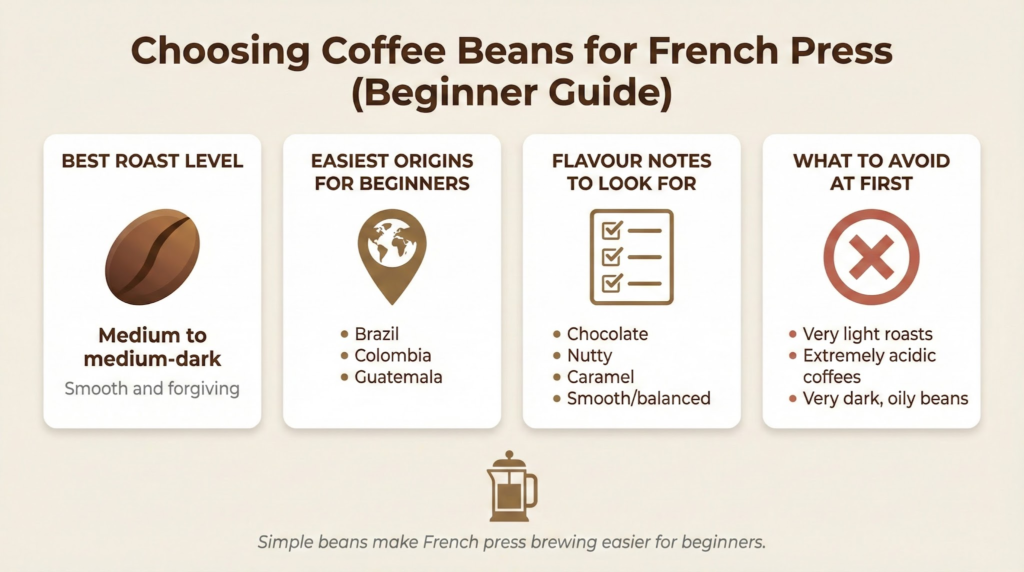
Medium to medium-dark roasts are usually the easiest place to start. If roast levels still feel confusing, this Light vs Medium vs Dark Roast for Beginners guide breaks it down simply.
Why these work well in French press:
- They taste fuller and rounder
- They’re more forgiving of timing and grind size
- They produce less sharp acidity
- They pair well with the heavier body French press creates
Very light roasts can taste thin or sour in French press if you’re still learning. Very dark roasts can taste harsh or overly bitter.
If you’re unsure, choose a medium roast — it’s the safest and most versatile option for beginners.
Easiest Coffee Origins for Beginners Using French Press
Some coffee origins naturally produce flavours that work especially well with French press brewing.
Beginner-friendly options include:
- Brazil – Nutty, chocolatey, low acidity
- Colombia – Balanced, smooth, widely available
- Guatemala – Rich, slightly sweet, easy to enjoy
These origins tend to brew consistently and are less likely to taste sour or sharp, even if your technique isn’t perfect yet. If your coffee ever tastes sour despite using beginner-friendly beans, this guide on Why Coffee Tastes Sour (And How to Fix It) can help.
You don’t need to chase rare regions or complex flavour profiles when you’re just starting out.
Flavour Notes Beginners Should Look For
When buying beans, flavour notes on the bag can help — as long as you keep them simple.
Good beginner flavour notes for French press include:
- Chocolate
- Nutty
- Caramel
- Cocoa
- Balanced or smooth
These flavours complement French press’s heavier body and reduce the risk of unpleasant bitterness or acidity. If flavour notes on coffee bags feel vague, this Coffee Flavour Notes Explained for Beginners article explains what they actually mean.
If you see descriptions like “bright,” “sharp,” or “high acidity,” those are usually better saved for later.
What Beginners Should Avoid at First
To keep French press brewing simple, it helps to avoid a few things early on.
Try not to start with:
- Very light roasts
- Extremely acidic coffees
- Beans described as very fruity or floral
- Very dark, oily-looking beans
None of these are “bad,” but they’re harder to brew well when you’re still learning and can make troubleshooting more confusing.
How Much Coffee Should Beginners Buy?
Start small.
Buying smaller bags of coffee keeps beans fresher — and freshness matters more than most beginners expect (see Why Freshness Matters (Roast Date Explained)).
- Keeps beans fresher
- Lets you experiment without pressure
- Reduces waste if you don’t love the flavour
As you gain confidence, you can explore different origins and roast levels more comfortably.
Using a consistent coffee-to-water ratio also helps keep results predictable when trying new beans — this Beginner Coffee Ratio Guide keeps things simple.
Whole Beans or Pre-Ground for French Press?
If possible, whole beans are the better choice, even for beginners.
Grinding fresh helps with:
- Better flavour
- More consistency
- Easier troubleshooting
Grind size matters just as much as freshness — our Grind Size Troubleshooting Guide shows how to fix bitter, weak, or strong coffee.
If you don’t have a grinder yet, pre-ground coffee labelled specifically for French press or coarse grind is fine as a starting point.
Once you’re comfortable, upgrading to a grinder gives you much more control over taste.
Simple Coffee Bean Checklist for French Press Beginners
If you want a quick summary, look for beans that are:
- Medium or medium-dark roast
- From Brazil, Colombia, or Guatemala
- Described as chocolatey, nutty, or balanced
- Not overly oily
- Sold in smaller, fresh bags
These choices make French press brewing easier, more forgiving, and more enjoyable while you’re learning.
Final Thoughts
French press is forgiving by design — and the right beans make it even easier.
You don’t need perfect technique or expensive coffee to brew something you’ll enjoy. Starting with simple, balanced beans lets you focus on learning the basics and building confidence one cup at a time.
Once you’re comfortable, you can experiment freely — but there’s no rush.
When you’re ready to branch out, you may also enjoy our guide to Best Beginner Coffee Beans for Pour Over, which explains how bean choice changes with brew method.
If you’re still choosing a French press, this guide to the best French press for beginners covers which options are easiest to use and most reliable when you’re starting out.