Grind size troubleshooting is one of the easiest ways to fix coffee that tastes bitter, sour, weak, or too strong.
For many beginners, grind size is the hidden reason coffee doesn’t taste quite right. A small change in how coarse or fine your coffee is ground can dramatically change flavour — even if everything else stays the same. If your coffee has tasted inconsistent from cup to cup, grind size is often the easiest place to start fixing it.
Grind size is also one of the most confusing parts of brewing coffee at home. But the good news is that you don’t need to understand coffee science to fix it. Once you know how different grind sizes affect flavour, troubleshooting becomes simple and intuitive.
What Grind Size Actually Means (In Simple Terms)
Grind size refers to how coarse or fine your coffee grounds are.
- Coarse grind → larger particles, like rough sea salt
- Fine grind → smaller particles, like table salt
Grind size matters because it controls how fast water flows through the coffee and how much flavour is extracted.
- Water moves quickly through coarse grinds
- Water moves slowly through fine grinds
This directly affects taste.
How Grind Size Affects Coffee Flavour
Think of grind size as a volume knob for flavour extraction:
- Too coarse → not enough flavour extracted
- Too fine → too much flavour extracted
When extraction is balanced, coffee tastes smooth, rich, and satisfying.
When it’s not, grind size is often the first thing to check.
Grind Size Troubleshooting: Common Problems and Fixes
Below is a simple way to diagnose grind size issues based on taste.
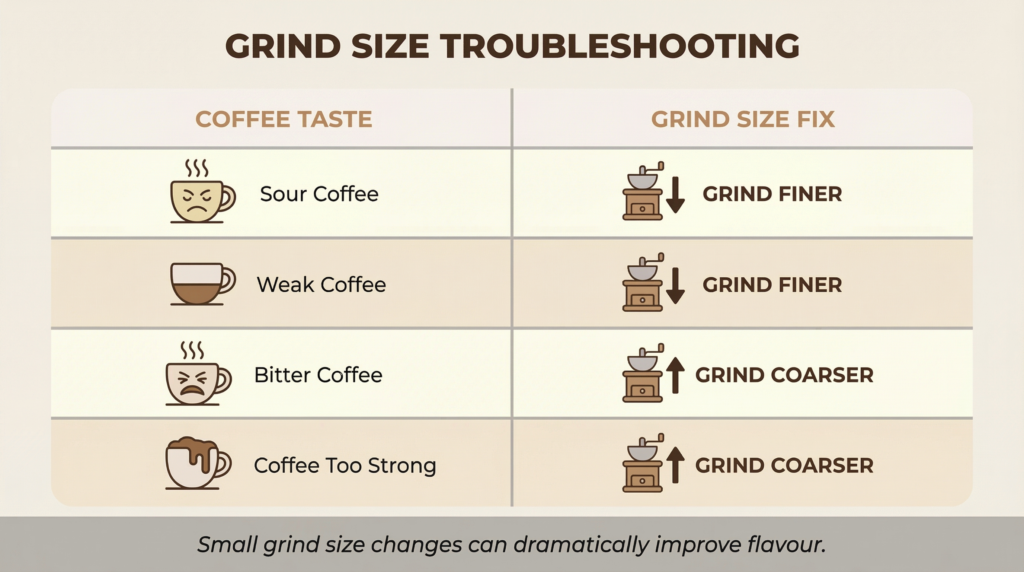
If Your Coffee Tastes Sour
Sour coffee usually means under-extraction, which often happens when the grind is too coarse.
When coffee grounds are too large, water passes through them too quickly and doesn’t extract enough flavour. The result is a sharp, acidic, or hollow taste.
What to do:
Grind slightly finer and try again.
If your coffee tastes sharp or lemony rather than balanced, this is a classic sign of under-extraction — Why Does My Coffee Taste Sour?
If Your Coffee Tastes Weak
Weak coffee often feels thin or watery and lacks body.
While this can be caused by too much water, grind size can also play a role. A grind that’s too coarse allows water to flow through too fast, preventing enough flavour from being extracted.
What to do:
Try grinding a little finer before changing anything else.
If your coffee feels thin or watery rather than flavourful, grind size may not be the only issue — Why Is My Coffee Weak?
If Your Coffee Tastes Bitter
Bitter coffee is usually caused by over-extraction, which can happen when the grind is too fine.
Fine grinds slow down water flow and pull out more flavour compounds — including bitter ones — especially if brew time is long.
What to do:
Grind slightly coarser and see how the flavour changes.
If your coffee tastes harsh, burnt, or drying on the tongue, bitterness is likely the main problem — Why Does My Coffee Taste Bitter?
If Your Coffee Tastes Too Strong
Coffee that tastes too strong or overpowering can also be linked to grind size.
A grind that’s too fine increases contact time and concentration, making the coffee feel heavy, harsh, or intense.
What to do:
Grind a little coarser, or shorten brew time slightly.
If your coffee feels heavy or overpowering rather than simply bold, grind size and concentration are often involved — Why Is My Coffee Too Strong?
How to Adjust Grind Size Safely (Beginner Tips)
When adjusting grind size, small changes matter. Grind size works best when paired with a consistent coffee-to-water ratio.
Here are a few simple rules to follow:
- Change grind size one step at a time
- Brew again before making another adjustment
- Don’t change grind size and brew time at the same time
- Taste the result before deciding what to do next
Big jumps often make things worse. Small, controlled changes help you learn faster.
Pre-Ground Coffee vs Freshly Ground Coffee
If you’re using pre-ground coffee, grind size control is limited.
Pre-ground coffee is usually made to suit one general brew method, which may not match how you brew at home. This can make troubleshooting more difficult.
If you grind your own coffee, you can adjust grind size easily and fix flavour problems much faster. If you’re starting out and don’t want to overspend, this guide to coffee grinders under $100 explains which budget options are consistent enough for beginners and which ones are best avoided.
If you’re still deciding what type of grinder fits your routine, this manual vs electric coffee grinders for beginners guide explains the difference in simple terms.
You don’t need an expensive grinder — just one that lets you make consistent adjustments. If you want a broader overview of beginner-friendly grinder options for filter coffee, this guide to best coffee grinders for beginners explains what actually matters without overcomplicating things. Uneven grinding (common with blade grinders) can also make troubleshooting harder.
If you’re happy to spend a little more for better durability or smoother grind adjustment, this guide to coffee grinders under $150 covers a wider range of beginner-friendly options.
A Simple Grind Size Reminder for Beginners
If you remember only one thing, remember this:
- Sour or weak coffee → grind a little finer
- Bitter or too strong coffee → grind a little coarser
That single guideline will solve most beginner grind size problems.
The Reassuring Truth About Grind Size
Almost everyone struggles with grind size when they start brewing coffee at home.
That’s normal.
Grind size isn’t about perfection — it’s about learning how small changes affect flavour. Once you start recognising the patterns, troubleshooting becomes intuitive, not frustrating.
Good coffee doesn’t come from getting everything right the first time.
It comes from understanding what to adjust next.