Why does my coffee taste bitter? If your coffee tastes bitter, you haven’t done anything wrong.
Bitterness is one of the most common problems beginners run into when brewing coffee at home. In most cases, it’s caused by a small, fixable detail — not bad beans, bad equipment, or lack of skill.
The good news is that once you understand why coffee tastes bitter, it usually only takes one or two small adjustments to improve the flavour.
Why Does My Coffee Taste Bitter? Common Causes Explained
Bitter coffee is often described as:
- harsh or sharp
- burnt or smoky
- dry and lingering on the tongue
- similar to burnt toast or very dark chocolate without sweetness
This kind of bitterness usually isn’t subtle. If your coffee makes you wince or leaves an unpleasant aftertaste, something in the brewing process is likely pulling too much out of the coffee grounds.
In simple terms, bitter coffee usually means the coffee has been over-extracted.
The Most Common Reasons Coffee Tastes Bitter
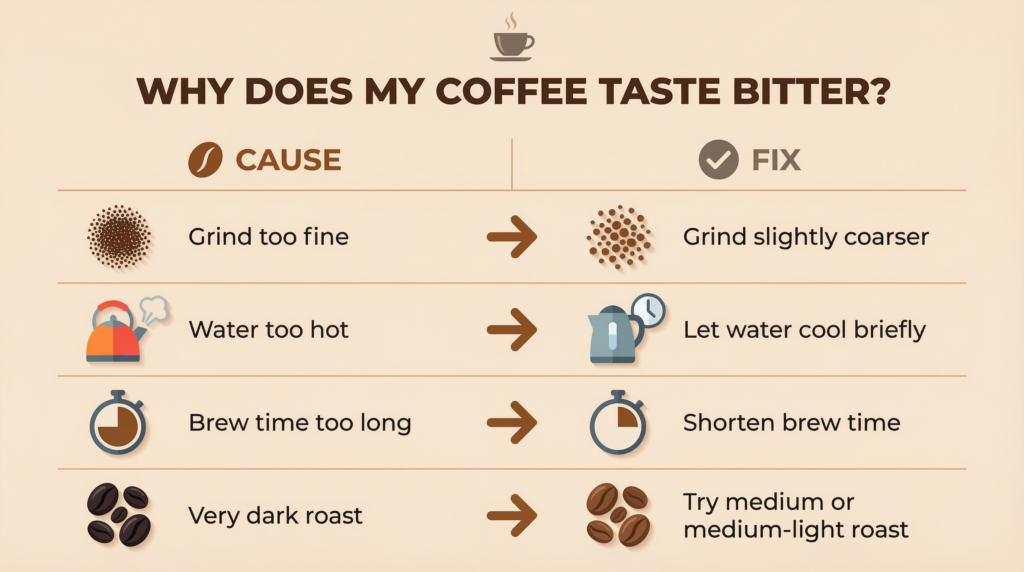
1. The grind size is too fine (most common cause)
Grinding coffee too fine is the most common reason beginners end up with bitter coffee.
When coffee is ground very fine, water extracts flavour compounds more aggressively. This can quickly pull out harsh, bitter elements before the sweeter flavours have a chance to balance things out.
This often happens when:
- using pre-ground coffee that’s too fine for your brew method
- grinding finer than necessary to “make it stronger”
- using a grinder without adjusting the grind size
Having a grinder that lets you adjust grind size consistently makes this much easier to fix. If you want a broader overview of beginner-friendly grinder options for filter coffee, this guide to best coffee grinders for beginners explains what actually matters without overcomplicating things.
If budget is your main concern, you can also see this guide to coffee grinders under $150.
How to fix it:
Try grinding slightly coarser and see how the flavour changes. Even a small adjustment can noticeably reduce bitterness.
2. The water is too hot
Using water straight off the boil can also cause bitterness, especially with lighter or medium roasts.
Very hot water extracts coffee faster and more aggressively. This can pull out bitter compounds that overpower the sweeter and more balanced flavours.
How to fix it:
After boiling your kettle, let the water sit for about 30 seconds before brewing. This small pause is often enough to soften bitterness without affecting strength.
3. The brew time is too long
Leaving coffee in contact with water for too long can lead to over-extraction.
This can happen with:
- French press coffee steeped for too long
- slow drip machines combined with a fine grind
- immersion brews that aren’t timed consistently
When coffee continues extracting past its sweet spot, bitterness increases — often because of an incorrect coffee water ratio.
How to fix it:
Slightly shorten the brew time, or adjust the grind size instead of changing everything at once. Small changes are easier to control and learn from.
4. The roast level is very dark
Dark roast coffees naturally taste more bitter than lighter roasts. This doesn’t mean they’re bad — it’s simply how darker roasting affects flavour.
Beginners often assume bitterness means something went wrong during brewing, when in reality the roast itself is emphasising bitter notes.
How to fix it:
If you prefer a smoother, less bitter cup, try a medium or medium-light roast. These roasts tend to highlight balance and sweetness rather than bitterness. If dark roast is causing bitterness, this best dark roast coffee for beginners guide shows which smooth options work best.
A Quick Checklist to Fix Bitter Coffee
If your coffee tastes bitter, try this simple checklist:
- Grind slightly coarser
- Avoid pouring boiling water directly onto the coffee
- Reduce brew time a little
- Consider a medium or medium-light roast
- Change one thing at a time, not everything at once
Making small, controlled adjustments helps you learn what actually improves the flavour.
Bitter vs Sour: a Quick Clarification
Bitterness is not the same as sourness.
If your coffee tastes sharp, thin, lemony, or hollow rather than harsh or burnt, you may be dealing with sour coffee instead, which is caused by under-extraction — the opposite problem. If your coffee tastes overpowering or intense rather than burnt, this guide on coffee tasting too strong explains the difference and how to fix it.
Sour coffee has different fixes and should be adjusted differently.
The Reassuring Truth for Beginners
Almost everyone brews bitter coffee at some point — especially when they’re learning.
Bitterness isn’t a failure. It’s feedback.
Once you understand what causes it, you’ll start recognising patterns and fixing issues much faster than you expect. Most beginners solve bitterness with just a few small tweaks, and each cup teaches you something useful.
Good coffee doesn’t come from perfection — it comes from understanding.