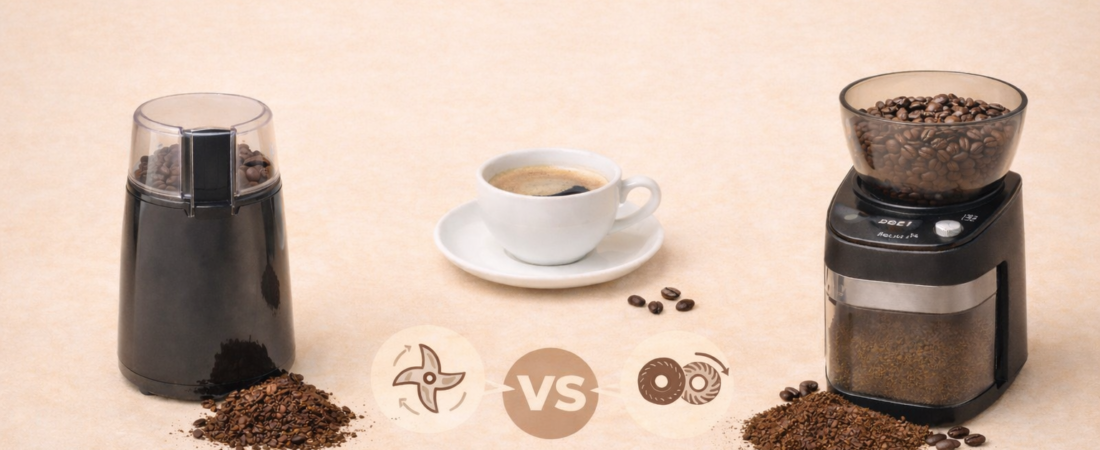
Blade grinder vs burr grinder is one of the most common questions beginners ask when they start brewing coffee at home.
If you’re new to home coffee brewing, choosing a grinder can feel surprisingly confusing. You might see terms like blade grinder and burr grinder and wonder what they actually mean — and whether the difference even matters at the beginner stage.
This guide breaks it down simply, so you can understand the difference and decide what makes sense for you.
Blade Grinder vs Burr Grinder: What’s the Difference?
Why grinder type matters (even before buying)
When you grind coffee, you’re controlling how water extracts flavour from the beans — which is why grind size matters so much when brewing at home.
The size and consistency of the grounds affect whether your coffee tastes:
- balanced and clear
- bitter
- sour
- weak or muddy
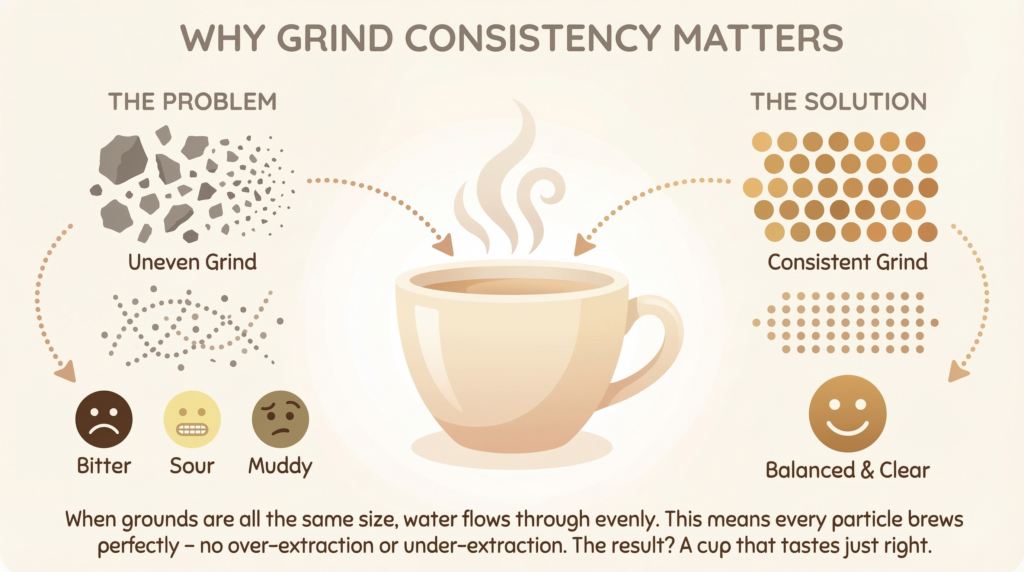
Different grinders produce coffee grounds in very different ways — and that’s where blade and burr grinders differ most. If you’re not sure what different grind sizes look like, a simple grind size chart can make this much clearer.
What is a blade grinder?
A blade grinder uses a spinning metal blade (similar to a small food processor) to chop coffee beans into smaller pieces.
How it works
- Beans bounce around while the blade spins
- Some pieces become very fine
- Others remain quite large
- Grind size depends on how long you run it
Why beginners often start with blade grinders
- Usually lower cost
- Small and compact
- Simple to use
- Easy to find in supermarkets
Common beginner issues with blade grinders
- Grounds are uneven
- Fine dust and large chunks mix together
- This unevenness is why very cheap coffee grinders often create bitterness and sourness — even when everything else is done correctly.
- Can lead to:
- bitterness (from over-extracted fine particles)
- sourness or weakness (from under-extracted larger pieces)
If this sounds familiar, Grind Size Troubleshooting breaks down how to fix it step by step.
This doesn’t mean blade grinders are “bad” — just that they’re less consistent.
What is a burr grinder?
A burr grinder uses two burrs (flat or cone-shaped surfaces) that crush coffee beans to a controlled, consistent size.
How it works
- Beans are fed between the burrs
- The gap between burrs determines grind size
- Grounds come out much more uniform
Why burr grinders are preferred for flavour
- Consistent grind size
- More predictable extraction
- Better clarity and balance in the cup
This consistency becomes more noticeable once you start paying attention to taste.
Blade vs burr: the key differences
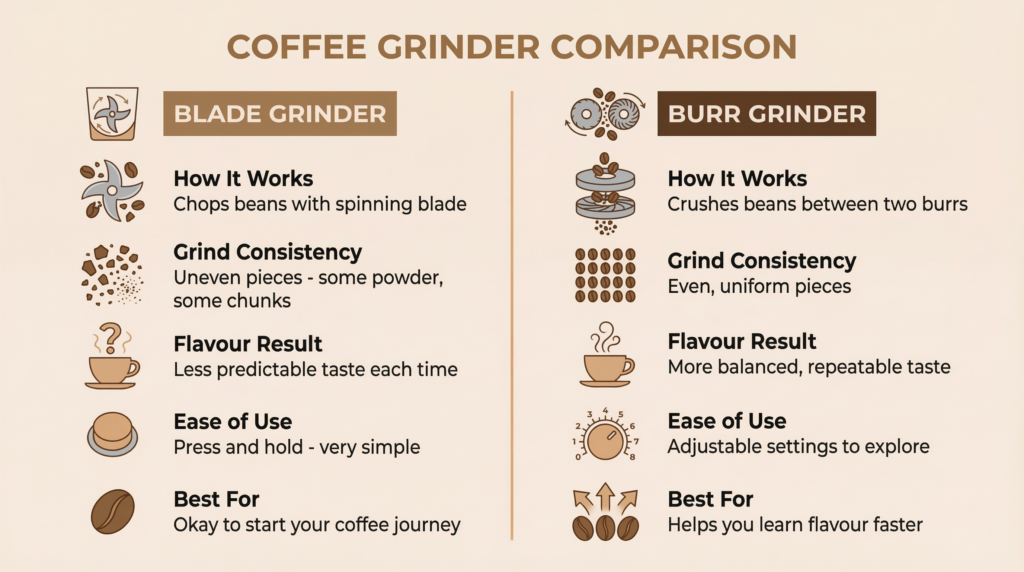
Grind consistency
- Blade grinders: uneven, mixed sizes
- Burr grinders: consistent and controlled
Flavour results
- Blade grinders: harder to repeat the same taste
- Burr grinders: more reliable flavour from brew to brew
Ease of use
- Blade grinders: very simple, no settings
- Burr grinders: slightly more setup, but still beginner-friendly
Cost (general)
- Blade grinders: usually lower cost
- Burr grinders: typically higher, but varies widely
Did you know?
Most blade grinders can slightly heat coffee grounds if run for too long, which can affect flavour even before brewing begins.
Does a beginner need a burr grinder?
This depends on how you’re brewing and what you care about most.
A burr grinder can be helpful if:
- You want more consistent flavour
- You’re brewing methods like pour-over, AeroPress, or espresso
- You enjoy learning and adjusting your coffee over time
A blade grinder can be fine if:
- You’re just starting out
- You mainly brew French press or batch drip coffee
- You’re focusing on understanding coffee basics first
If you’re deciding between different grinder formats rather than grinder types, this guide on manual vs electric coffee grinders for beginners explains how effort, convenience, and daily routine factor into that choice.
Many people start with a blade grinder and upgrade later — and that’s completely normal.
A note about French press and blade grinders
French press brewing is:
- more forgiving
- less sensitive to small grind inconsistencies
- designed for a coarser grind
That’s why beginners using French press often don’t notice major issues with blade grinders at first, especially while they’re still learning what good coffee tastes like.
Which is better for beginners?
There isn’t one answer that fits everyone.
- If your goal is to learn flavour differences and improve consistency, a burr grinder makes that easier.
- If your goal is to keep things simple and get started, a blade grinder can still work.
What matters most is building confidence and enjoyment, not getting everything “right” immediately.
If learning about grind consistency is making you curious about upgrading, the next step is understanding what actually matters in a first grinder — without espresso features or unnecessary complexity.
→ Best Coffee Grinders for Beginners (No Espresso)
Final Takeaway
Blade grinders chop. Burr grinders crush.
That one difference explains most of the flavour results beginners experience.
Understanding this doesn’t mean you need to change your setup right away — it simply gives you clarity, so future choices feel more straightforward.
Beginner FAQ
Can I make good coffee with a blade grinder?
Yes. Many beginners do, especially with forgiving methods like French press or batch drip coffee. Consistency helps, but starting simple is completely fine.
Will a burr grinder automatically make my coffee taste better?
Not instantly. A burr grinder improves consistency, but factors like fresh beans, correct ratios, and brewing method also play a big role.
Should I upgrade my grinder before buying better coffee beans?
For most beginners, using fresher beans first often makes a bigger difference than upgrading equipment right away.
What’s next?
If you’re continuing to explore coffee grinding, these guides may help: