Do you need a coffee grinder to make good coffee at home?
If you’re just getting started, the answer is often simpler — and cheaper — than you might expect.
New coffee drinkers are often told a grinder is essential. Others say it’s optional. And before long, it can feel like making “proper” coffee requires buying more equipment than you planned.
The truth sits somewhere in the middle.
This beginner guide explains when a grinder actually starts to matter, when you can skip it for now, and how to decide without rushing into unnecessary purchases.
Do You Need a Coffee Grinder as a Beginner?
Do you need a grinder?
Eventually, yes. Immediately, not always.
You don’t need to buy a grinder on day one to start enjoying coffee at home. But as you learn more, a grinder becomes one of the most meaningful upgrades you can make.
The key is understanding why — and when.
When You Don’t Need a Grinder Yet
Many beginners can make good coffee without owning a grinder right away.
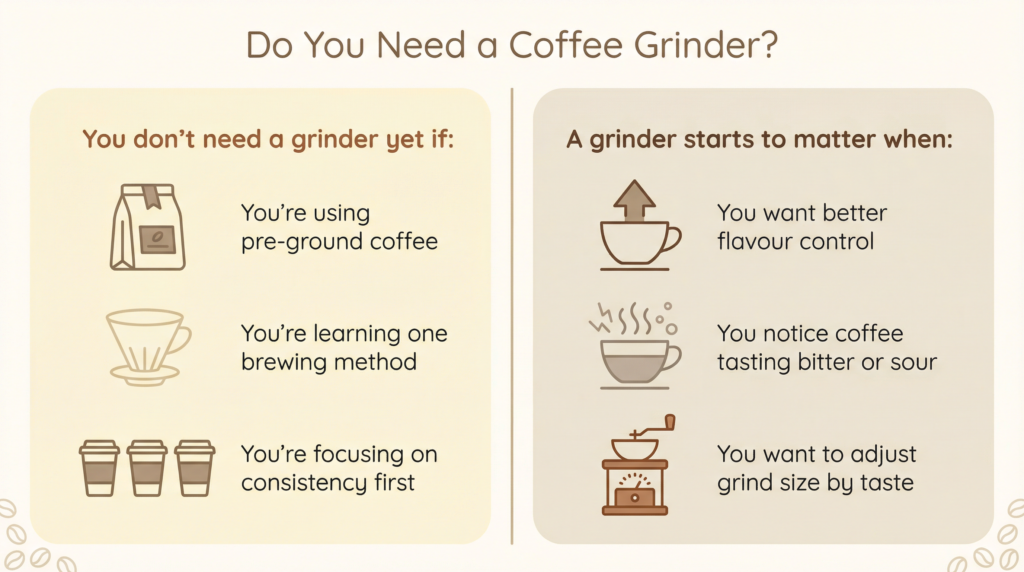
You may not need one yet if:
- You’re using pre-ground coffee that matches your brew method
- You’re still learning one brewing method consistently
- You’re focusing on freshness, ratios, and basic technique first
In these early stages, consistency matters more than equipment. If your coffee tastes okay and you’re learning how small changes affect flavour, you’re doing it right.
A grinder won’t automatically fix:
- stale coffee
- inconsistent brewing
- changing too many variables at once
So if you’re just starting out, it’s okay to wait.
When a Grinder Starts to Matter
As you gain experience, you may notice something frustrating.
Even when you follow the same steps, your coffee:
- tastes flat one day and harsh the next
- feels weak or sour despite good beans
- doesn’t respond well to small adjustments
This is often where a grinder begins to make a real difference.
A grinder allows you to:
- control grind size instead of guessing
- adjust based on taste
- keep coffee fresher for longer
Grind size has a direct impact on flavour extraction. Too fine, and coffee can taste bitter. Too coarse, and it can taste thin or sour.
This is explained in more detail here: Why Grind Size Matters (Beginner Explanation)
Once you start noticing flavour differences, a grinder stops being optional and starts becoming useful. If you’re at this stage, this beginner guide explains what actually matters in a first grinder — without espresso features or unnecessary complexity.
→ Best Coffee Grinders for Beginners (No Espresso)
Manual vs Electric Grinders (High-Level Only)
At this stage, you don’t need to choose a specific model.
But it helps to understand the basic difference.
Manual grinders
- More affordable
- Very consistent for the price
- Slower, but simple and reliable
Electric grinders
- Faster and more convenient
- More expensive for good consistency
- Useful if you brew often or make multiple cups
Both can make good coffee. The right choice depends on how often you brew and how much convenience matters to you — not on “level” or seriousness.
If you want help deciding calmly, this guide on manual vs electric coffee grinders for beginners breaks down the real differences without pushing you toward a purchase.
You don’t need to decide today.
What Matters More Than Owning a Grinder
Before buying anything, it helps to check the basics:
- Are your beans reasonably fresh?
- Does your grind size suit your brew method?
- Are you sticking with one method long enough to learn it?
- Are you changing one thing at a time when the coffee tastes off?
If these aren’t consistent yet, improving them will usually help more than buying a grinder.
A grinder supports good fundamentals — it doesn’t replace them.
A Common Beginner Scenario
Many beginners buy a grinder expecting instant improvement.
Instead, the coffee still tastes disappointing.
In most cases, the issue isn’t the grinder itself. It’s that:
- the beans aren’t fresh
- the grind size isn’t adjusted properly
- multiple changes were made at once
Understanding when a grinder helps — and what it actually controls — prevents frustration and unnecessary spending.
Did You Know?
Grinding coffee releases aromatic compounds very quickly. This is why coffee tastes fresher when it’s ground just before brewing — and why pre-ground coffee loses flavour faster, as explained by the Specialty Coffee Association (SCA).
Beginner FAQ
Can I use pre-ground coffee long-term?
Yes, especially if it matches your brewing method. Many people do.
Is a grinder the most important upgrade?
For most beginners, yes — but only after fundamentals are in place.
Do expensive grinders make better coffee?
Not automatically. Consistency matters more than price.
What’s Next?
Now that you understand when a grinder actually starts to matter, the next step is deciding what type makes sense for your routine — without pressure or upsell.
Read next: Manual vs Electric Grinder
If you’re already at the point where you want to see a few solid beginner-friendly options, I’ve put together a simple guide to good coffee grinders under $150, focusing on consistency and ease of use rather than unnecessary features.