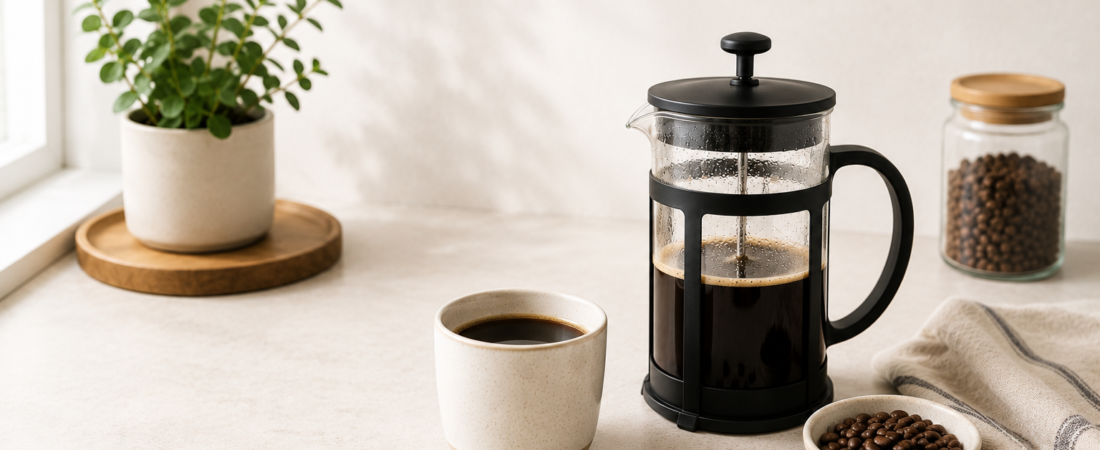
French press mistakes are more common than you’d think — and if your coffee tastes bitter, muddy, or just never quite right, one of these is probably why. You’re not alone — and the good news is the fixes are usually simple. Most beginners run into the same handful of problems when starting out, but a few small adjustments can make a surprisingly big difference.
French press is actually one of the best beginner coffee brewing methods to start with. There’s no complicated equipment, no special technique — just a few small details that make a big difference. Once you know what to look for, you can go from “drinkable” to genuinely great coffee with the same beans and the same press you already have.
Here are the seven most common French press mistakes, and exactly how to fix each one.
1. Why French Press Coffee Tastes Bitter
This is probably the single most common reason French press coffee tastes bitter — and it’s also the easiest to fix.
When you pour boiling water straight from the kettle over your grounds, you’re over-extracting the coffee. That means you’re pulling out the harsh, bitter compounds along with the good stuff.
The fix: After your kettle boils, wait 30 seconds before pouring. That’s it. The water cools just enough to extract flavour without the bitterness. If you want to be precise, aim for around 90–96°C (195–205°F).
2. Grinding the Coffee Too Fine
French press uses a full-immersion brewing method — the grounds sit in the water for the entire brew. That means grind size matters a lot more than people realise.
If your grind is too fine, a few things go wrong:
- The coffee over-extracts quickly, leading to a bitter, harsh taste
- Fine particles slip through the mesh filter and make your cup gritty and muddy
- The plunger becomes hard to push down
The fix: Aim for a coarse grind — similar in texture to coarse sea salt or rough breadcrumbs. If you’re buying pre-ground coffee, look for bags labelled “French press,” “coarse grind,” or “cafetière.”
If you’re grinding at home, a burr grinder gives you the most control and consistency. Even an affordable burr grinder can make French press coffee noticeably smoother and less muddy. A blade grinder can work, but the grind will be uneven — and inconsistent grind size is one of the main reasons French press coffee ends up bitter or muddy. Even an affordable burr grinder makes a noticeable difference. If you’re not sure where to start, our guide to the best beginner coffee grinders under $150 walks through simple options.
3. One of the Most Common French Press Mistakes
Leave your coffee sitting too long and it will keep extracting — long past the point where it tastes good. This is one of those things that’s easy to forget, especially first thing in the morning.
The fix: Aim for around 4 minutes of brew time. Set a timer so you don’t lose track.
Equally important: once you press the plunger, pour the coffee straight away. Don’t leave it sitting in the press with the grounds — it will keep extracting and turn bitter even after plunging.
If you’re not drinking it all at once, pour the remaining coffee into a separate carafe or thermos.
4. Getting the Coffee-to-Water Ratio Wrong
Too much coffee and your brew tastes harsh and overpowering. Too little and it comes out weak and watery. Finding the right balance is one of the things that makes the biggest difference.
The fix: Start with a ratio of 1 tablespoon of coffee per 125ml (4oz) of water and adjust from there.
If it tastes too strong, use slightly less coffee before changing anything else. If it’s too weak, add a little more. Getting the ratio right is worth experimenting with — small adjustments have a noticeable effect. If strong coffee is your main issue, our guide on why coffee tastes too strong has more detail.
5. Pressing the Plunger Too Hard
Once your four minutes are up, it can be tempting to push the plunger down quickly and get to your coffee. But forcing it down stirs up fine particles that have settled at the bottom, making your cup murky and gritty.
The fix: Apply slow, steady pressure. The plunger should go down smoothly over about 20–30 seconds.
If you’re hitting a lot of resistance, that’s a sign your grind is too fine or you’ve used too much coffee — not a reason to push harder. Ease up and adjust next time.
6. Using Stale Coffee Beans
No brewing technique in the world can save stale coffee. Old beans lose their volatile compounds — the ones responsible for aroma and flavour — and what you’re left with is flat, dull, and lifeless.
The fix: Buy freshly roasted coffee and use it within a few weeks of the roast date (check the bag — good roasters always print it).
For beginners, medium or medium-dark roasts tend to work really well in a French press. They’re forgiving, produce a smooth and balanced cup, and don’t need to be brewed perfectly to taste good.
Store your beans in an airtight container away from heat and light, and only grind what you need each time.
7. Not Cleaning the French Press Properly
This one catches a lot of people off guard. Coffee oils build up on the mesh filter and inside the glass surprisingly quickly, and stale oil left behind makes your next cup taste bitter before you’ve even started brewing.
The fix: Rinse your French press thoroughly after every use. Give it a proper clean — disassembling the plunger and filter — at least once a week.
Pay particular attention to:
- The mesh filter (oils collect here)
- The plunger components
- The inside edges of the glass
It only takes a couple of minutes and makes a noticeable difference to the taste of your coffee.
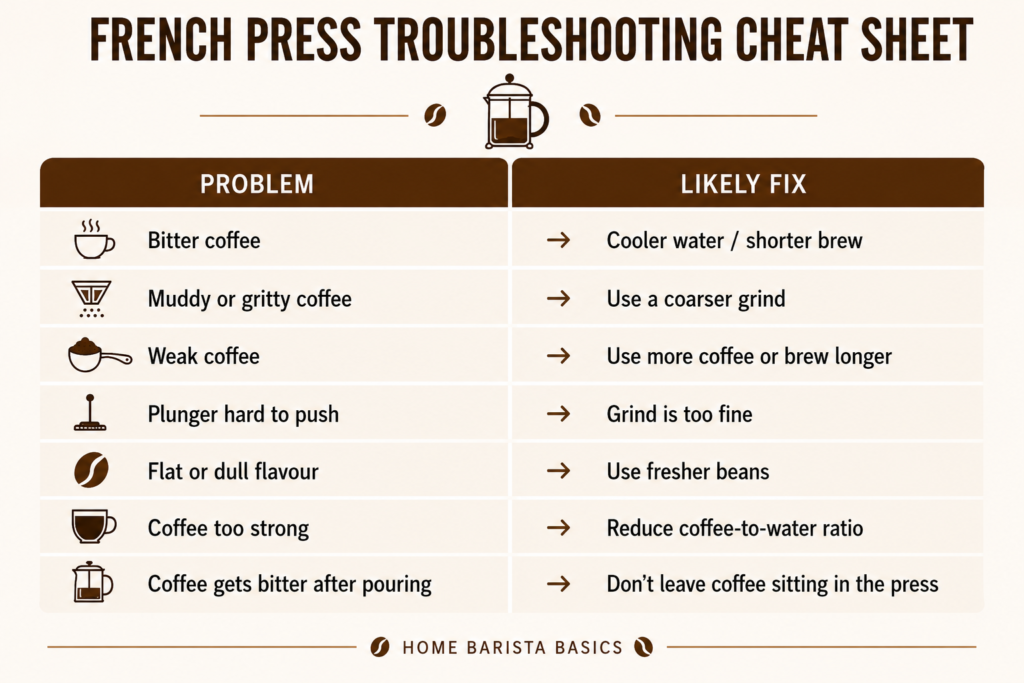
Quick Reference: French Press Troubleshooting
| Problem | Most Likely Cause | Fix |
|---|---|---|
| Tastes bitter | Water too hot, brewed too long | Let kettle cool 30 sec; brew for 4 min |
| Tastes muddy/gritty | Grind too fine | Use a coarser grind |
| Tastes weak | Too little coffee or too short a brew | Adjust ratio; brew full 4 min |
| Plunger hard to push | Grind too fine | Coarsen the grind |
| Tastes flat/dull | Stale beans | Buy fresher coffee |
Final Thoughts
Great French press coffee comes down to four things: water temperature, grind size, brew time, and coffee ratio. All four are easy to adjust once you know what you’re doing.
Start with the basics, make one change at a time, and you’ll be surprised how quickly your morning cup improves. No expensive upgrades needed — just a little attention to the details. And if you’re still using an old or budget press, our best French press for beginners guide is worth a look.