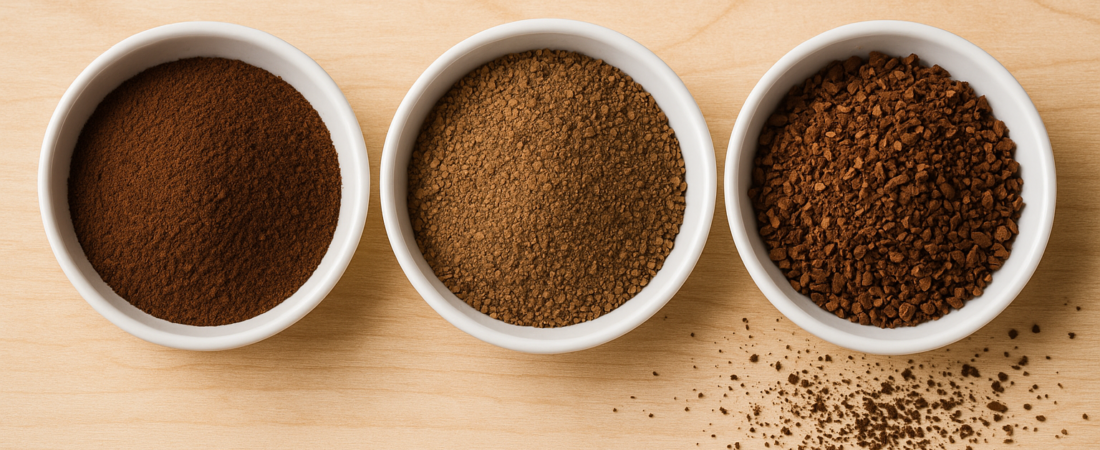
Why grind size matters becomes clear if you’ve ever brewed coffee that tasted bitter, sour, weak, or harsh — even when you’re using good beans.
For beginners, grind size can feel technical or intimidating. But the idea is actually very simple:
Grind size controls how quickly flavour is extracted from coffee.
Once you understand that, everything else starts to make sense.
What grind size actually means
Grind size refers to how fine or coarse your coffee beans are ground before brewing.
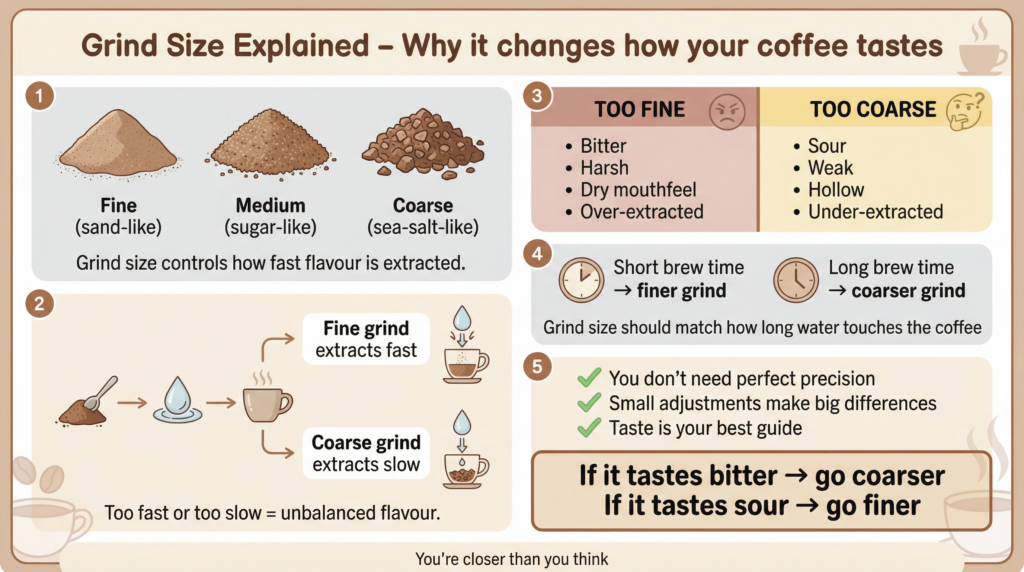
- Fine grind → looks like sand or table salt
- Medium grind → similar to regular sugar
- Coarse grind → chunky, like sea salt or breadcrumbs
Different brewing methods need different grind sizes because water interacts with coffee differently depending on time and contact area.
Why grind size affects taste
When water touches coffee grounds, it pulls out flavour compounds. This process is called extraction.
- Finer grinds expose more surface area → flavours extract faster
- Coarser grinds expose less surface area → flavours extract slower
If extraction happens too fast or too slow, the coffee won’t taste balanced.
Too fine vs too coarse (what beginners usually taste)
If your grind is too fine
- Coffee tastes bitter, harsh, or dry
- Mouthfeel may feel heavy or chalky
- Often happens when fine grinds are used with slow brew methods
This is called over-extraction.
If your grind is too coarse
- Coffee tastes sour, weak, or hollow
- Flavours seem thin or unfinished
- Often happens when grinds are too chunky for the brew time
This is called under-extraction.
You don’t need to memorise the terms — just remember the taste clues. If you want a simple way to diagnose flavour problems by taste, this grind size troubleshooting guide breaks it down step by step.
Why grind size matters more than beginners expect
Many beginners focus on:
- beans
- brew method
- equipment
But grind size quietly affects all of them.
Even great beans can taste disappointing if they’re not fresh or the grind size is wrong.
And simple equipment can produce excellent coffee if the grind size is right.
That’s why grind size is one of the fastest ways to improve coffee at home, without buying anything new. If you do decide to upgrade later, a consistent burr grinder makes a noticeable difference — here’s a simple guide to beginner-friendly options under $150.
Matching grind size to brew method (simple idea)
Different brew methods use different contact times — which is why grind size matters when brewing at home. For example, if you’re using a French press, pairing the right grind with a beginner-friendly French press makes it much easier to get balanced results.
Some methods push water through the coffee quickly, while others let the water sit with the coffee for longer.
Because of this:
- Short brew time → finer grind
When water moves through coffee quickly, a finer grind helps the water extract enough flavour in that short time. - Long brew time → coarser grind
When water stays in contact with coffee for longer, a coarser grind slows extraction so the coffee doesn’t become bitter or muddy.
You don’t need to get this perfectly right yet. Small differences are normal, and taste matters more than exact settings.
For now, just remember this simple idea:
Grind size should match how long water stays in contact with the coffee.
Do beginners need to be precise?
No.
You don’t need laboratory precision, special tools, or exact measurements to make good coffee at home.
Coffee is more forgiving than it seems — especially at the beginning.
What you do need is:
- A reasonable grind size for your brew method
Getting close is enough. You don’t need the “perfect” setting for the coffee to taste good. - Willingness to adjust slightly if it tastes off
If your coffee tastes too bitter, go a little coarser next time.
If it tastes weak or sour, try going a little finer. - Understanding that small changes make a big difference
Tiny adjustments in grind size often improve flavour more than changing beans, equipment, or recipes.
Once you get comfortable making these small tweaks, coffee starts to feel much easier and more predictable.
Key takeaway
Grind size isn’t about perfection — it’s about balance.
- If your coffee tastes too bitter, go slightly coarser
- If it tastes too sour or weak, go slightly finer
That alone fixes more beginner coffee problems than most people realise.
Beginner FAQ
Is grind size more important than roast level?
For taste balance, yes — grind size usually has a bigger immediate impact.
Can I fix bad coffee just by changing grind size?
Often, yes. Many flavour issues improve by adjusting grind size alone.
Do pre-ground coffees work?
They can, but you lose control over grind size and freshness. Whole beans give better results long-term.
➡️ Next Beginner Guide: Grind Size Chart for Beginners (Simple)