
If you’ve ever looked at a coffee bag and seen words like chocolate, citrus, caramel, or berry and thought:
“There’s no way I’m going to taste that…”
You’re not alone — and you’re not doing anything wrong.
Coffee flavour notes are one of the most confusing parts of specialty coffee for beginners. This guide explains what they really mean, what they don’t mean, and how to use them.
What coffee flavour notes actually are
Coffee flavour notes are descriptions, not ingredients.
When a coffee bag says “notes of chocolate and orange”, it does not mean:
- chocolate or orange was added
- the coffee is flavoured
It means the coffee naturally reminds people of those flavours — similar to how fruit or wine can remind you of something familiar.
These flavours come from:
- the coffee variety
- where it was grown
- how it was processed
- how it was roasted
This is why single origin and blends can taste very different.
Nothing artificial is ever added.
Why coffee has flavour notes at all
Coffee comes from a fruit called a coffee cherry.
The bean you grind is the seed inside that fruit.
Just like apples or grapes:
- different varieties taste different
- growing conditions affect flavor
- processing changes the final taste
This is why coffee can taste:
- nutty
- sweet
- bright
- rich
- fruity
Even when brewed with only water.
What flavour notes are not
This is important for beginners.
Coffee flavour notes are not:
- a test of your palate
- something you’re expected to identify perfectly
- a guarantee of what you will taste
You are not “bad at coffee” if you don’t taste blueberry or jasmine.
Most people don’t — especially at the beginning.
Think of flavour notes as a guide, not a promise
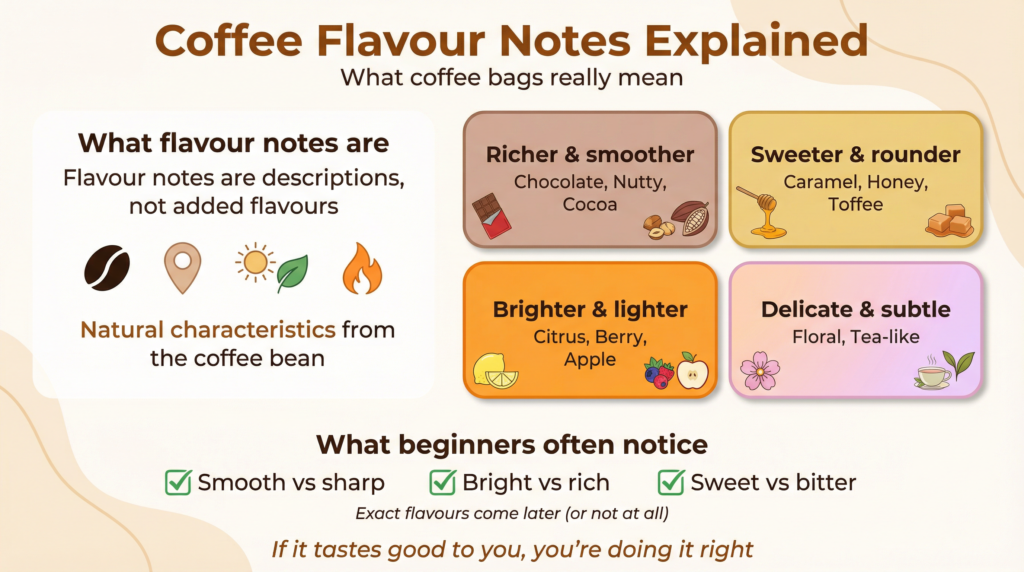
A helpful way to read flavour notes is to think in broad categories rather than exact flavours.
For example:
- Chocolate / nutty → richer, smoother, comforting
- Caramel / honey → sweeter, rounder
- Citrus / berry → brighter, lighter, more acidic
- Floral / tea-like → delicate, subtle
Flavor notes help you choose, not perform.
If you enjoy chocolatey desserts, a coffee described as chocolate or nutty is usually a safer choice than one described as tropical fruit or florals.
Why beginners often don’t taste what’s on the bag
This is completely normal. Common reasons include:
- coffee not being freshly roasted
- grind size not matched to the brew method
- brewing technique muting subtle flavours
- expecting very specific tastes
Most beginners notice flavour notes as general impressions, such as:
- “This tastes smoother than my usual coffee”
- “This feels brighter”
- “This isn’t as bitter”
Sometimes this is simply because the coffee is under-extracted or over-extracted.
Do you need to train your palate?
No — not to enjoy coffee.
Over time, you may naturally notice:
- sweetness more clearly
- acidity separately from bitterness
- subtle differences between beans
This happens simply by:
- drinking better coffee
- brewing more consistently
- paying light attention, not analysing
No tasting wheels or special training required.
Did You Know?
- Coffee flavour notes are agreed upon by professional tasters — they are not made up for marketing
- Two people drinking the same coffee can taste different things, and both can be right
- Brewing method affects which flavors stand out (pour-over highlights brightness, French press highlights body)
- Many “chocolatey” coffees taste that way because of how they’re roasted, not because flavour is added
- Your brain learns flavours through repetition — general impressions come before specific notes
Beginner FAQ:
Do coffee flavor notes mean flavors are added?
No. Coffee flavor notes describe natural characteristics of the bean. No flavors are added.
Why can’t I taste the flavors listed on the bag?
This is very common. Most beginners notice overall qualities like smoothness, brightness, or richness rather than exact flavors.
Are flavor notes only for expensive coffee?
No. All coffee has flavor notes. Specialty coffee simply describes them more clearly.
Should I choose coffee based on flavor notes?
Use them as a guide, not a rule. If you prefer richer flavors, look for chocolate or nut notes. If you prefer lighter coffees, try citrus or fruit-forward descriptions.
Do I need special equipment to taste flavor notes?
Not to start. Fresh beans and consistent brewing matter more than expensive gear.
Is it okay if I don’t care about flavor notes?
Absolutely. If the coffee tastes good to you, that’s what matters most.
Key Takeaway
Coffee flavour notes are descriptions, not added flavours.
They help you understand whether a coffee is likely to be:
- richer or lighter
- smoother or brighter
- more comforting or more vibrant
You don’t need to taste the exact words on the bag for them to be useful.
If the coffee tastes good to you, you’re already using flavor notes the right way.
➡️ Next Beginner Guide
Why Freshness Matters (Roast Date Explained)
Even the best-tasting beans lose their flavour if they’re stale. In the next guide, you’ll learn why roast date matters more than brand or price — and how to avoid buying old coffee by mistake.