What is specialty coffee? This beginner-friendly guide explains what specialty coffee really means and why it matters if you’re just starting to brew coffee at home. If you’ve ever wondered why some coffee tastes flat while others taste sweet, bright or complex, you’ve already experienced the difference between regular coffee and specialty coffee — even if you didn’t realise it at the time.
What Is Specialty Coffee?
In simple terms, specialty coffee means higher-quality beans with better flavour than regular supermarket coffee — especially when you brew it at home.
It’s coffee that has been grown, picked, processed, roasted, and handled with much more care at every step. Instead of treating coffee as a cheap caffeine drink, specialty coffee focuses on flavour, freshness, and where the coffee comes from.
This is why specialty coffee often tastes:
- sweeter rather than bitter
- cleaner and more balanced
- brighter or more interesting, without being harsh
For beginners, this does not mean:
- expensive machines
- complicated techniques
- barista-level knowledge
It also doesn’t mean you need precision tools right away. Many beginners assume specialty coffee requires gadgets like scales, but they’re optional rather than essential. This guide explains whether you actually need a coffee scale as a beginner, and when it’s worth adding one.
It simply means:
- choosing better beans
- paying a little attention to freshness
- using a basic brew method consistently
Even small changes — like buying fresher beans or grinding just before brewing — can noticeably improve how your coffee tastes at home.
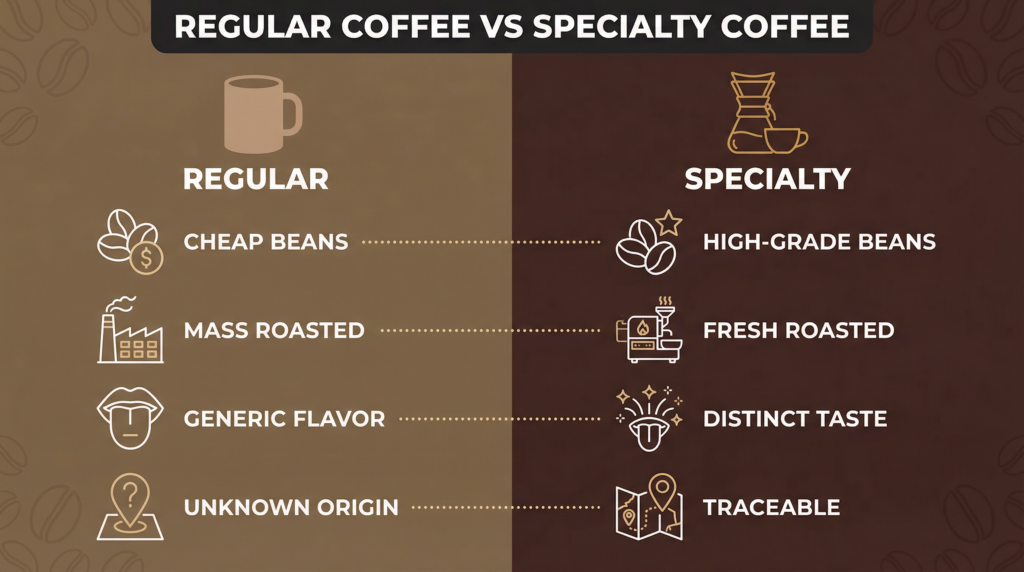
Regular Coffee vs Specialty Coffee (Beginner Comparison)
What Makes Coffee “Specialty”?
These are the main differences beginners should know — you don’t need to memorise them, just understand what they generally mean.
Higher-quality beans
Specialty coffee usually uses carefully selected Arabica beans with fewer defects. This helps create cleaner, smoother flavours and reduces harsh bitterness.
Freshly roasted
Specialty coffee is often roasted in smaller batches and shows a clear roast date on the bag. Fresher coffee keeps more aroma and flavour, which makes a noticeable difference when brewing at home. Freshness doesn’t mean coffee suddenly goes bad — flavour fades gradually over time. This guide on how long coffee beans stay fresh explains what actually changes, and how much it really matters for beginners.
Traceable origin
You’ll often see where the coffee came from — the country, region, or even the farm. This transparency usually goes hand-in-hand with better farming practices and more distinctive flavours.
Clear flavour notes
The bag may list flavour notes like chocolate, nuts, berries, or citrus. These are natural flavour impressions, not added ingredients, and they help you choose a coffee that suits your taste.
Do You Need to Be an Expert to Enjoy Specialty Coffee?
Not at all. Specialty coffee can be enjoyable at any stage — but whether it’s actually worth prioritising early on depends more on your brewing consistency than the beans themselves.
For beginners, specialty coffee tends to add the most value once the basics feel familiar. This guide on whether specialty coffee beans are worth it for beginners explains when specialty coffee starts to make sense, and when it’s better to keep things simple.
It’s especially appealing for people who want better-tasting coffee at home, are curious about where their coffee comes from, and enjoy making small, simple improvements over time.
You don’t need to learn everything at once. You can start with just one easy step — such as buying fresher beans from a local roaster or switching to a simple brew method like French press, AeroPress, or pour-over.
Each small change builds on the last, and you can move at your own pace.
Why This Matters for Home Beginners
Understanding what specialty coffee is helps you make better choices without feeling overwhelmed.
Instead of guessing, you’ll start to understand:
- what kind of beans to look for
- what labels on the bag actually mean
- why your coffee tastes different from café coffee
That confidence makes home brewing feel simpler, not more complicated.
For now, just remember this:
Specialty coffee isn’t about being fancy — it’s about better beans, more care, and better flavour, even for complete beginners at home.
What to read next
Now that you understand what specialty coffee really means, the next step is learning how small choices affect flavour — such as the type of coffee bean, roast level, and freshness. These beginner guides will help you take the next step without feeling overwhelmed.