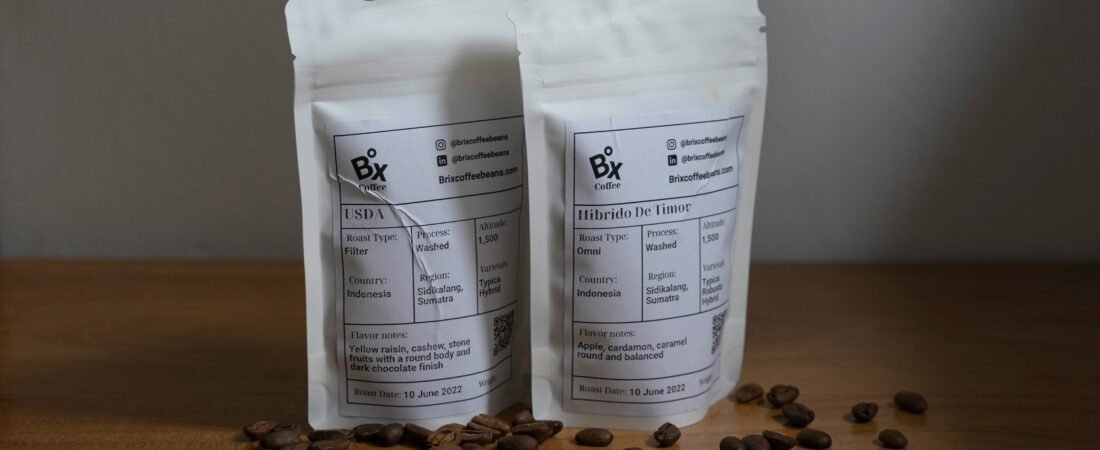
How to read a coffee bag label becomes clearer once you know what actually matters — walking into a coffee shop or browsing coffee online can feel confusing when you’re new to specialty coffee.
The good news?
You don’t need to understand everything on a coffee bag to choose good coffee.
This guide will walk you through what to focus on, what to treat as helpful context, and what you can safely ignore as a beginner.
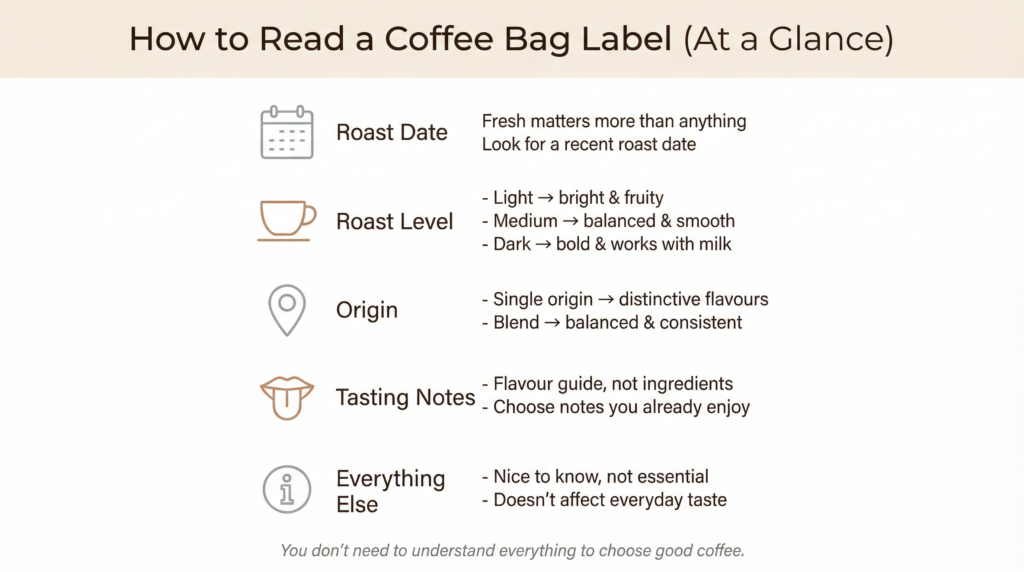
How to Read a Coffee Bag Label: 5 Things to Look For First
If you only remember one thing from this article, make it this:
- Roast date
- Roast level
- Origin (single origin or blend)
- Tasting notes
- Recommended brew methods (if listed)
Everything else is optional when you’re starting out.
Roast Date (This Matters More Than You Think)
The roast date tells you when the coffee was roasted, not when it expires.
Why it matters
Coffee tastes best when it’s:
- fresh, but not too fresh
- usually 7–28 days after roasting
Beginner tip
If you’re choosing between bags:
- pick the one with the most recent roast date
- avoid bags with only a “best before” date and no roast date
Freshness has a bigger impact on flavour than most label details.
Roast Level (Light, Medium, Dark)
Roast level tells you how long the coffee beans were roasted, which has a big impact on how the coffee tastes.
It doesn’t tell you how strong the coffee is — it tells you what style of flavour to expect.
Very simply:
- Light roast → brighter, fruitier, more acidic
These coffees often taste lighter and more vibrant.
They can highlight flavours like citrus or berries, but may feel sharp if you’re not used to them. - Medium roast → balanced, smooth, beginner-friendly
This is the most versatile roast level.
Flavours are well-rounded, not too sharp and not too heavy, which makes it easier to enjoy across different brew methods. - Dark roast → bold, smoky, works well with milk
These coffees taste richer and heavier, with roasted or smoky notes.
They’re popular in milk-based drinks because the strong flavours cut through milk easily.
Beginner tip
If you’re unsure where to start:
Choose a medium roast
It’s the most forgiving option and gives you a clear, balanced introduction to how good coffee can taste at home.
Origin: Single Origin vs Blend
This tells you where the coffee beans come from, which can influence how the coffee tastes.
You’ll usually see one of two options on a coffee bag:
- Single origin → beans from one country, region, or even a single farm
These coffees often have clearer, more distinctive flavours.
They can highlight unique characteristics of where the coffee was grown, which makes them interesting to explore over time. - Blend → beans from multiple origins combined together
Blends are designed to be balanced, consistent, and familiar.
They aim to taste similar from bag to bag, which many people find comforting and reliable.
Beginner tip
- Drink coffee black? → try single origin
You’re more likely to notice subtle flavour differences without milk. - Drink milk coffee? → blends are often easier
Their balanced flavours tend to work well with milk. - Just starting out? → either is fine
There’s no wrong choice at this stage.
There’s no “better” option — it simply comes down to what you enjoy and how you drink your coffee.
Tasting Notes (How to Read Them Properly)
Tasting notes describe flavour impressions, not added ingredients.
If a bag says:
- chocolate, caramel, nuts → expect smooth, comforting flavours
- berries, citrus, floral → expect brighter, fruitier coffee
Important beginner reassurance
- Your coffee does not need to taste exactly like the notes
- They’re a guide, not a test
- You’re not doing it wrong if you taste something different
Beginner shortcut
If the tasting notes sound appealing to foods you already like, that’s usually a good sign.
Processing Method (Optional at the Start)
You may see terms like washed, natural, or honey on a coffee bag.
These describe how the coffee cherry was processed after harvest, before the beans were dried and roasted.
This step can influence flavour, but it’s not something you need to focus on early on.
Very simply:
- Washed → cleaner, brighter flavours
These coffees often taste more crisp and clear, with flavours that feel lighter and more defined. - Natural → fruitier flavours with a heavier body
These coffees can taste richer, sweeter, or more intense, sometimes with a jammy or wine-like feel. - Honey → somewhere in between
Often slightly sweet and rounded, combining aspects of both washed and natural coffees.
Beginner tip
This information is interesting, but not essential when you’re starting out.
If the terms feel confusing, it’s completely fine to ignore them and focus on roast date, roast level, and flavour notes first.
You can always come back to processing methods later, once you’re curious.
Altitude, Variety, Certifications (Nice to Know, Not Required)
Some bags list:
- altitude (e.g. 1,800m)
- bean variety (e.g. Bourbon, Caturra)
- certifications (organic, fair trade)
This information can add depth over time, but it doesn’t affect whether your coffee tastes good day to day.
Which Details Matter Most for Beginners?
If you’re standing in front of a shelf, focus on this order:
- Roast date
- Roast level
- Origin or blend
- Tasting notes
Everything else is extra.
Key Takeaway (Super Simple)
Coffee bag labels are meant to guide you — not overwhelm you.
If the coffee is freshly roasted, the roast level suits your taste, and the flavour description sounds appealing, you’re already making a good choice.
You don’t need to understand everything to enjoy great coffee at home.
Beginner FAQs
Does a more detailed label mean better coffee?
Not necessarily. Clear, honest information matters more than how much is listed.
Should I avoid bags I don’t understand?
No. You only need to understand a few basics to choose well.
Do cafés and roasters expect me to know all this?
Absolutely not. Labels are there to help, not judge.