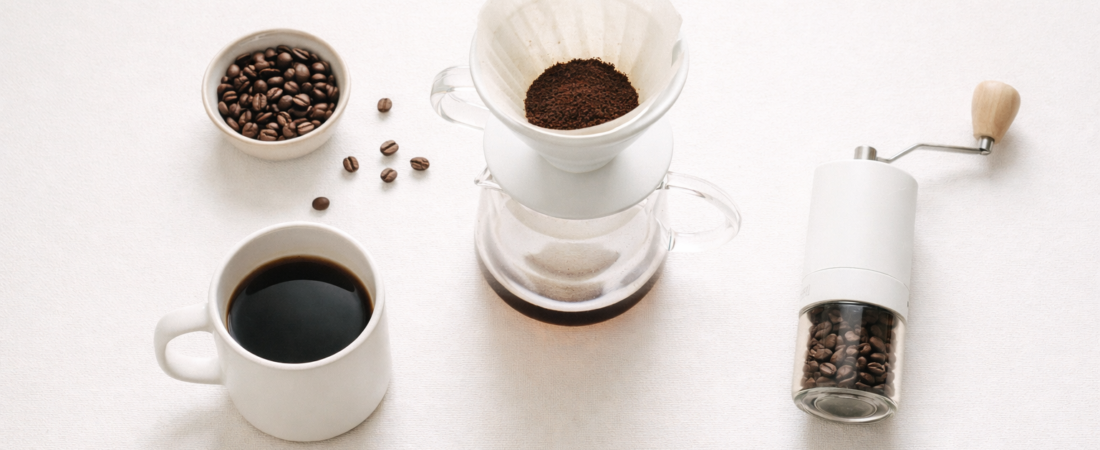
Beginner coffee brewing gear checklist: if you’re new to making coffee at home, one thing becomes overwhelming very quickly — there’s a lot of gear.
There’s a lot of gear.
Grinders, brewers, kettles, scales, filters, accessories — it can start to feel like you’re supposed to buy everything before you’re “allowed” to make good coffee.
Here’s the calm truth:
You don’t need much gear to make enjoyable coffee at home.
You just need the right basics, chosen intentionally.
This checklist shows you what actually matters for beginners, what’s optional, and what you can safely skip — so you can build your setup without stress or overbuying.
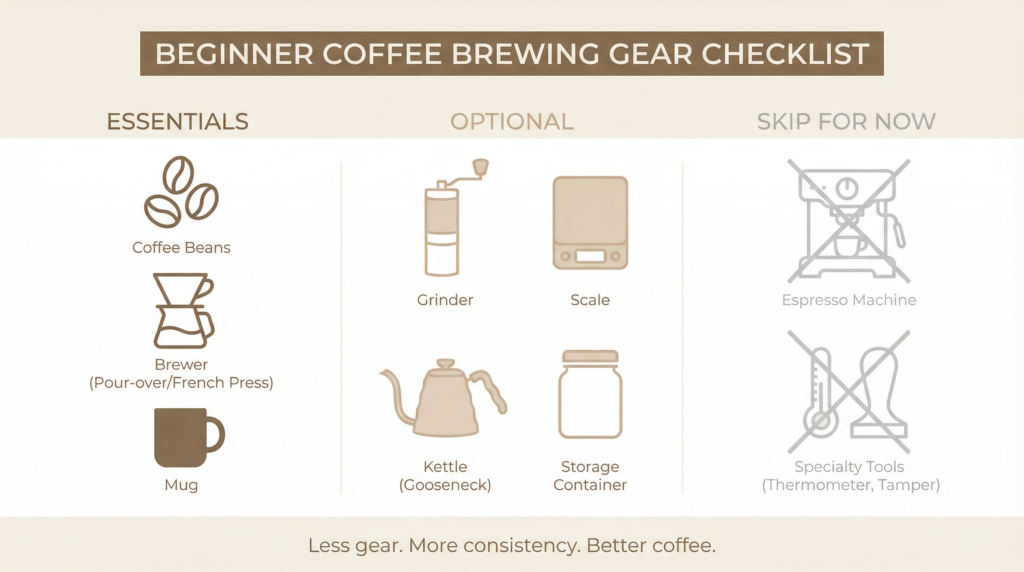
At a glance, here’s what most beginners actually need — and what can wait.
How to use this checklist (important)
This is not a shopping list you need to complete all at once.
Think of it as:
- a reference
- a way to sanity-check purchases
- a reminder that less is often more
You can start at the top and stop whenever your coffee already tastes good.
The true essentials (beginner coffee brewing gear checklist)
These are the only items most beginners truly need.
☑️ Coffee beans you actually enjoy
This matters more than any piece of equipment.
If you don’t like the beans, no brewer or gadget will fix that.
Look for:
- smooth or balanced descriptions
- flavours you naturally enjoy
- low-acid options if bitterness bothers you
If choosing beans already feels confusing, this beginner guide on how to choose coffee beans without overthinking walks through simple decisions without jargon or pressure.
☑️ A brewing method that fits your routine
Choose something that feels easy and repeatable.
Common beginner-friendly options:
- a simple drip coffee maker
- a single-serve drip brewer
- a manual brewer (pour-over or immersion)
The “best” brewer is the one you’ll actually use consistently.
If drip coffee feels like the easiest place to start, this guide to the best drip coffee makers for beginners focuses on simple, reliable options that don’t overcomplicate things.
☑️ A mug or cup you like using
This sounds trivial — it’s not.
If you enjoy holding and drinking from your mug, you’re more likely to enjoy the coffee you make.
That’s part of the experience.
Optional but helpful (add only if they feel useful)
These can improve consistency or convenience — but they’re not required.
◻️ A grinder (if you want fresher coffee)
Grinding fresh can improve flavour, but it’s optional at the start.
If you choose one:
- manual grinders are quieter and smaller
- electric grinders are faster but take more space
Choose based on your lifestyle, not trends.
◻️ A coffee scale
A scale can help with consistency, not quality magic.
It’s useful if:
- you want repeatable results
- you brew one cup at a time
- you enjoy calm, measured routines
It’s optional if:
- you’re happy eyeballing
- your coffee already tastes good
If you’re unsure whether a scale is worth adding at this stage, this guide on whether beginners actually need a coffee scale explains when it helps — and when it doesn’t.
For those who do want one, this list of beginner-friendly coffee scales focuses on simple, affordable options without unnecessary features.
◻️ A kettle (or reliable hot water source)
Most people already have this.
You don’t need a special kettle unless:
- you brew pour-over regularly
- you enjoy slower, hands-on brewing
A standard kettle works perfectly well for most beginners.
◻️ Simple coffee storage
If your beans sit out on the counter, a basic airtight container can help keep them fresher.
Avoid:
- oversized containers
- decorative jars that aren’t airtight
Practical beats pretty.
Things beginners often think they need (but usually don’t)
This is where many people overspend.
⛔ Espresso machines
Espresso is:
- more expensive
- more complex
- more equipment-heavy
It can be great — just not necessary for beginners.
⛔ Specialty accessories
Distribution tools, advanced tampers, extra drippers, fancy gadgets — they add clutter without improving early results.
⛔ Dedicated coffee timers
Your phone already does this job.
⛔ “Upgrade everything” bundles
Buying everything at once increases pressure and reduces enjoyment.
Build slowly.
Simple beginner setup examples
If it helps to see this in practice, here are a few realistic setups.
Minimal beginner setup
- Beans you enjoy
- Simple drip brewer or manual brewer
- Mug
That’s enough to make enjoyable coffee.
Comfortable daily setup
- Beans you enjoy
- Brewer
- Grinder
- Kettle
Adds flexibility without complexity.
Small apartment setup
- Compact brewer
- Manual grinder
- Small kettle
- Minimal storage
Quiet, space-efficient, and easy to manage.
If space is limited, this guide to coffee gear for small apartments goes deeper into compact, low-noise options that fit small kitchens.
A common beginner mistake
Many beginners try to build the “perfect” setup before they’ve even formed a habit.
That often leads to:
- decision fatigue
- unused gear
- disappointment
A better approach is:
- start simple
- brew regularly
- notice what you wish were easier
- upgrade only then
When it makes sense to add more gear
Upgrading becomes useful once coffee is already enjoyable and consistent.
That usually shows up as thoughts like:
- “I wish this tasted the same every morning.”
- “I want a little more control over flavour.”
- “This part of my routine feels awkward.”
Those signals matter more than reviews or recommendations.
Gear should solve a specific friction, not create a new one.
If you can’t clearly name the problem, waiting is often the better choice.
FAQs
Do I need all of this to start?
No. Beans + a brewer + a mug is enough.
What should I upgrade first?
Usually beans or grind quality — not gadgets.
Is it okay to use pre-ground coffee?
Yes. Many beginners do. You can always change later.
Should I buy everything at once?
No. Build slowly and intentionally.
The calm recommendation
Your beginner coffee setup doesn’t need to be impressive — it needs to support consistency.
It should:
- fit your space
- fit your routine
- make coffee you enjoy
You can always add more later — or not at all.
Good coffee comes from confidence and repetition, not equipment lists.