This article contains affiliate links. If you buy through them, I may earn a small commission at no extra cost to you.
Choosing a beginner coffee grinder can feel more complicated than it should. Some guides jump straight into espresso grinders and high-end gear. Others recommend whatever is cheapest. The truth is simpler: as a beginner, you don’t need an espresso-capable grinder — you need one that’s consistent, easy to use, and suited to the way you brew. If you’re not sure how grinders fit into different methods, this beginner coffee brewing methods guide explains how each brewing style affects your setup.
This guide covers what actually matters in a beginner coffee grinder, which options are sensible first choices, and how to decide without overthinking.
Quick Beginner Picks
If you don’t want to compare lots of options, these are the most common beginner-safe choices:
⭐ Best manual grinder for beginners: Timemore Chestnut C2
Reliable grind consistency, compact, and excellent value for filter brewing.
⭐ Best electric grinder for beginners: Baratza Encore
A simple, durable electric burr grinder that most beginners won’t outgrow quickly.
⭐ Best budget electric option: OXO Brew Conical Burr Grinder
Easy to use and suitable for everyday filter coffee without extra complexity.
What “No Espresso” Means — And Why It Matters
Espresso grinders are built for very fine, precise grinding — and they’re also more expensive, more complex, and less forgiving than most beginners need. If you brew pour-over, French press, AeroPress, or drip coffee, you don’t need an espresso grinder. Even where they can work for filter coffee, they cost more and introduce complexity that gets in the way while you’re learning.
This guide focuses only on grinders that work well for filter brewing — the kind most beginners start with.
What Actually Matters in a Beginner Coffee Grinder
Before looking at specific grinder categories, it helps to understand what really affects your coffee.
For beginners, the most important factor is grind consistency, not brand, price, or speed alone.
A good beginner grinder should:
- produce reasonably even grounds
- allow you to adjust the grind size
- suit your brewing method
- be easy to use day to day
Consistency matters because uneven grinding is one of the most common reasons coffee tastes bitter, sour, or weak — even when you use good beans. When coffee tastes off, this guide on why your coffee tastes too strong explains how grind size affects flavour step by step.
If grind size feels unfamiliar right now, you can read: Why Grind Size Matters (Beginner Explanation).
Manual vs Electric Grinders (Quick Overview)
Most beginner grinders fall into one of two categories:
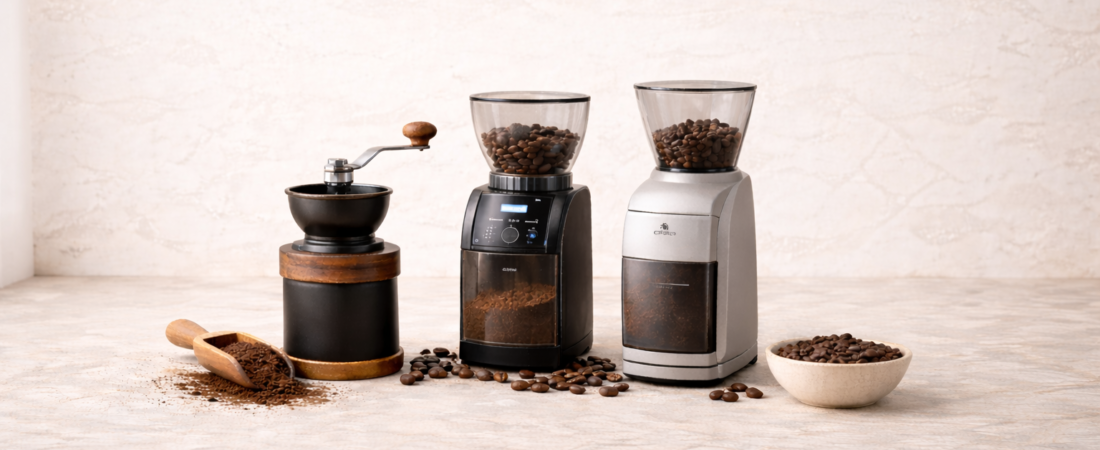
Manual grinders
- more affordable
- very consistent for the price
- quiet and compact
- slower and more hands-on
Best for:
- 1–2 cups at a time
- pour-over, AeroPress, French press
- people willing to put in a little effort
If AeroPress is your main brew method, this beginner guide to AeroPress coffee grinders explains which grinder features matter most — and which ones you can safely ignore.
Electric grinders
- faster and more convenient
- better for daily use
- easier for multiple cups
- usually cost more to get good consistency
Best for:
- daily brewing
- shared households
- drip machines and batch brewing
Neither option is “better” universally — it depends on how often you brew, how much effort you want to put in, and what style of coffee you prefer. If you want a deeper breakdown, this manual vs electric grinder guide for beginners explains the differences more clearly.
Best Coffee Grinders for Beginners (No Espresso)
Below are the grinder types that offer the best balance of price, performance, and ease of use for new brewers.
1. Entry-Level Manual Burr Grinders
Manual grinders are one of the safest starting points for beginners because they offer consistent grounds and low cost.
Why they work well:
- burr grinding (more consistent than blade)
- adjustable grind settings
- excellent value for money
- simple and reliable
Best for:
- pour-over
- AeroPress
- French press (small batches)
Trade-offs:
- slower than electric
- some physical effort required
Good beginner manual grinder examples
Compared to cheaper electric grinders, these offer more consistent grind size and fewer flavour issues over time:
Timemore Chestnut C2
A well-reviewed manual burr grinder that offers excellent grind consistency for the price. It’s compact, durable, and very popular with beginners who brew pour-over, AeroPress, or French press.
👉Check current pricing and availability
1Zpresso JX
A slightly higher-tier hand grinder with smoother adjustment and very reliable grind distribution. This is a good option if you want something you can grow into over time.
Tip: Hand grinders often outperform cheap electric grinders at a similar price point — especially for beginners.
2. Entry-Level Electric Burr Grinders (Filter-Focused)
If convenience matters and you plan to make coffee often, an entry-level electric burr grinder designed for filter coffee is a great companion.
Why they work well:
- consistent burr grinding
- easy daily use
- suitable for multiple cups
- quick grind times
Best for:
- drip coffee machines
- pour-over
- French press
Trade-offs:
- more expensive than manual
- not designed for espresso precision
Example products (filter-focused electric grinders):
OXO Brew Conical Burr Grinder
A simple, beginner-friendly electric burr grinder with intuitive controls and reliable consistency for everyday brewing.
Cuisinart DBM-8 Supreme Grind Automatic Burr Mill
A widely used entry-level electric burr grinder with multiple grind settings for common home brew methods.
3. All-Purpose Beginner Grinders (When Budget Allows)
Some grinders sit in a sweet spot where they:
- outperform most budget grinders
- remain beginner-friendly
- work across multiple brew methods
These are often recommended as “buy once, grow into” options — especially when they’re available under your target price range.
Best for:
- pour-over
- French press
- daily brewing
Trade-offs:
- sometimes priced slightly higher than basic entry models
- still not espresso-focused
Example product:
Baratza Encore Conical Burr Grinder — a classic beginner-friendly electric burr grinder known for excellent grind consistency, durability, and ease of use. Many home brewers keep this grinder long after their first upgrade. If you want one electric grinder that’s easy to live with and rarely needs upgrading, this is usually the safest starting point for beginners.
👉 See current pricing and options
Grinders Beginners Should Usually Avoid
Some grinder types create more problems than they solve for beginners:
❌ Blade grinders — uneven grind → inconsistent flavour
❌ Very cheap electric grinders with poor burrs — unpredictable performance
❌ Espresso-only grinders — overkill and unnecessary complexity
Choosing a grinder that matches your brewing method matters more than chasing features you don’t need yet.
How to Choose the Right Grinder for You
Here’s a simple decision guide:
- You brew 1–2 cups and don’t mind effort
→ manual burr grinder - You brew daily or for more than one person
→ entry-level electric burr grinder - You want one grinder to last a long time
→ all-purpose beginner grinder
If you’re still unsure, this guide on whether you even need a grinder yet can help clarify timing.
A Calm Buying Reminder
You don’t need the “perfect” grinder to make good coffee.
A reasonable grinder will help you:
- understand grind size
- improve consistency
- learn what you enjoy
You can always upgrade later — once you know why you’re upgrading.
Buying calmly now often leads to better decisions long term.
What’s Next?
Once you’ve decided what type of grinder fits your routine, the next step is choosing specific beginner-friendly models.
👉 Read next: Best Manual Coffee Grinders for Beginners
👉 Or: Best Electric Coffee Grinders for Beginners